Twilio Segment
The Customer Data Platform Report 2026

Introduction
The Context Imperative: Equipping AI for Continuous Customer Engagement
Imagine handing the keys of a high-performance sports car to a driver who has been blindfolded, spun around three times, and handed a map from 1995.
The engine has immense power, but the driver has absolutely no idea where they are going or what obstacles lie directly ahead. This is the exact predicament facing the modern enterprise today.
Companies are pouring substantial capital into artificial intelligence models, yet these advanced systems frequently operate in a state of operational amnesia, possessing immense computational power but absolutely no memory of a customer's recent history, identity, or digital behavior. While these AI models provide the raw analytical intelligence, they require a reliable data foundation to operate effectively. Without this foundation, an enterprise artificial intelligence deployment is merely a highly sophisticated engine running without fuel.

This report introduces a core framework to address this challenge.
In this model, artificial intelligence provides the strategic intelligence while Twilio Segment serves as the Customer Data Platform (CDP), providing the foundational data layer and connective tissue that links unified customer context directly to the exact moment of engagement.

The Blast Radius of Bad Data
To understand the necessity of a unified data infrastructure, we must first look at how the stakes have changed. We are moving beyond standard software to deploying autonomous AI systems that act, decide, and communicate on our behalf. In the past, the surface area of AI was limited—if data was bad, a dashboard was wrong or an internal report was skewed.
That world is over. Unlike the contained AI of the last decade, AI agents are beginning to touch every customer, every interaction, every moment of trust. The blast radius of bad data is now the entire customer experience.
When every team—marketing, support, sales—layers independent AI tools on top of the same fragmented data foundation businesses have always struggled with, those AI agents don't fix the gaps; they operationalize and amplify them at scale. And with every new AI system or tool implemented, new custom (and often duplicative) data pipelines need to be built, compounding data fragmentation.
Executing automated actions without immediate access to unified identity and behavioral context simply automates frustration. You go from one broken customer experience to five broken experiences—each one faster and more confident than the last.
The Infrastructure of Engagement
To solve fragmented AI, you must resolve the underlying data problem. You don’t need more systems or custom pipelines; you need a single, governed infrastructure that can:
- Capture disparate intent signals across every digital touchpoint, turning fragmented web visits, mobile interactions, and service logs into a single stream of raw data
- Contextualize this information, transforming raw, high-volume event data into an accessible, deterministic backbone of verified customer context that both human operators and programmatic systems can interpret
- Connect this enriched context to orchestrate personalized cross-channel journeys and power autonomous agents

The Agentic Leap
In the agentic era, the ultimate objective is to have a data architecture that can transition the enterprise from static data management to continuous engagement, removing the blindfold from our high-performance sports car driver entirely. A unified data foundation is needed to solve not only the data fragmentation problem, but also the agent context problem—without locking you into a single AI model.

The report will share:
The top ways Twilio Segment Customer Data Platform (CDP) helps organizations orchestrates frictionless experiences across the engagement stack
The evolving state of CDPs
The increasing importance of trust, privacy, and data governance
The partner ecosystem that accelerates time-to-value and helps businesses deploy agentic workflows
How Twilio Segment is powering the agentic future as the engine for connected context
CDP Report Key Findings
1. The Shift Toward Composable Architectures
Organizations are actively transitioning from rigid, all-in-one platforms to modular technology stacks defined by seamless integration. This move toward interoperability allows businesses to hand-select and connect the specific applications that align with their distinct operational goals. By prioritizing a flexible ecosystem over a closed system, companies can adapt more quickly to market changes and foster a culture of continuous technical innovation.
2. The Activation of Data Warehouses
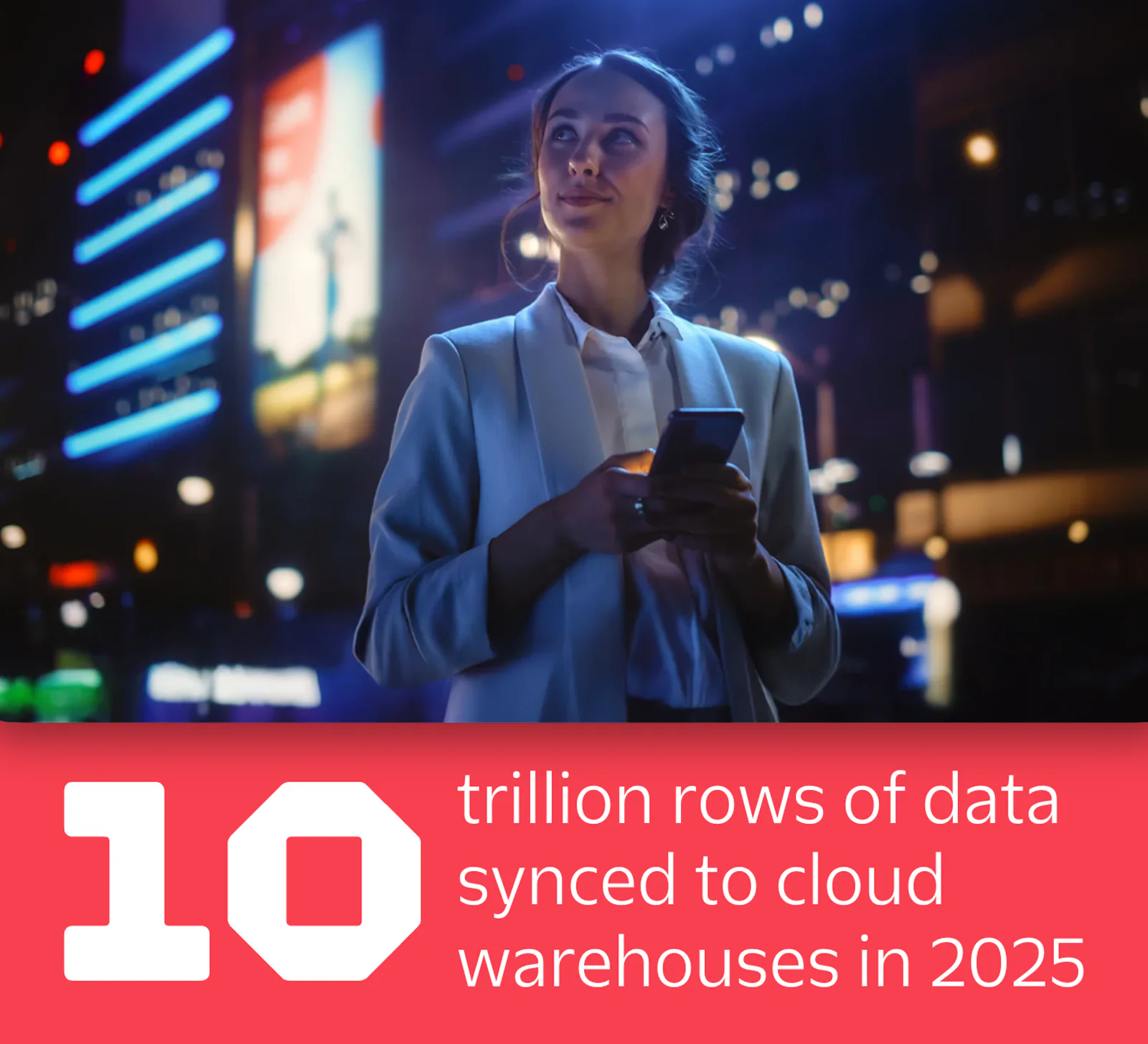
Over the last year, Twilio customers synced nearly 10 trillion data rows to warehouses like Snowflake, BigQuery, and Databricks. While these platforms excel at storage, organizations maximize ROI by building with the data warehouse rather than just on top of it. Pairing a central repository with a composable CDP unlocks zero-copy data sharing, allowing businesses to leverage existing infrastructure without the latency and pipeline complexity of basic data-shoveling tools. This unified approach seamlessly bridges historical data assets with live behavioral streams, transforming static storage into a high-velocity engine for true real-time personalization.
3. The Enduring Dominance of Analytics
Analytics software continues to lead as the most frequently integrated category across the Twilio ecosystem, underscoring its vital role in deciphering consumer patterns. Organizations that pair these analytical tools with a CDP gain a significant advantage by turning raw observations into immediate, intelligent actions. This combination allows brands to move beyond simple reporting to achieve a more responsive and effective engagement strategy.
4. The Growth of Agentic AI
Organizations are shifting from passive record-keeping to an "agentic" architecture by linking data platforms directly to AI engines. While traditional AI reacts only to prompts, agentic systems are proactive and goal-oriented, possessing the autonomy to reason through objectives and execute multi-step workflows independently. This transforms static data into a dynamic "brain" capable of taking real-time action to resolve customer needs.