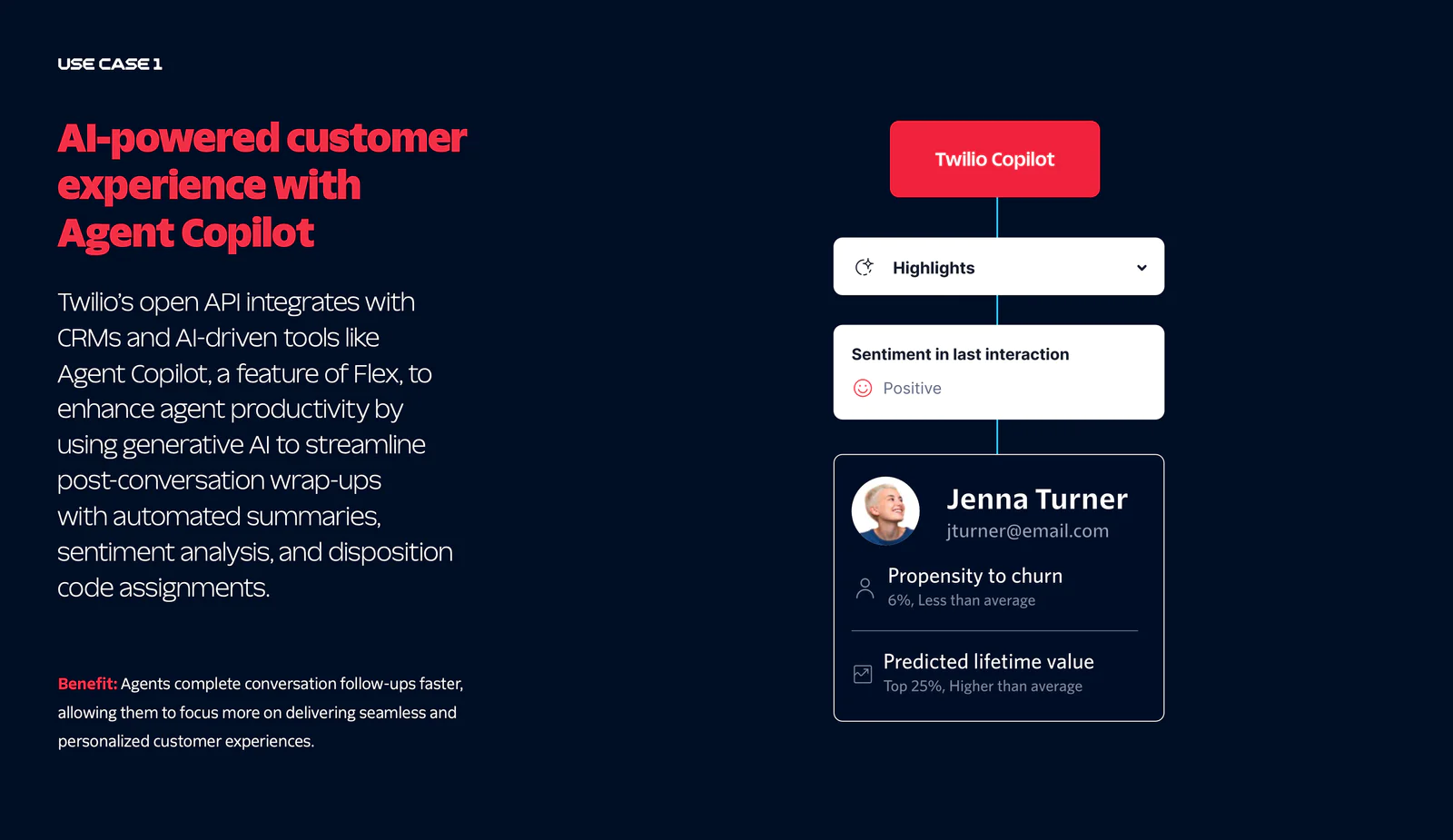
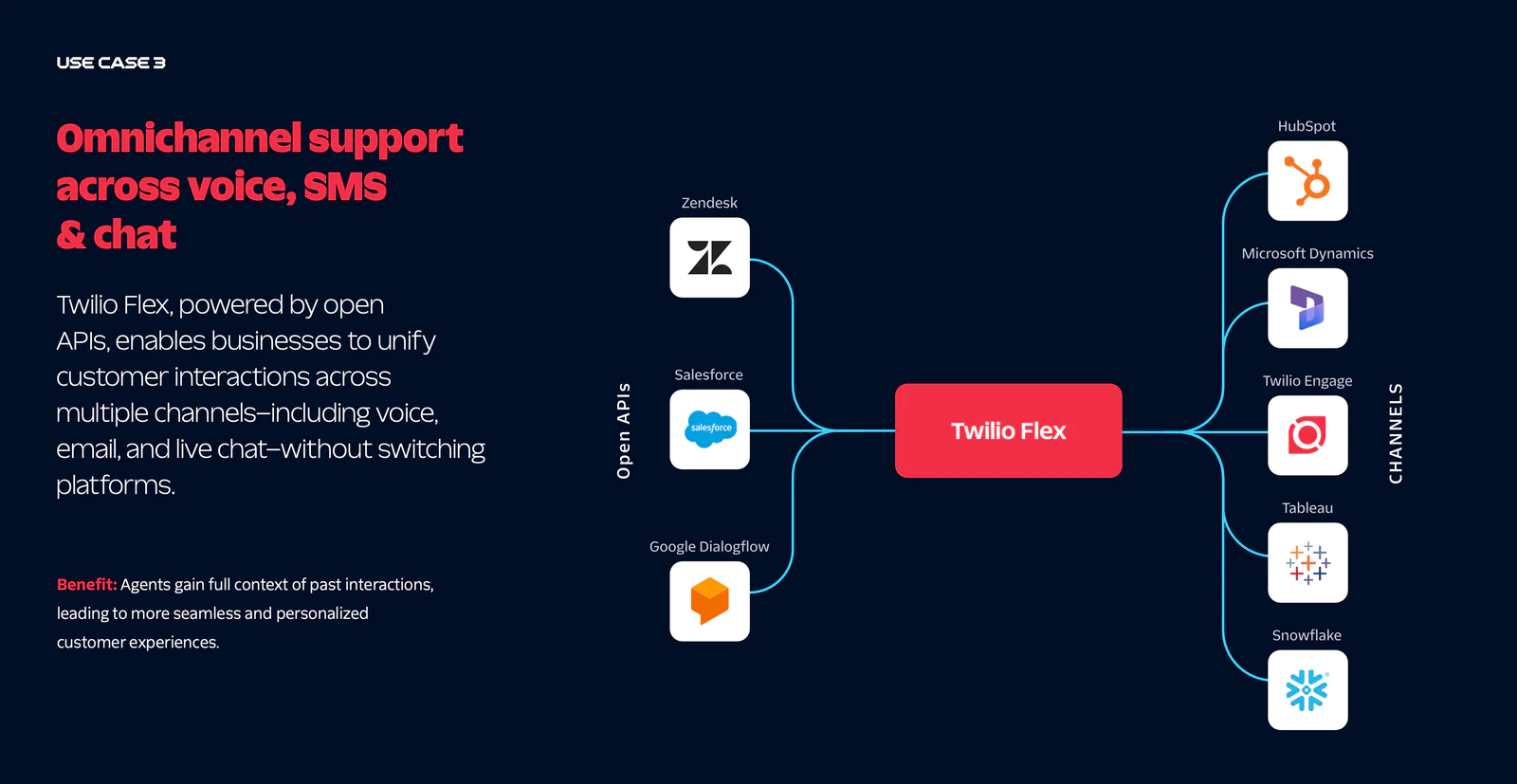
Replacing your tech stack when needing to find solutions to new business challenges can be costly and time-consuming. Instead, enhancing your current tools is a more cost-effective approach that delivers faster results. By integrating new features like chatbots and virtual assistants, smart routing, and near real-time comprehensive analytics (qualitative: Voice Intelligence and quantitative: Voice insights) with your existing software, teams can immediately benefit without the need for long onboarding periods or major disruptions. Customer experience teams can continue working with the systems they’re familiar with, while also gaining access to new capabilities. This approach offers scalability, allowing businesses to add features as needed without committing to a full system replacement.
Unlocking more use cases with open APIs
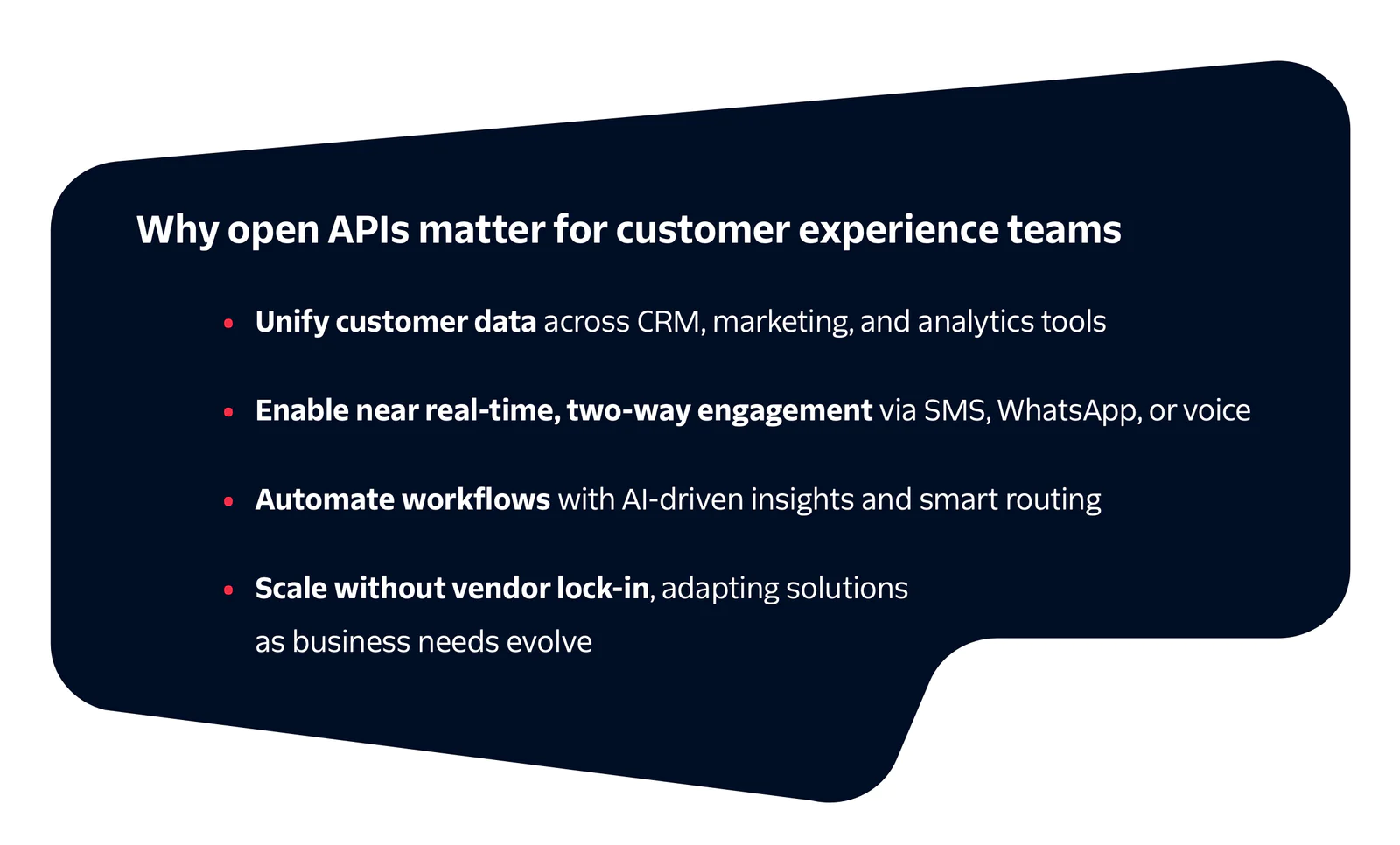
Open APIs (Application Programming Interfaces) give customer experience teams the flexibility to integrate, customize, and scale their tools without being locked into rigid systems. By seamlessly connecting platforms, they break down silos, automate workflows, and personalize customer experiences.
However, not all APIs are truly open—many limit customization and restrict use cases. A true open API, like Twilio’s, integrates seamlessly with any tech stack, offering full developer control without platform lock-in. This modular approach enables businesses to orchestrate omnichannel customer journeys—whether through messaging, voice, email, or customer data—ensuring a consistent and personalized experience at every touchpoint.
Avoid closed API pitfalls
Some vendors claim to offer open APIs but impose restrictions that limit integration and innovation. When evaluating solutions, ask whether full customization is possible, or are features locked behind approvals. Does the API support near real-time data sharing and automation? And can it scale with my business, or does it force predefined workflows?
Twilio’s open API approach
Unlike rigid, pre-packaged solutions, Twilio’s APIs are fully modular and composable. Businesses can build custom engagement solutions that integrate effortlessly into existing systems—ensuring flexibility, interoperability, and long-term scalability.