How AI-Powered Support and Sales Workflows Help Brands Win During Peak Shopping Season

Introduction
The Cyber Week Revenue Challenge
High-traffic periods like Cyber Week are the ultimate real-time test of brand affinity, conversion speed, and operational resilience. The moment Black Friday hits, millions of shoppers flood digital channels simultaneously. Every promotional broadcast and cart recovery sequence triggers a massive wave of inbound inquiries, and a single delayed shipping update or fragmented support interaction is all it takes to lose a sale to a competitor.
Winning peak season requires intelligent, automated workflows that convert high-intent shoppers and eliminate friction in real time. This guide details how leading brands deploy AI-driven workflows across two core use cases to protect holiday revenue and scale operations smoothly, all without exponentially increasing seasonal headcount:
-
Multichannel Inbound Self-Service IVR/IVA
-
Intelligent Contextual Handoff
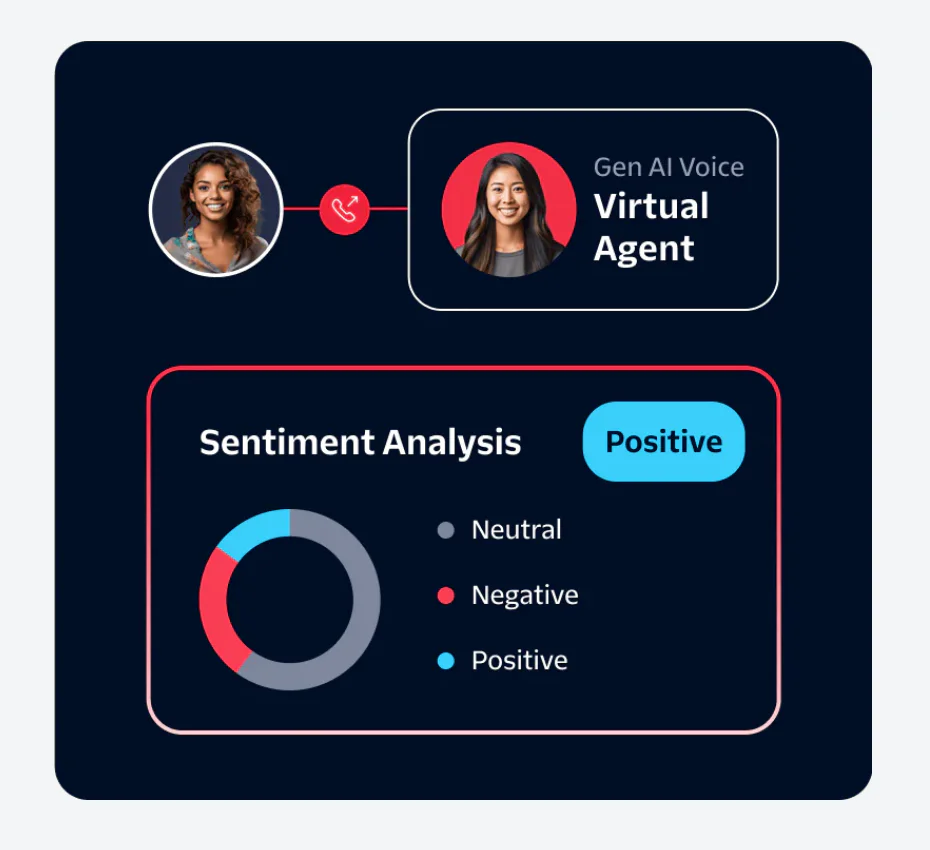
At the center of both workflows is real-time conversational intelligence. By pairing Gen AI Virtual Agents with live customer analytics, such as ongoing sentiment tracking, brands can monitor customer satisfaction as interactions happen, ensuring high-value shoppers receive empathetic, effective care even during the highest volume spikes.

For Developers
Are you building the underlying technical infrastructure?
If you're an architect, systems engineer, or developer building for peak seasonal surges, check out our companion guide: Cyber Week Readiness: A Developer's Guide to Scalable Comms.
How Twilio Bridges the Gap for Multichannel Self-Service
Pre-built AI agents are designed to handle individual conversations well, but they lack cross-channel history and customer profile data because that isn’t their underlying infrastructure. Twilio connects your AI runtime to everything known about that customer before the agent says hello.
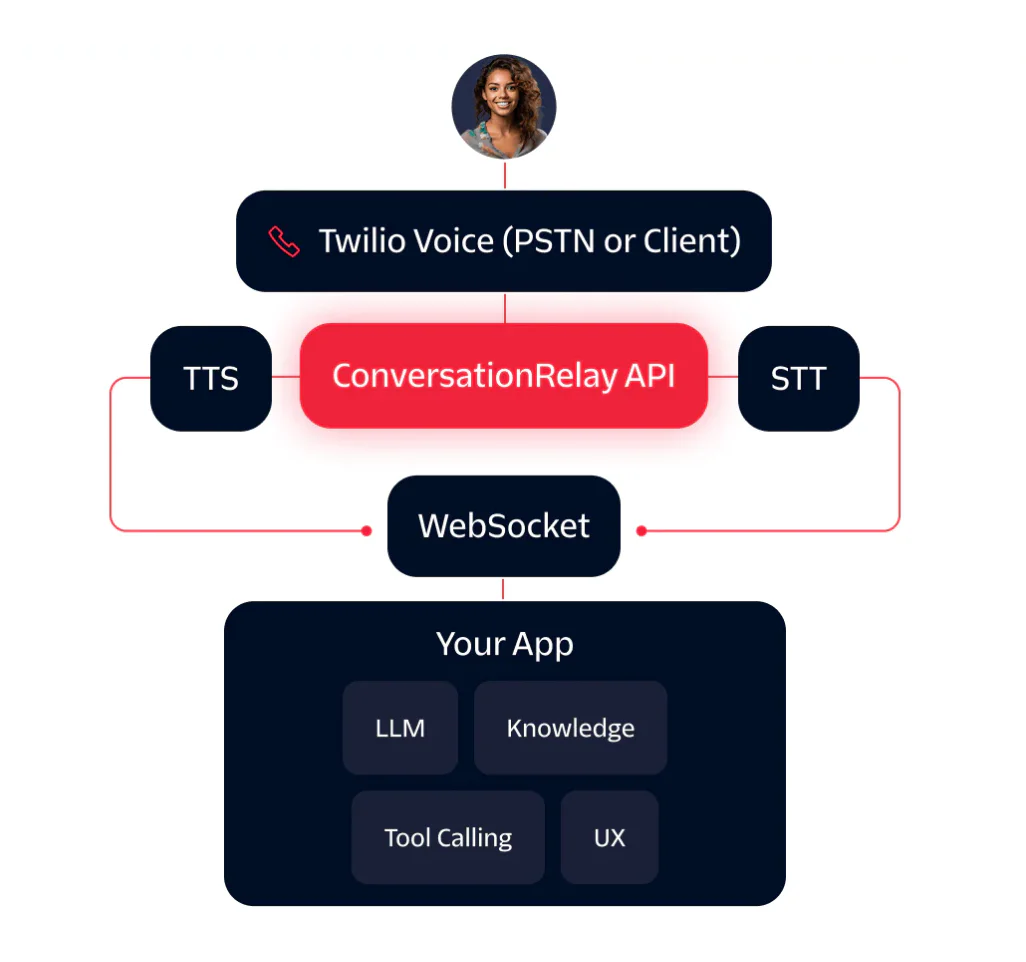
1. Deploy across channels with Agent Connect + Conversation Relay
Connect customer-selected AI agents to supported Twilio voice and messaging channels, with flexibility across models, speech providers, and agent environments. Conversation Relay abstracts real-time voice complexity by managing low-latency streaming, turn-taking, and interruption handling out of the box.
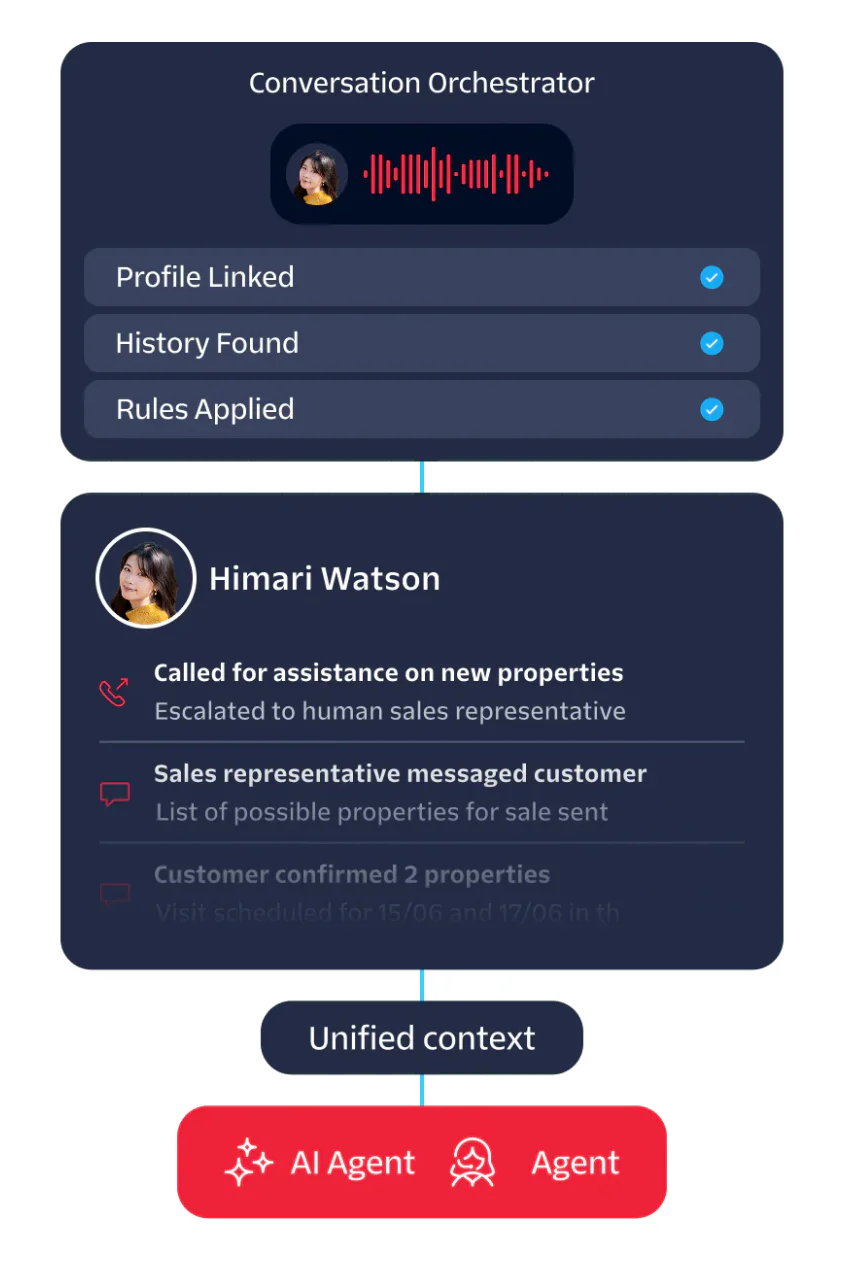
2. Unify customer journeys with Conversation Orchestrator
Maintain a single, unbroken conversation timeline across touchpoints. If a Cyber Week shopper starts in chat and transitions to a phone call while running errands, Twilio Conversation Orchestrator carries the full state forward so the customer never hears, "Can you state the reason for your call?"
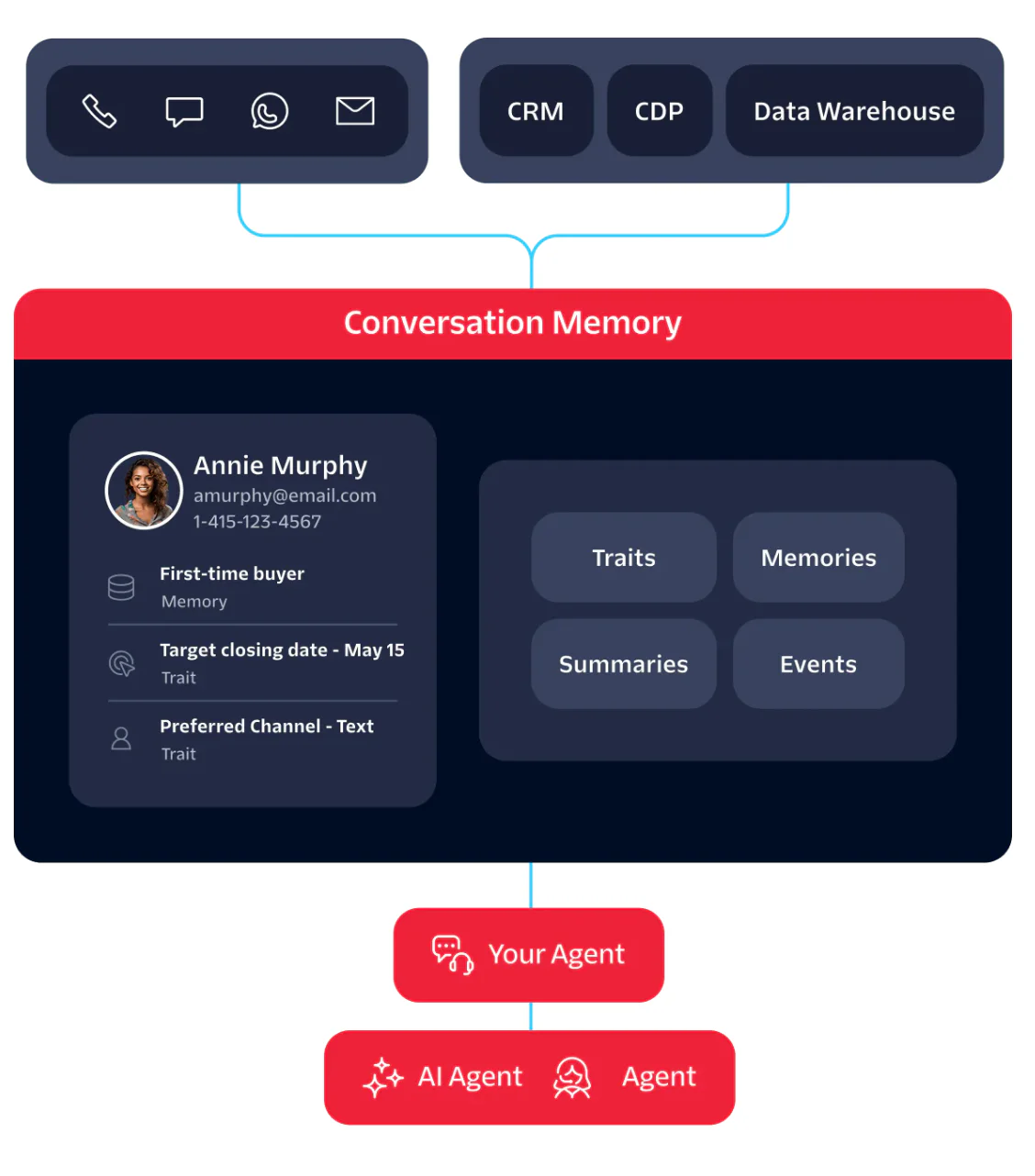
3. Personalize responses with Conversation Memory
Empower your agent with durable customer context. Twilio Conversation Memory synthesizes CRM traits, previous order history, explicit preferences, and past AI-generated observations to deliver personalized responses immediately upon connection.
How Twilio Bridges the Gap for Contextual Handoffs
While third-party AI platforms (such as Microsoft Copilot or Sierra) can only pass what happens within their own isolated bot sessions, Twilio sits in the communications path and helps preserve context across supported channels, agents, and handoffs. This ensures total context preservation across every channel, bot runtime, and human desk.
1. Standardize escalations and cross-channel handoffs with Conversation Orchestrator
Standardize AI-to-human escalation across your entire stack using a single, structured Escalation Tool Call. When the AI determines human intervention is needed, it packages essential metadata, including issue_type, reason_code, conversation_id, and profile_id, ensuring a lossless transition to the support queue.
2. Enrich handoffs with Conversation Memory
Unify every interaction into a persistent, chronological ledger. Conversation Orchestrator tracks the full journey, while Conversation Memory enriches the payload with customer traits, lifetime value, and previous interaction history.
When the transfer occurs, Twilio automatically synthesizes the bot's attempt into a concise AI conversation summary. The receiving human agent instantly sees why the customer is calling, what failed, and how to resolve the issue without asking a single repetitive question.
Cyber Week
Operational Guardrails: Accuracy, Tone, & Compliance
While AI serves as a powerful revenue engine during peak surges, it must operate within strict parameters. Unchecked AI outputs during high-stakes sales can lead to unauthorized discounts, inaccurate shipping promises, or brand reputation damage. To protect your brand equity when traffic spikes, deploy these three core operational guardrails:

-
Version-Controlled Prompting
Manage system prompts, return policy parameters, and discount logic inside source-control systems. This ensures AI agents strictly adhere to active promotional rules and prevents them from offering outdated terms or hallucinated discounts.
-
Strict Schema Validation
Intercept model outputs with automated schema validators before they reach the customer. This guarantees that every automated response includes required legal disclosures, accurate delivery windows, and compliant opt-out formatting across all messaging channels.
-
Deterministic Fallback Triggers
Set model outputs with automated schema validators before they reach the customer. This guarantees that every automated response includes required legal disclosures, accurate delivery windows, and compliant opt-out formatting across all messaging channels.
Customers remain responsible for their agent logic, prompts, policies, and business rules. Twilio complements those controls by providing conversation-level context, traceable insights, and handoff signals across supported interactions.
Unified CX Analytics: Monitor real-time performance metrics, including containment rates, escalation ratios, Average Handle Time (AHT), and conversation-driven revenue across chat, SMS, WhatsApp, and voice from a single dashboard.
Pre-Holiday Load & Stress Testing: Run simulated peak-volume dress rehearsals in late October. Testing synthetic traffic spikes validates end-to-end response speeds and ensures real-time data sync between your AI orchestration layer, inventory databases, and messaging APIs.
War Room Agility: Empower marketing and CX leadership to make instant, pre-approved workflow updates during live promotional events. This allows teams to push real-time updates for shifting shipping cutoffs, sudden flash sales, or unexpected stock shortages without re-deploying underlying code.

Conclusion
Turning Peak Surges into Long-Term Loyalty
Winning peak season isn't about inflating seasonal support headcount or blasting unsegmented discount codes. It is about orchestrating intelligent, context-aware workflows that assist, convert, and retain high-intent shoppers the second they arrive.
By unifying multichannel self-service, intelligent contextual handoffs, and rigorous operational guardrails, forward-thinking brands turn chaotic holiday traffic into a streamlined, high-converting customer experience. In doing so, you do not just capture immediate Cyber Week revenue, you build the foundation for long-term customer loyalty.
Ready to Scale Your Cyber Week Revenue?
Don’t let fragmented channels or peak support volumes stand between you and holiday conversions. Connect with a Twilio Sales rep today to see how our autonomous AI solutions can help you deliver seamless, high-converting customer experiences when it matters most.