Cyber Week Readiness: A Developer's Guide to Scalable Comms
Time to read:
October 13, 2026
Written by
Reviewed by
Cyber Week – A Developer's Guide
Cyber Week isn't just a retail holiday – for developers, it's the ultimate real-time stress test of your system architecture.
Midnight hits on Black Friday, a million carts convert in unison, and every event pipeline, API integration, and webhook receiver you own is suddenly absorbing months of traffic inside a 72-hour window. One dropped call or misplaced message, and a customer's holiday shopping experience is gone… possibly to your competitor. And whether you're handling Black Friday cart conversions, Q1 tax filing surges, open enrollment deadlines, or holiday travel booking spikes, the fundamentals are the same: the systems that quietly keep up during a routine Tuesday are the ones that buckle without strategic planning, proactive scaling, and the right tools instrumented and rehearsed long before the surge hits.
Whether you’re new to developing your comms stack for Cyber Week or want to make sure you've thought of all the options to bolster your architecture for peak seasonal shopping, we’ve got you covered in this guide. I’ll walk you through the six areas most likely to buckle under holiday load – and the Twilio products that give you a running start on each. From SendGrid for high-deliverability email, to Programmable Messaging and Voice for reach, to Verify and Lookup for fraud defense, you've got building blocks for every layer – and every season.
Understanding Cyber Week: A Developer's Perspective
Building for Cyber Week goes beyond knowing a spike in online traffic (and sales!) is coming. It means preparing for increased server loads, potential downtime risks, and comms channels that have to keep standing up under load. As you review and revise your systems and applications, focus on these five key areas:
- Optimizing APIs
- Warming systems and scaling to meet increased traffic needs
- Customizing communication where it counts
- Utilizing AI to help streamline processes
- Being proactive with troubleshooting and monitoring
We'll walk through each of these in this guide and share practices for building resourcefully towards Cyber Week.
Optimizing APIs and systems for scalability
If your business exposes an API, requests might surge exponentially during Cyber Week – and without careful management, delays or outright failures become inevitable.
Optimizing your API performance is what keeps interactions seamless and customer experience intact. A good place to start is rate limiting and caching mechanisms that absorb sudden spikes and reduce the strain on your servers. Layer in traffic shaping at the edge so bursty clients get shaped rather than dropped, and return 429 responses with a Retry-After header so well-behaved integrations back off gracefully instead of hammering you into a deeper hole.
Traffic spikes aren't just an inbound concern – the volume of outbound comms your application sends leading up to and through the week can strain the same infrastructure. Scale your infrastructure proactively to accommodate peak load, and know your strategy to make outbound API calls to your downstream service providers before the surge hits, not after your first crash.
Enhancing Customer Communication
The sheer volume of inbound and outbound comms can quickly create noise and fatigue for your customers.
Being strategic about what your communications say and when they go out often decides which brand actually leaves the biggest impression. Preliminary ads and promo blasts are only the opening move – order-status updates, special offers, and transparent outage notifications are what build trust and repeat engagement. Whether over SMS, voice, or email, the ability to both send and receive comms at the moments that matter is what makes or breaks your customer's Cyber Week experience.
Without proper domain authentication and strategic preparation, even the most robust architecture risks having critical emails flagged as spam during high-volume periods. Mailbox providers scrutinize delivery speed and domain credibility, which makes early IP warmup essential. Gradually increasing daily send thresholds prevents sudden spikes from tripping defensive filters, and configuring your Sender Policy Framework (SPF), DomainKeys Identified Mail (DKIM), and Domain-based Message Authentication, Reporting & Conformance (DMARC) records ensures reliable delivery to recipient inboxes – non-negotiable requirements for bulk senders under Gmail and Yahoo's recent inbox rules!
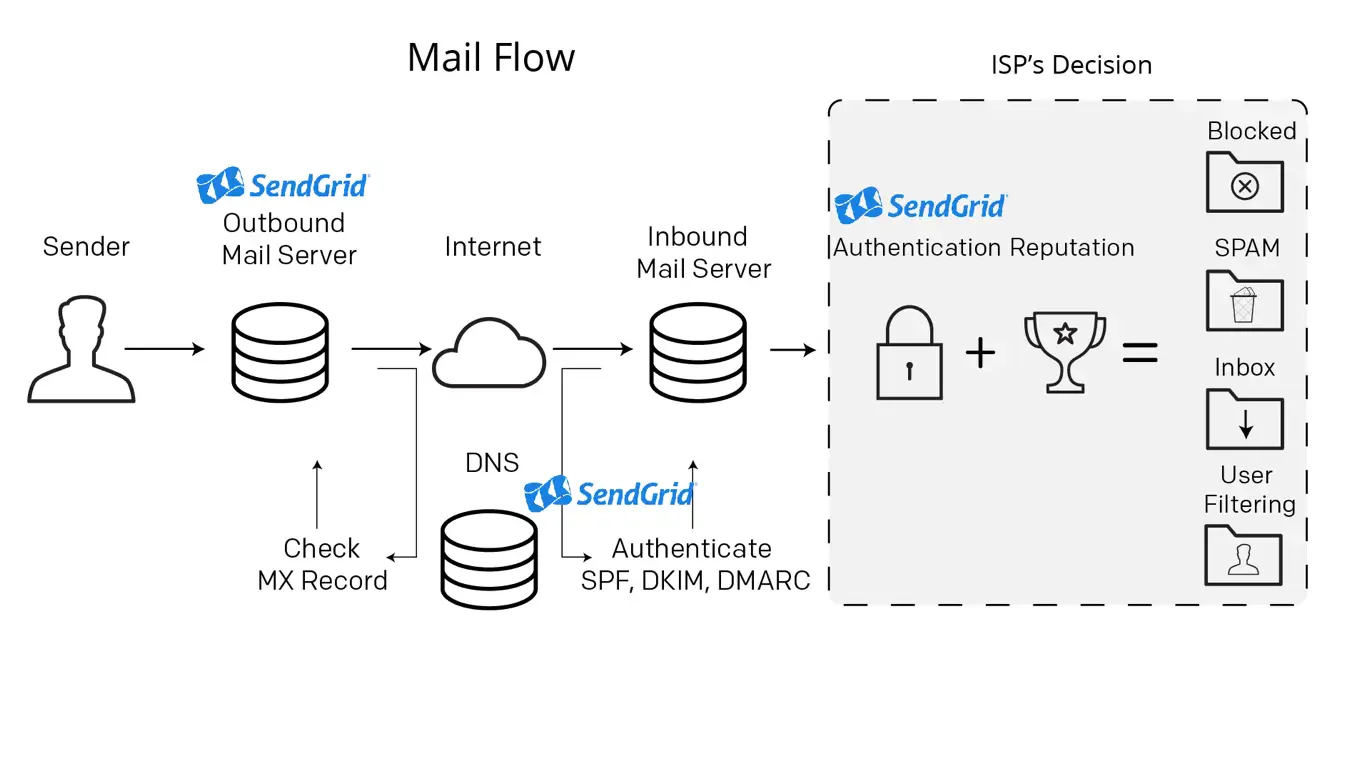
Maintaining inbox placement when volume doubles overnight takes planning that starts weeks before the sale goes live. Limit holiday promotional segments strictly to customers who have engaged in the last 30 to 90 days so you don't trigger spam traps or tank your sender reputation. To keep complaint rates low, make sure every email you send delivers something meaningful to the recipient and does your reputation justice.
Voice
During Cyber Week, a failing voice pipeline means stranded support teams and frustrated customers left on hold. To handle massive caller influxes without dropping connections, set fallback URLs and increase your <Queue> resource's maxSize parameter if you expect a lot of concurrent callers. Most importantly, remember that voice scaling requires proactive capacity planning – know your expected Calls Per Second (CPS) quota weeks before Black Friday, and scale up ahead of time to handle the high call volumes you're forecasting.
Add step-up authentication when a caller wants to change a shipping address or trigger a refund — the goal is to raise the challenge for risky actions without adding friction to safe ones.One way to do that is with a Silent Network Authentication (SNA). SNA checks can confirm the call is actually coming from the phone tied to the account without making the customer type a code, and it falls back to a one-time passcode over SMS or email if it can't.
Register your caller IDs with STIR/SHAKEN attestation so your legitimate calls land with the verified checkmark instead of getting flagged as spam, and set up geo-permissions to disable calling to premium-rate international destinations you don't actually do business in. Done right, your voice stack turns fraud prevention from a reactive scramble into a set of quiet guardrails that let your real customers through in seconds and slow the bad actors to a crawl.
Messaging
It's important that messages get to the customers who need them – obvious on (digital) paper, harder in practice. Whether you're sending over SMS, MMS, or RCS, which numbers can receive your messages and what those messages contain matter equally. As with voice and email, invest time upfront in filtering out numbers that can't receive them (i.e., landlines, invalid formats, opted-out recipients, spam) – every send to a bad number is a failure metric that can drag down your reputation with carriers.
Watch your messaging queues, and lean on Messaging Insights to understand what's actually landing. Timing and frequency both play a huge role in customer sentiment and brand reputation – and with dozens of Cyber Week campaigns competing for attention, what a customer ultimately clicks on comes down to which message caught their eye at the right moment.
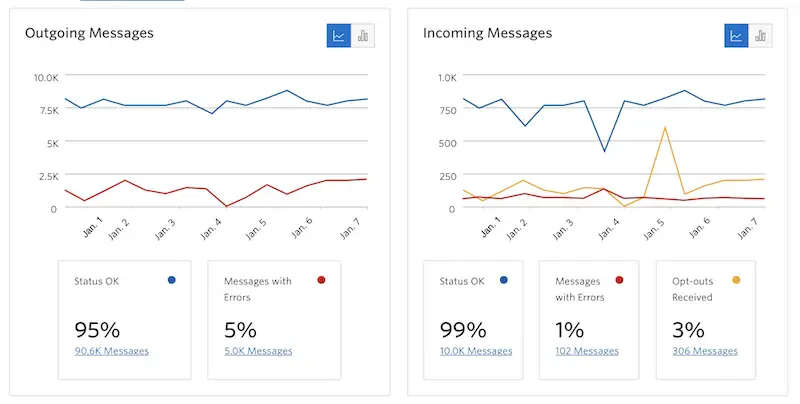
Know your expected Messages per Second (MPS) before Black Friday, and stay mindful of regulatory thresholds (like a throughput tier assigned to 10DLC campaigns, for example) and peak-window throttling. A useful rule of thumb: divide your expected peak send volume by your available MPS to calculate your minimum drain time. If that number is longer than the window your message is relevant in, you don't have a send problem — you have a scheduling problem.
Like with email and voice, build with fraud in mind. A common attack pattern is SMS pumping, where fraudsters exploit a phone-number input field to trigger one-time passcodes, app-download links, or any other outbound SMS. Phone verification and two-factor authentication (2FA) flows are the most commonly abused vectors — protect them with rate limits, CAPTCHA challenges, and country-level restrictions before Cyber Week traffic hits.
Incorporating AI
AI can be a force multiplier during Cyber Week – but only if you treat it like every other piece of production infrastructure.
Start by scoping where AI actually earns its keep: perhaps that’s with subject-line and preview-text generation for emails or real-time triage of inbound emails, calls, or messages. Wherever you plug in an LLM, put a deterministic system in front of it: brand-guideline prompts checked into version control, output validators that reject anything missing a required disclosure or unsubscribe link, and clear handoff steps to a human-in-the-loop for anything customer-facing. When the scenario goes beyond what the agentic model can reasonably handle, the escalation path has to be built in from day one.
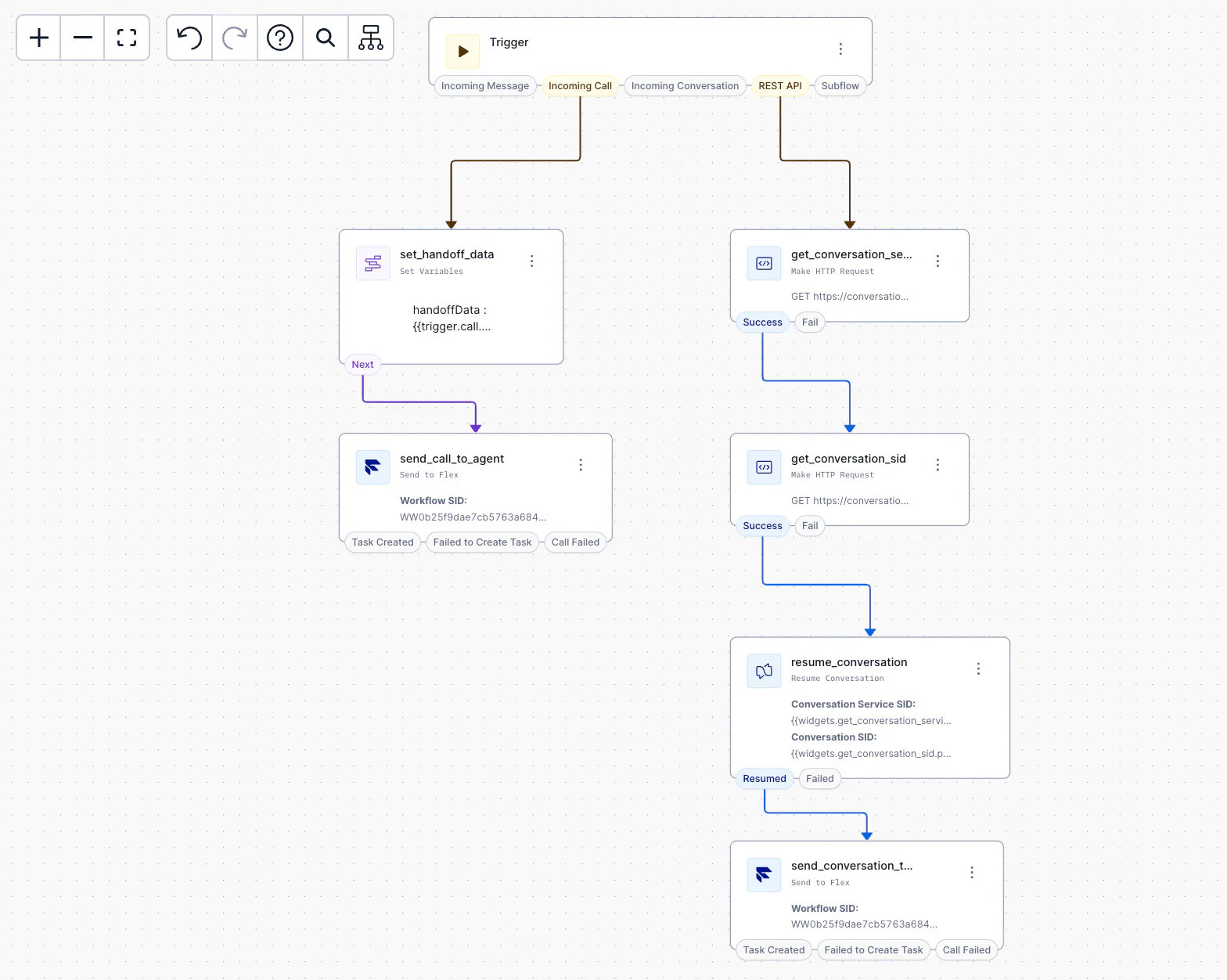
For email, cache aggressively and rate-limit your model calls the same way you rate-limit your email service provider – that way your token budget is available when it's needed most, during the spikes that actually matter.
For voice and SMS, an AI-powered chatbot or voice agent can absorb the load to lessen pressure on your human support team. For inbound calls and messages, a conversational voice agent or SMS bot can greet every contact, classify intent in the first turn, pull order context from your commerce backend, and either resolve the issue outright or hand off to a human with a clean summary already attached – enough leverage to soak up a 5–10x volume spike without a 5–10x headcount spike. When sending outbound messages, emails, and calls, LLMs let you personalize at a scale static templates never could: shipping-delay texts that adapt their tone to the customer's history, proactive voice callbacks for cart-abandoners in their preferred language, messaging threads that answer stock questions against live inventory.
Wrap all of your AI features in the same guardrails you'd put on a payments system:
- Versioned prompts checked into source control.
- Strict output schemas so the model can't hallucinate a refund amount.
- Deterministic human fallback the moment confidence drops.
- Per-customer rate limits so a runaway loop can't call or text the same customer twenty times.
Done right, AI during Cyber Week isn't a novelty layer bolted onto your comms stack – it's the thing that lets development teams ship at the scale and quality that used to require a war room.
Monitoring and troubleshooting
Continuous monitoring and proactive troubleshooting are what let you catch performance issues and resolve errors quickly enough to keep operations seamless through Cyber Week. Set up real-time alerts for API failures, system downtime, AI observability and monitoring, and abnormal traffic patterns. Monitor key performance metrics and logs so you can pinpoint and address issues before customers feel them.
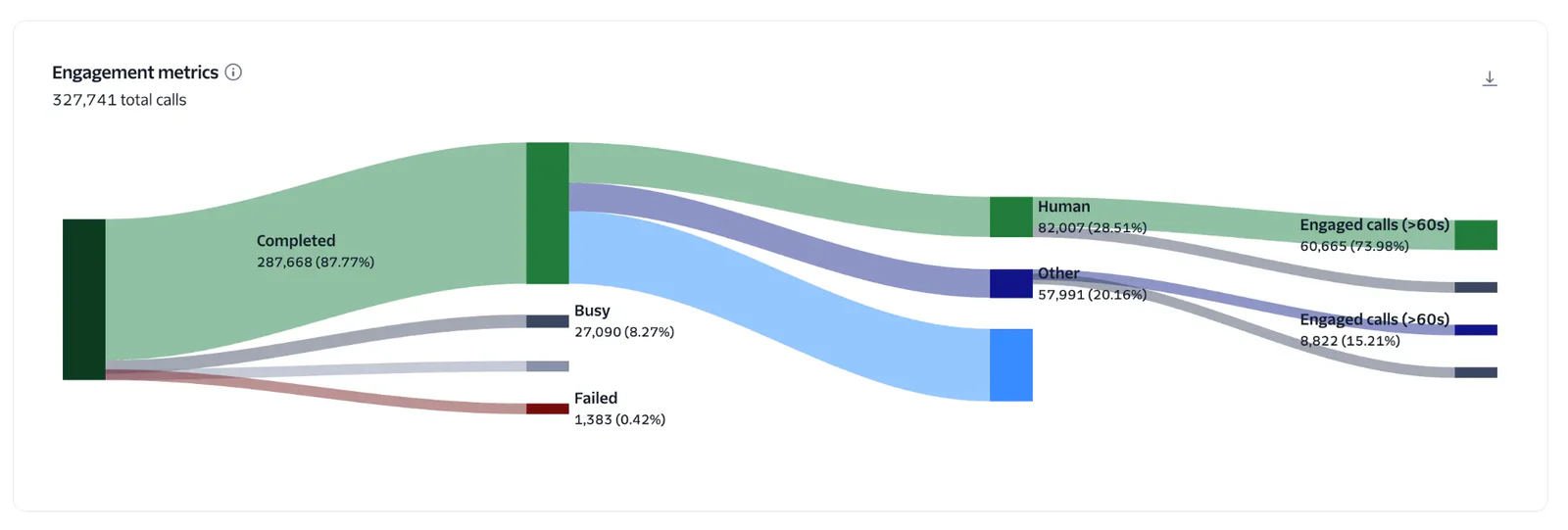
Attach a single correlation ID to every customer touchpoint so one query can pull the email, SMS, and voice trail together. Build one unified comms dashboard – a so-called single pane of glass – rather than three silo'd ones, split by transactional vs. marketing traffic class so on-call engineers know what to actually wake up for. Define per-channel metrics that map to real customer experience – end-to-end p95 latency, delivery ratio, error-code distribution, and queue drain time – and alert on trend changes rather than static thresholds. Ingest any provider webhooks into a durable stream that you can query 90 days later, and build a reconciliation job that flags the most dangerous failure mode of all: messages that were queued but never resolved either way.
Just as important as the monitoring is the rehearsal. Pre-write runbooks for every alert with diagnose / mitigate / escalate sections, and run a game day in late October where you deliberately break parts of your infrastructure to see where you might have issues with your primary email, SMS, and/or voice provider.
Tighten usage-trigger thresholds so a stolen key or runaway loop gets caught in hours instead of days, and pipe support-ticket keywords into your monitoring stack – customers will spot delivery-into-spam issues your dashboards miss.
And if you do have an incident during Cyber Week? Make sure one person timestamps every observation and action into a shared log so late-joiners don't need to be re-briefed, and within a week of Cyber Monday, run the retro while that pain is still fresh. Remember: Cyber Week doesn't invent new failure modes, it compresses a year's worth of them into 72 hours. Every minute you shave off the loop between something broke and someone knows exactly what to do is a minute your customers never feel.
Closing Thoughts
Building for Cyber Week can feel like an uphill battle, but knowing what to build, how to build it, and where to monitor and troubleshoot it turns traffic spikes, provider hiccups, and inevitable failures into routine events your systems already know how to absorb. These patterns don't retire on December 1st, either — whether your next surge is Q1 tax filing, open enrollment, holiday travel bookings, or a feature launch that unexpectedly hits the front page of Hacker News, the same observability, fault-tolerant design, and ruthless prioritization carry over. When something does break, your team knows exactly where to look — past incidents are a page in the runbook, not a mystery to solve again. Treat reliability as a feature rather than an afterthought, and your applications don't just survive the chaos – they convert calmly and consistently while your competitors are firefighting.
Related Links:
- How AI-Powered Support and Sales Workflows Help Brands Win During Peak Shopping Seasons
- June 2026 Fraud Update
- High Volume Messaging Solutions Guide
- Staying Safe on Cyber Monday
Esther is a Technical Content Strategist with 6 years of documentation experience across a variety of software models and deployment types. Her main focus is creating content that boosts customer education and enablement. She can be reached at ebalta [at] twilio.com.
Related Posts
-
 AI-powered agents for contact center in Australia: containment quality, not deflectionAliakbar Lokhandwala
 -
AI-powered agents for contact center in India: what they can and cannot doAliakbar Lokhandwala
-
AI-powered agents for contact center in Philippines: what the term actually meansAliakbar Lokhandwala
Related Resources
Twilio Docs
From APIs to SDKs to sample apps
API reference documentation, SDKs, helper libraries, quickstarts, and tutorials for your language and platform.
Resource Center
The latest ebooks, industry reports, and webinars
Learn from customer engagement experts to improve your own communication.
Ahoy
Twilio's developer community hub
Best practices, code samples, and inspiration to build communications and digital engagement experiences.