How Conversation Memory works
-
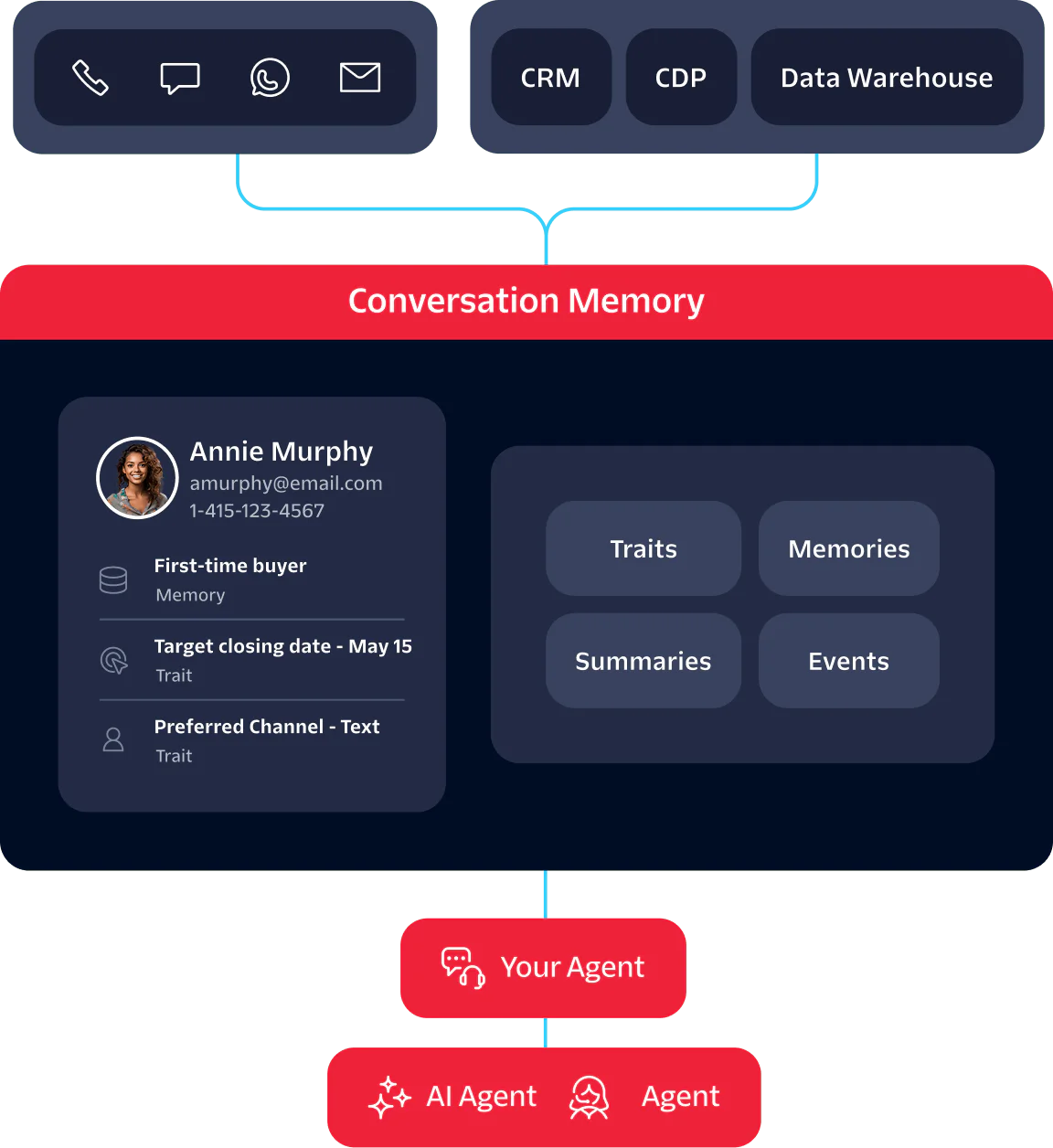
Capture signals from every conversation, across every channel.
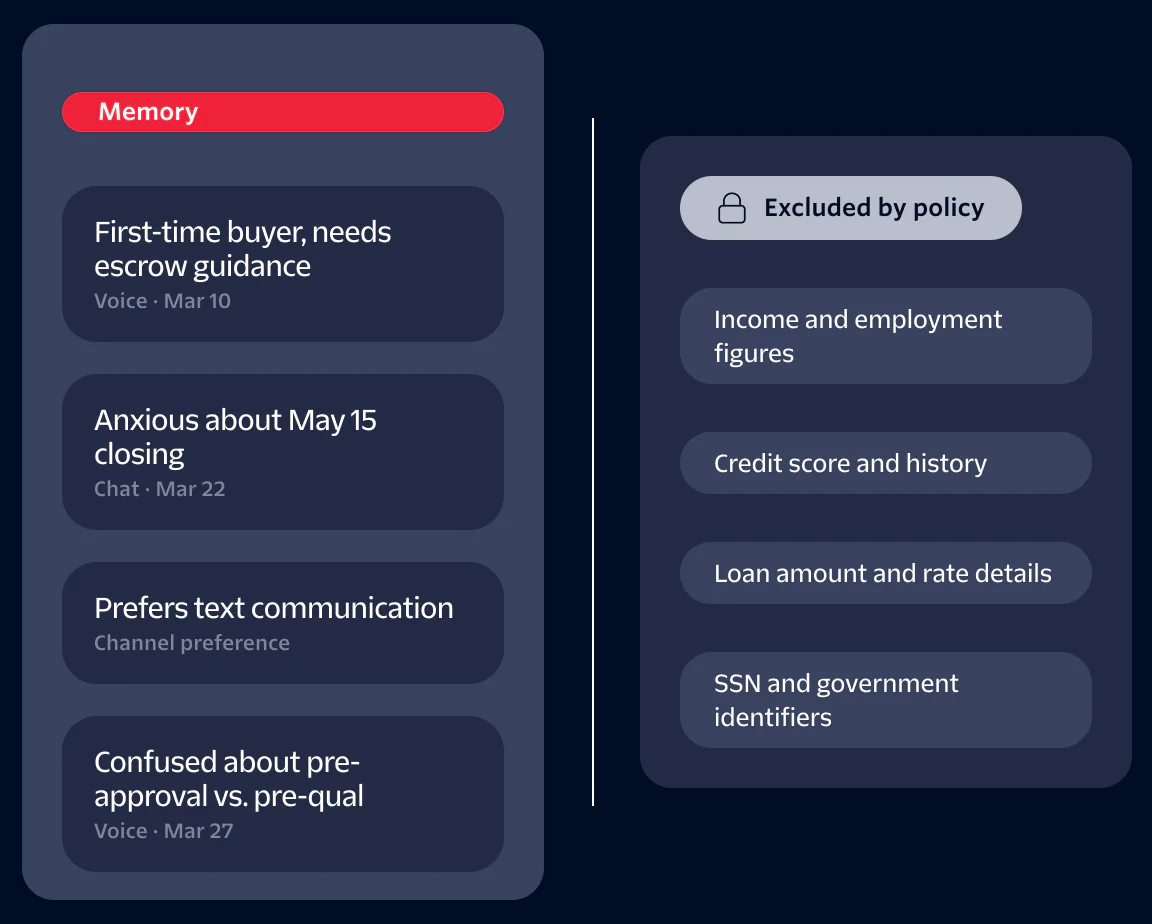
Voice, SMS, chat, and more. Conversation Memory processes each interaction to extract preferences, behaviors, and context that matter for customer conversations.
-
Continuously refine what you know.
New memories are reconciled against existing ones, so agents always see the latest, most accurate view of the customer profile.
-
Surface the right context for the next interaction.
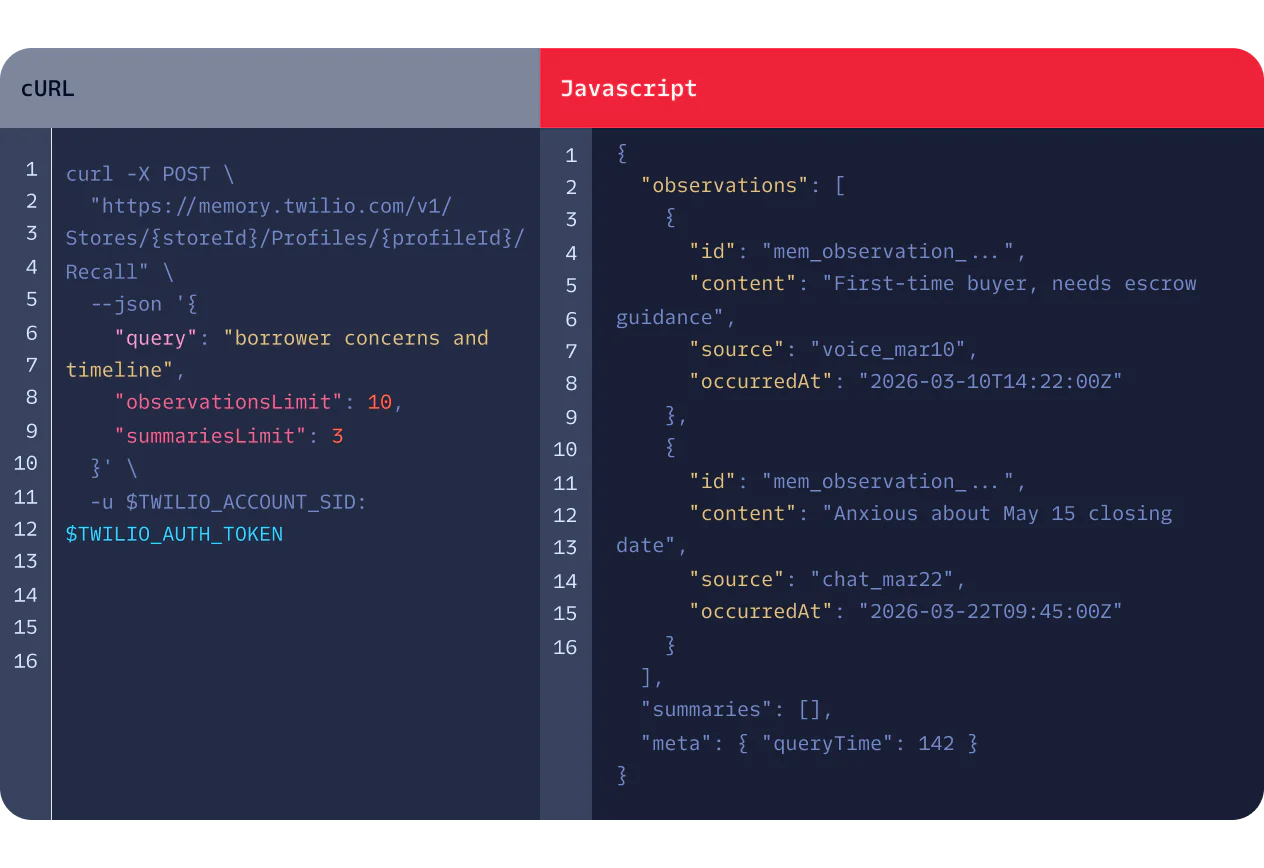
The Recall API uses semantic search to deliver the most relevant memories, summaries, and traits, whether the next agent is human or AI.
-
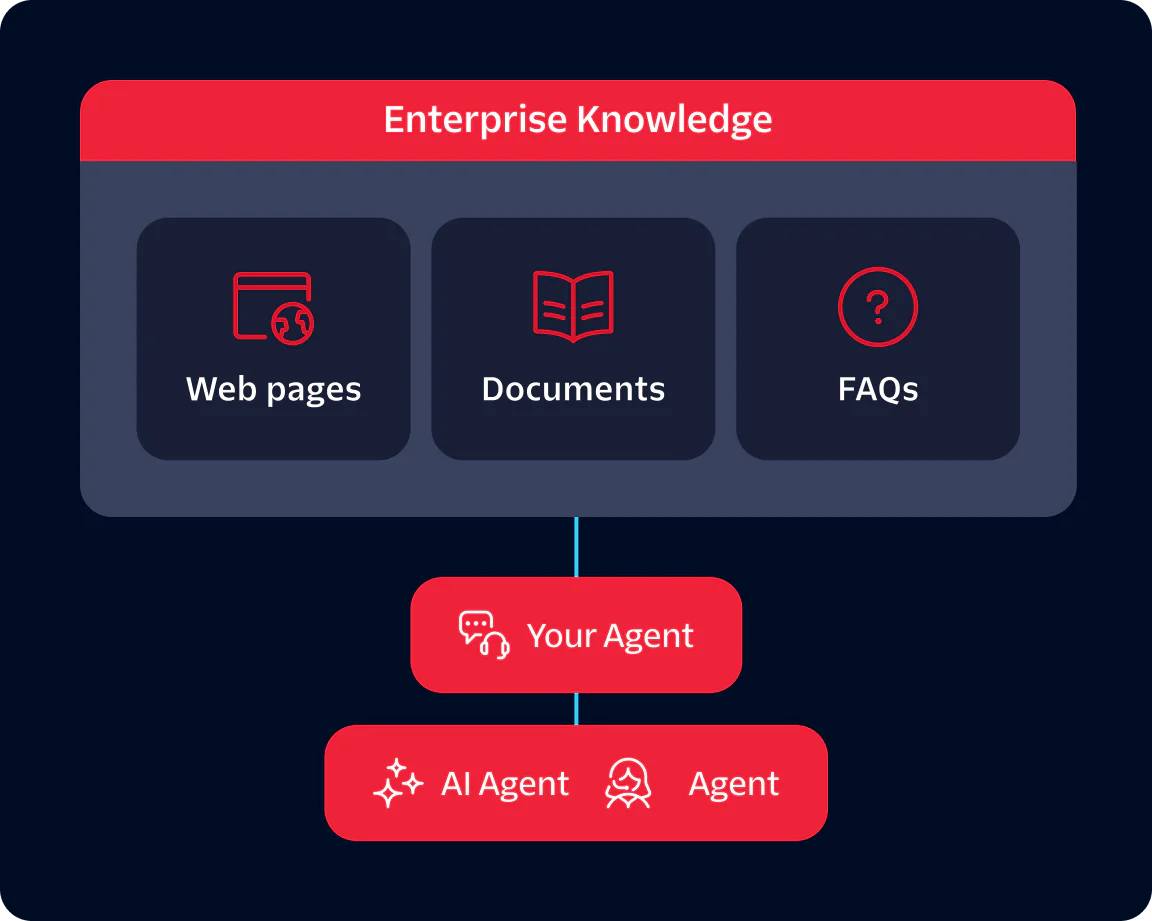
Ground every response in trusted business knowledge.
Connect to Enterprise Knowledge to index FAQs, policies, product docs, web pages, and more for fast, accurate retrieval.
How Enterprise Knowledge works
-
Index the content that drives every interaction.
FAQs, policies, product docs, and web pages are processed into searchable chunks, so agents always have access to the right information.
-
Retrieve what's relevant, not everything at once.
Intelligent search surfaces only the most accurate, applicable content for each question, keeping responses grounded in facts your team has approved.
Create continuity for every customer
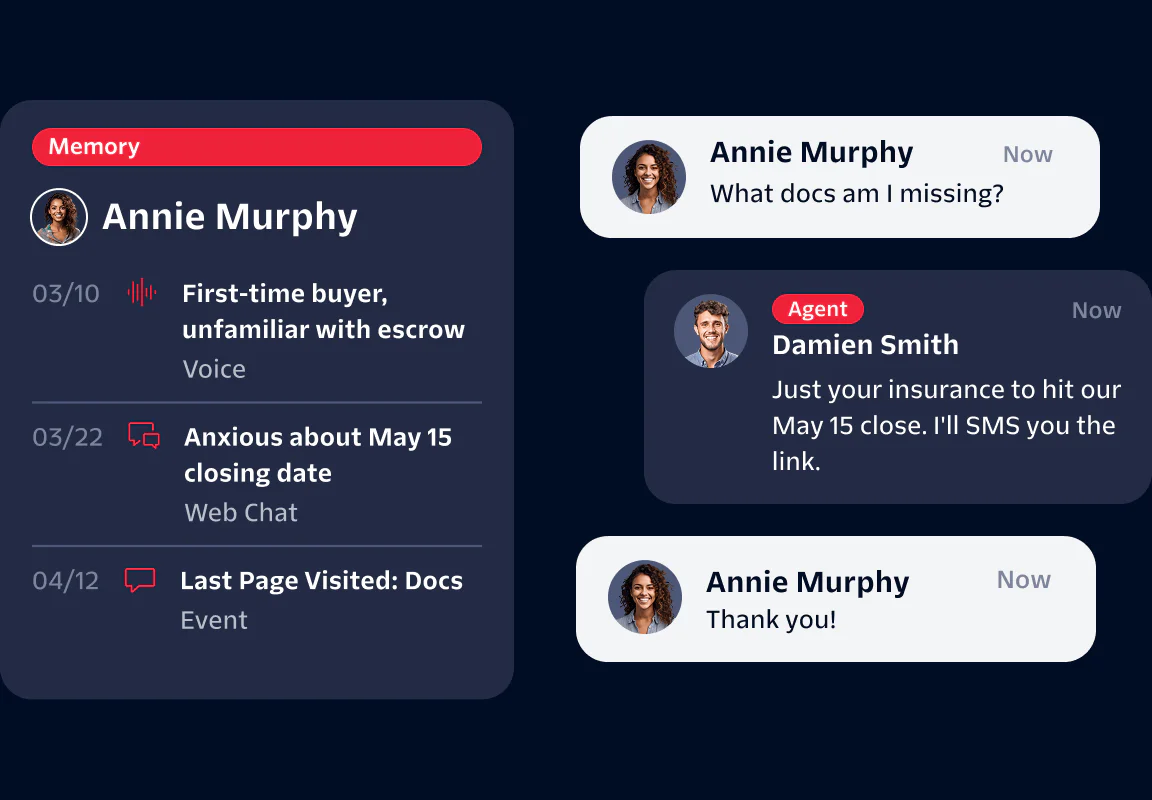
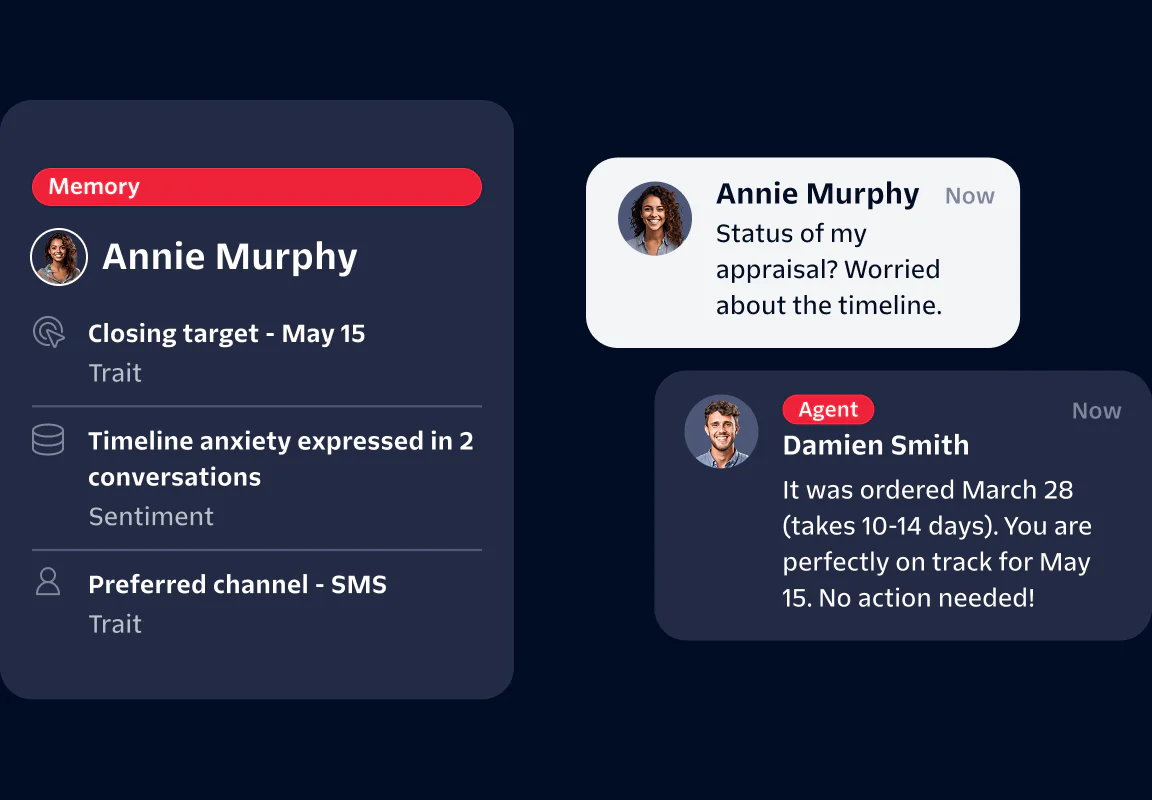
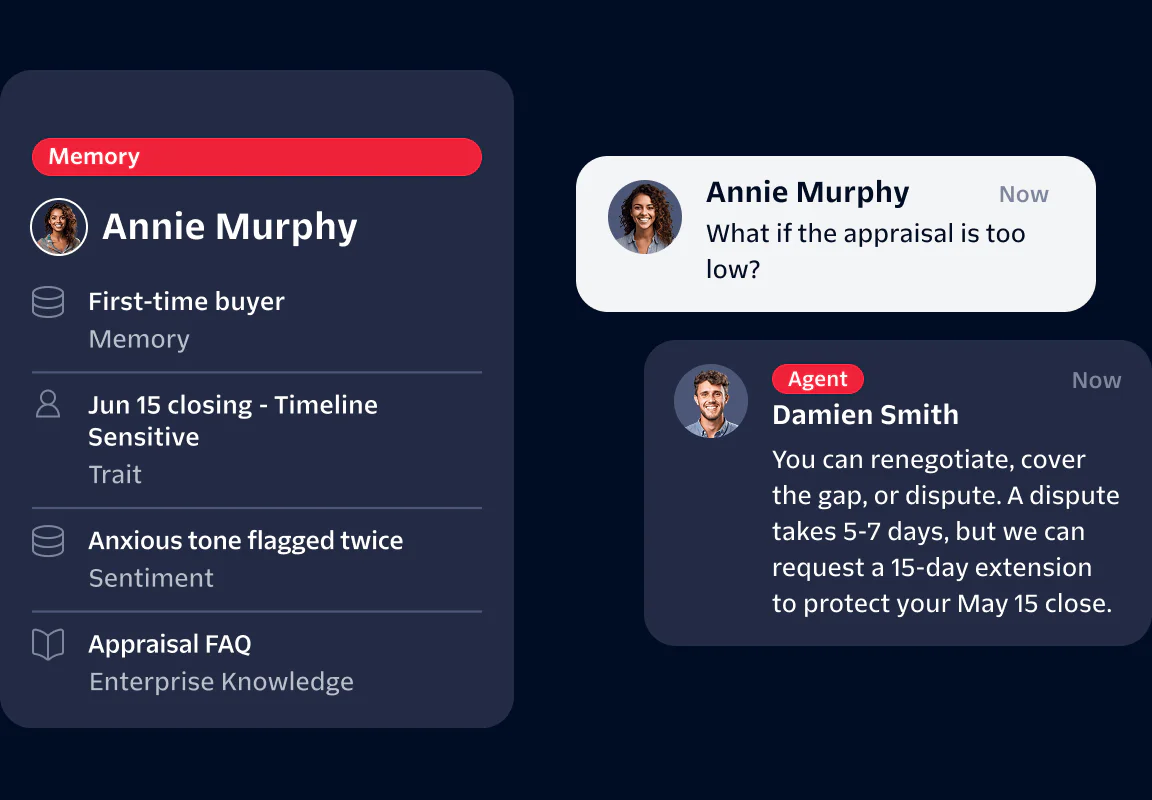
Ensure every interaction builds on the last, so customers don’t have to repeat themselves.
-
Start every interaction with full context
Surface what was discussed, what was promised, and what still needs resolution.
-
Reduce handle time and customer frustration
Skip repetitive questions and move directly to solving the issue.
-
Carry context across voice, chat, SMS, and more
Ensure every interaction reflects the customer’s full history with you.
Conversation Memory features
-
Observation extraction and profiles
Extracts observations from every conversation and builds a unified customer profile with identity resolution—so agents always have an accurate, evolving view of each customer across channels.
-
Recall API
Uses semantic search across observations, summaries, and traits to surface only the most relevant context – reducing noise, token usage, and errors.
-
Enterprise Knowledge
Indexes policies, FAQs, product docs, and more, so agents respond with verified business facts.
-
Summaries and traits
Capture key conversation outcomes and combine them with structured attributes like tier or location, so that agents see both the story and the data.
-
Memory controls and governance
Define what gets remembered, how it’s stored, and who can access it—with built-in controls for filtering, partitioning, deletion, and traceability.
-
Model portability and integrations
Store memory independently of any AI runtime and connect to systems like Segment, Snowflake, and Salesforce, so your data stays flexible and enriched.

Make every conversation count
Capture, unify, and activate customer memory with a complete system.
Conversation Memory FAQs
Twilio Conversation Memory turns customer conversations into lasting context, so every interaction builds on the last. It extracts preferences, behaviors, and outcomes from each conversation across voice, SMS, and chat, then builds a unified customer profile that any agent (human or AI) can draw on to skip the repeat questions and pick up where things left off.
Twilio Conversation Memory processes every conversation to extract preferences, behaviors, and context, then reconciles new memories against existing ones so the profile stays current across sessions. When the next interaction starts (days or weeks later, with a human agent or AI), the Recall API surfaces the relevant history. The customer never starts from scratch.
Twilio Conversation Memory pairs persistent memory with governance built for enterprise support. You define what gets remembered, how it's stored, and who can access it, with controls for filtering, partitioning, deletion, and traceability. That means per-customer data control and a traceable record of how memory is used, giving support teams continuity without losing oversight.
The Recall API uses semantic search across a customer's observations, summaries, and traits to surface only the most relevant context for the moment. Agents see the specific memories, summaries, and traits behind each interaction, making the context traceable to its source.
A raw vector database stores embeddings, and you build everything else. Twilio Conversation Memory is a complete system: it extracts observations, resolves identity into unified profiles, reconciles new memories against old, and surfaces the right context through the Recall API.
Yes. Twilio Conversation Memory stores memory independently of any AI runtime, so you're not locked in to one model. Bring your own LLM, swap models as you like, and connect to systems like Segment, Snowflake, and Salesforce. Your customer memory stays portable and keeps working across whatever AI stack you run.
Conversation Memory is the context layer for Twilio Conversations. Conversation Intelligence feeds in signals and summaries from live conversations, while Conversation Orchestrator connects interactions across channels, and Enterprise Knowledge grounds agent responses in your approved business content. Together they give every agent shared, persistent context.