Overview

The Connected Government Report

Five Priorities for Public Sector Digital Engagement

Three people in green shirts smiling in a field during sunset

Percent of this sector that expects their end user engagement will be digital

From basic digitization to meaningful engagement

Public sector organizations have spent the last several years doing the heavy lifting. They've modernized systems that hadn't been touched in decades. They've built digital infrastructure under budget pressure, staffing constraints, and the kind of bureaucratic friction that would stop most organizations cold. And now digital interactions account for about 70% of all citizen engagement (up 13% since 2024), with 76% projected by the end of 2027.

When agencies digitize services, citizens experience direct benefits

Public sector organizations did the work, and the initial returns were promising. But as digital channels scaled, citizen expectations grew even faster. 

Citizens are reporting fewer tangible benefits from digital engagement than they did when surveyed in 2024. "Time saved", down 17 points. "Better results", down 16. "Better experience", down 11. This isn’t because the government is doing less (our report shows it's doing more than ever) but because the people on the other side of these systems have steadily raised the bar.

There is a new baseline expected- across every interaction on an app, each personalized notification, and any service that anticipates a need before someone has to ask; it all becomes the new baseline for what citizens expect from the public sector. 

Top benefits of digitizing engagement for citizens

Methodology

This report features survey responses from 750 public sector employees and 1,000 US adults who communicated with a public sector. Unless otherwise noted, the statistics cited in this report are based on two blind online surveys commissioned by Twilio, designed and analyzed by Lawless Research, and fielded from April to May 2026:

Public sector organizations: 750 manager-level and above employees of US public sector organizations (local, county, state, federal, and tribal) with 50 or more employees. Respondents were responsible for managing inbound and/or outbound digital communications with public sector end users, developing digital engagement strategies, and/or managing digital engagement technologies. All had communicated with public sector end users through digital channels in the past 12 months.

Public sector end users: 1,000 US adults (18+) who used public sector services and communicated with a public sector organization through one or more digital communication channels in the past 12 months.

Where real change begins

Citizen expectations are evolving faster than they can adapt and 96% of public sector organizations already know it. That's not just a data point, that's an entire sector acknowledging that the ground has moved beneath them.

What the data shows clearly, consistently, across every priority in this report is that the organizations closing the gap aren't doing something entirely different. They're connecting what they already have.

The importance of digital maturity

Throughout this report, references to three types of organizations will appear: beginner organizations, developing organizations, and leaders. These are labels assigned based on a composite score built from four questions we asked every public sector organization in our survey.

The four factors:

  • How they describe their digital communication style

  • How they personalize engagement with citizens

  • How they use citizen data to support engagement

  • How much data they share across departments to improve citizen engagement

Two students with backpacks smile while working on a laptop together.

Beginner Organizations

Beginner organizations (20% of survey respondents) are building the foundation. They tend toward one-way, broadcast-style communications with limited personalization and minimal data sharing across departments.


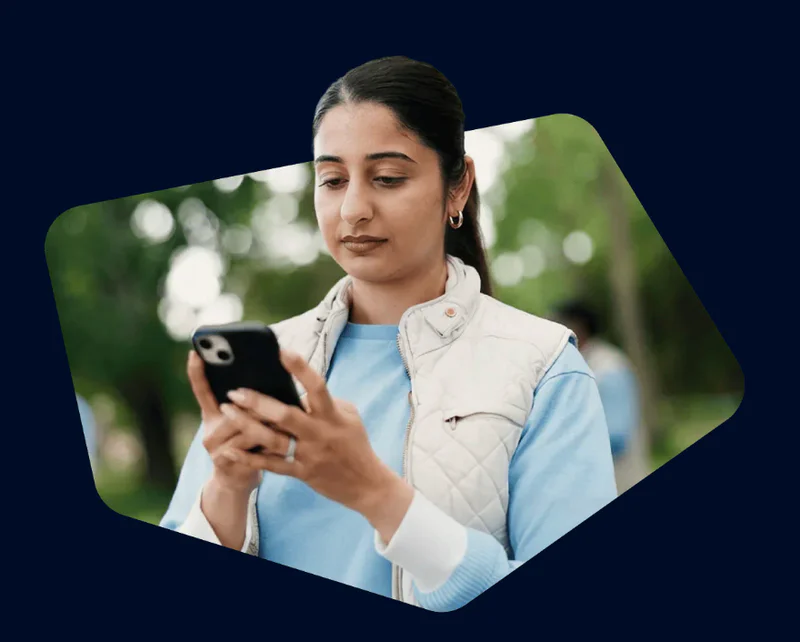
Woman in business attire holding a smartphone, smiling, with a red notification alert icon in the corner.

The gap between beginners and leaders is proving that they’re more likely to understand their citizens deeply

Public sector organizations that fall under the leaders category achieve 70% of their digital engagement strategy goals versus 51% for beginners. The gap between beginners and leaders isn't just a score, it’s proving that they’re more likely to understand their citizens deeply, have a unified engagement strategy in place, and deliver excellent citizen experiences.

The five priorities that follow in this report reflect exactly what separates those leaders from the pack and how organizations at all levels can get started on their digital maturity journey.