Deliver on surging channel demand

The public sector and its citizens agree: expand digital channels
While our research1 highlights several clear disconnects between public sector agencies and the public they serve, there is one area of absolute alignment: the demand for more digital options.
Eighty-nine percent of organizations say citizens want more digital channels. Eighty-two percent of citizens agree. That kind of consensus is unusual in this data, and citizen demand has only grown stronger: up from 75% in 2024. Also notable is that the appetite to expand isn't running into a funding wall either. Budgets for digital citizen engagement increased on average in 2026.
The gaps worth closing
Public sector organizations are largely showing up across the digital channels that citizens use most. But two gaps stand out:


More digital channels only work if they're connected
The opportunity here for government organizations is to add digital channels strategically so they complement, rather than complicate, the citizen journey. More digital channels only help when they're coordinated, consistently maintained, and connected to a complete picture of the citizen on the other end.
The public sector organizations that have figured this out are seeing the payoff: citizens who get their preferred channels report saving time (47%), easier access to organizations (43%), and feeling easier to reach (36%). Those aren't small gains. Those are the kinds of outcomes that rebuild trust.
The AI moment
Chatbots and AI-powered routing are already in active deployment across the sector, and digital leaders are significantly more likely to use them. Channel expansion backed by intelligent automation is increasingly a build-once, scale-many proposition. Adding a channel doesn't have to mean adding headcount. It means building smarter.
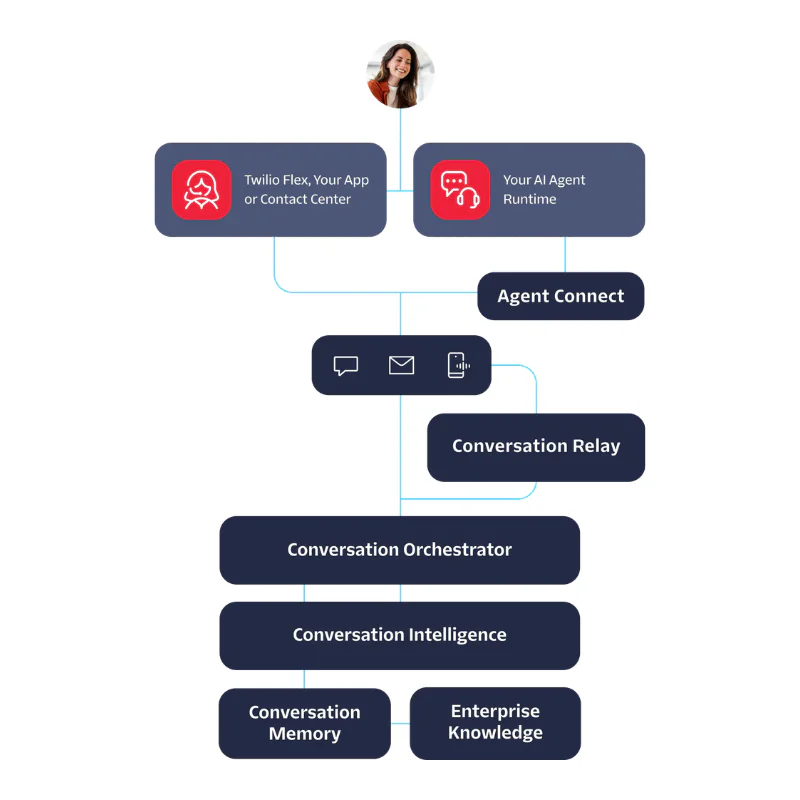
Infrastructure for the agentic era of conversations
Solution spotlight
Twilio's multi-channel messaging, spanning SMS, WhatsApp, RCS, and Email, lets public sector organizations meet citizens on the channel they already trust, whether that's a routine notification or a time-sensitive emergency alert. The difference is what happens between those channels.
With Twilio Conversations, context moves with the citizen instead of resetting at every touchpoint — coordinating interactions across channels while maintaining conversation history and intelligence, so a citizen who starts on SMS and follows up over WhatsApp or email isn't starting over.
Agencies get the connected, coordinated experience citizens are asking for, without stitching together point solutions or standing up new integration work for every channel added — and citizen data stays governed under a single, secure platform throughout.

1 Unless otherwise noted, the statistics cited in this report are based on two blind online surveys commissioned by Twilio, designed and analyzed by Lawless Research, and fielded from April to May 2026