Free trial
Start building with Twilio for free
Sign up and start building your ideal customer engagement experience today.

Developers
Explore technical topics, solutions, and resources for building with Twilio – and beyond.
-
 How to Connect Your Twilio Agent to External APIs in PythonAmanda Lange Dylan Frankcom
 -
 How to Build a Voice AI Agent with OpenAI's GPT-Live, Twilio Agent Connect, and PythonXinghao Huang
 -
 Build Voice AI Experiences with Twilio and GPT-Live-1 in the OpenAI APILenore Files
 -
 Build an AI Voice Assistant with Twilio Voice and Media Streams, OpenAI's GPT-Live API, and Node.jsPaul Kamp
 -
 Make Outbound Calls with Twilio Voice and Media Streams, GPT-Live-1 in the OpenAI API, and Node.jsPaul Kamp
 -
 From AI Agent to Human Agent: ElevenLabs Call Handoffs with TwilioRicardo Bangueses
 -
 Integrate Deepgram Flux with Twilio's Conversation RelayDhruv Patel
 -
 Build a Video Chat App with ASP.NET Core and Angular using Twilio VideoDonal Toomey
 -
 How to Approve Real Users and Block Fake Accounts at Sign Up with Lookup and Verify in PHPKelley Robinson Matthew Setter
 -
 How to Confirm Phone Number Ownership with Lookup Identity Match in PHPKelley Robinson Matthew Setter
 -
 How to Confirm Phone Number Ownership with Lookup Identity MatchKelley Robinson
 -
 How to Approve Real Users and Block Fake Accounts at Sign Up with Lookup and VerifyKelley Robinson
 -
 Build a Video API with Twilio Programmable Video, Node.js, TypeScript, and ExpressMia Adjei
 -
 How to Approve Real Users and Block Fake Accounts at Sign Up with Lookup and Verify in C#Amanda Lange Dhruv Patel
 -
 How to Use Svelte and Go to Build a Video Chat AppDonal Toomey
Industry Insights
Explore the latest trends, best practices, and expert tips shaping the future of customer engagement.
-
 121+ Cyber Monday email subject line examples in 2026Jesse Sumrak
 -
 What Is SMS Pumping Fraud and How to Stop ItTwilio
 -
 10+ best practices to improve your email deliverabilityJesse Sumrak
 -
 Holiday email marketing best practices for 2026 (and beyond)Jesse Sumrak
 -
 Choosing a low-latency infrastructure layer for conversational AILuke Morgan
 -
 What is bring your own LLM (BYO LLM)?Jesse Sumrak
 -
 4 must-ask questions before you delegate to your AI agentJesse Sumrak
 -
 How to disclose AI to customers without killing the conversationJesse Sumrak
 -
 When AI takes the wheel: The rise of invisible identity intelligence in 2026Catie Kolander
 -
 Complete guide to sending email to Google: Rules, signals & setupTony Williams
 -
Your customers don't hate AI — they hate you lying about itJesse Sumrak
-
 Why 78% of customers try to bypass your AI agentJesse Sumrak
 -
 8 top conversational AI platforms in 2026Jesse Sumrak
 -
 Top user authentication trends for 2026Sebastian Del Aguila Fiocco Ravleen Kaur
 -
 The fraud-friction paradox: Why stronger security should feel invisibleAnurag Dodeja Reed Mcginley-Stempel
Product News
Get the scoop on Twilio’s latest innovations—from upcoming betas to the latest product launches and feature updates.
-
 The architecture of enterprise trust: Twilio US Branded Calling is now generally availableJason Spulak
 -
 WhatsApp just changed how customers identify themselves. Here's what to do about itSebastian Del Aguila Fiocco
 -
 Overcoming the Spam Epidemic: Twilio Branded Calling Enters Public Beta in the UK, Canada, and GermanyVinodhan Kaleeswaran
 -
 Announcing Twilio Lookup Line Status Public Beta: Verify Number Deliverability Before You SendCatie Kolander
 -
 Twilio's Compliance Toolkit now Generally AvailableWill McKenzie
 -
 Announcing Data Residency for SMS (EU): Local control, global trustBill Higbee
 -
The Power of the Grey Bubble: Why Apple Messages for Business is a game changerChris Cadotte Sebastian Del Aguila Fiocco
-
 Infrastructure for the agentic era: A new conversation layer for the Twilio PlatformDisha Rustogi
 -
 What Is Twilio Conversation Memory? How to Give Your AI Agents Context Across ConversationsSean Spediacci
 -
 Introducing Conversation Orchestrator: Connected Conversations with Conversation OrchestratorShanelle Thadani
 -
 What is Conversation Intelligence? Turn live interactions into context-aware actionLenore Files
 -
 What is Twilio Agent Connect? Meet the model‑agnostic bridge between your AI agents and real customersLenore Files
 -
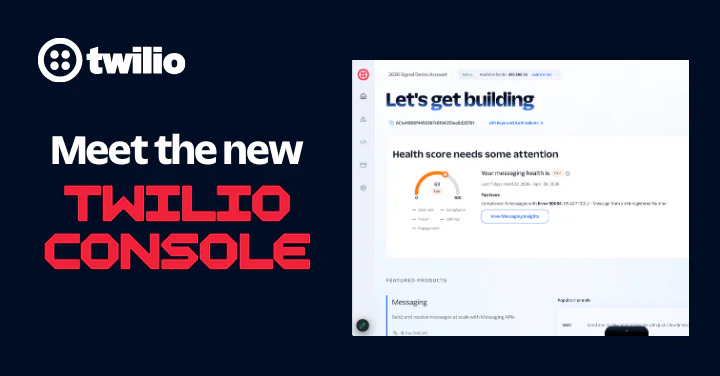 The new Twilio Console: Your mission control for customer engagementBryn Saunders
 -
 The Art of Teaching Algorithms to Listen: What’s New in Conversation RelayJason Spulak
 -
 Intelligent Alerts is now Generally AvailableWill McKenzie
Events & Community
Learn about upcoming opportunities to connect with fellow builders and developers.
-
 [Webinar] Elevating customer engagement with WhatsAppTwilio
 -
 [Webinar] Voice AI that connectsTwilio
 -
 From Idea to Index: How Twilio Voice and AI Helped Bring the Guinness Price Index to LifeTwilio
 -
 Systems of Agency and Engineering Grit: What You Missed at SIGNAL San Francisco 2026Lisa Eagleson
 -
 Five Reasons You Should Attend SIGNAL San Francisco 2026Leah Lengel
 -
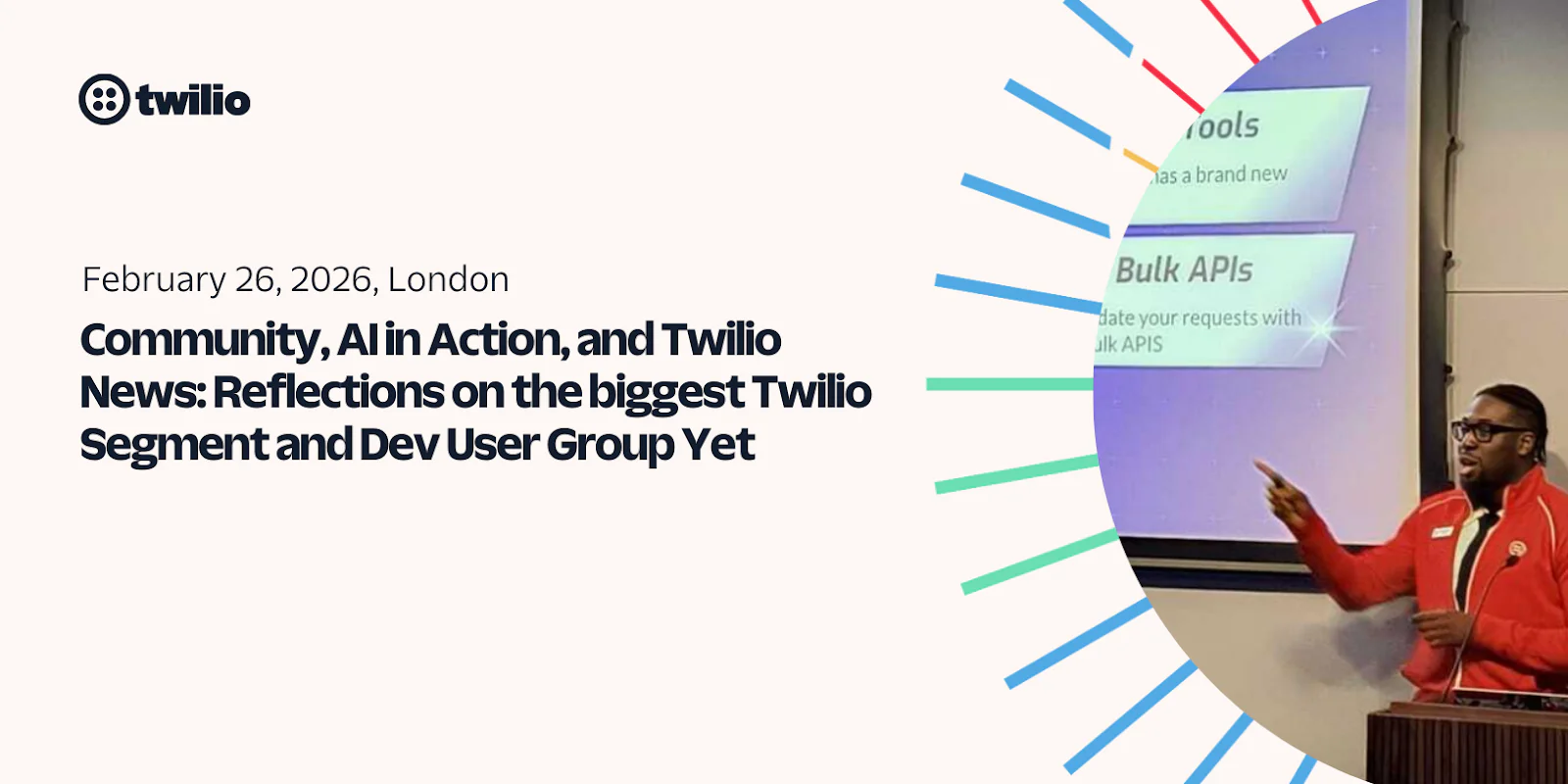 Community, AI in Action, and Twilio News: Reflections on Our Biggest User Group YetPayam Taghizadeh
 -
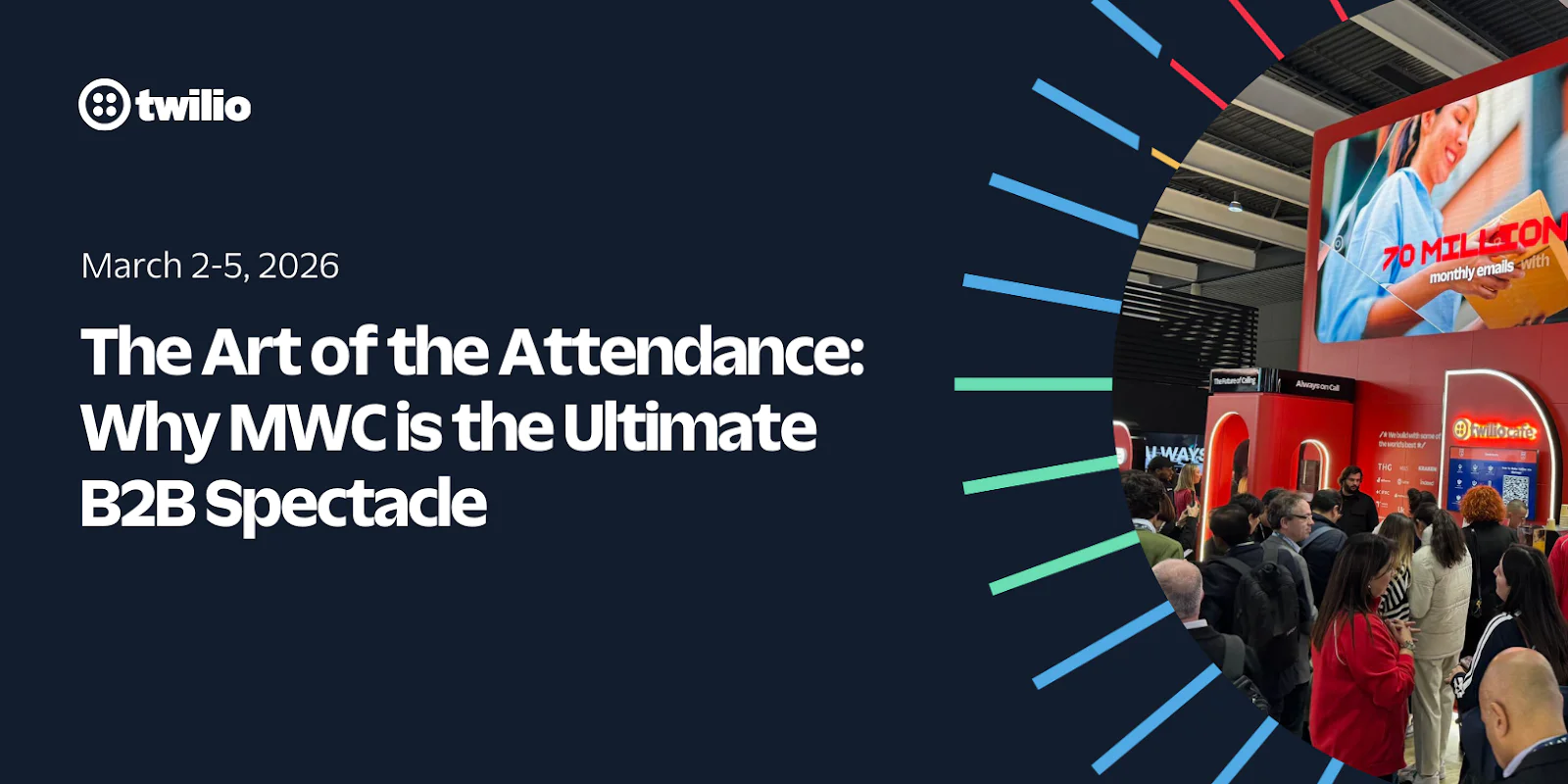 The Art of the Attendance: Why MWC is the Ultimate B2B SpectaclePeter Bell
 -
 SIGNAL London 2025 had something for everyoneLeah Lengel
 -
 SIGNAL Sydney 2025: A Sold‑out Debut on the HarbourRobin Elrod
 -
 Welcome to the Builder’s Arcade at SIGNAL Sydney 2025Michelle Duke
 -
 What Brand Builders Need Most Right Now? Smarter Data, Real-Time Personalization, and AI That Actually Works | AdWeek 2025 Recap
 -
 Tackling the data management challenge: Insights from Enterprise ConnectRakesh Bhatia
 -
 SIGNAL Singapore 2024: Fulfilling the promise of customer engagement AI through communications and contextual dataRobin Elrod
 -
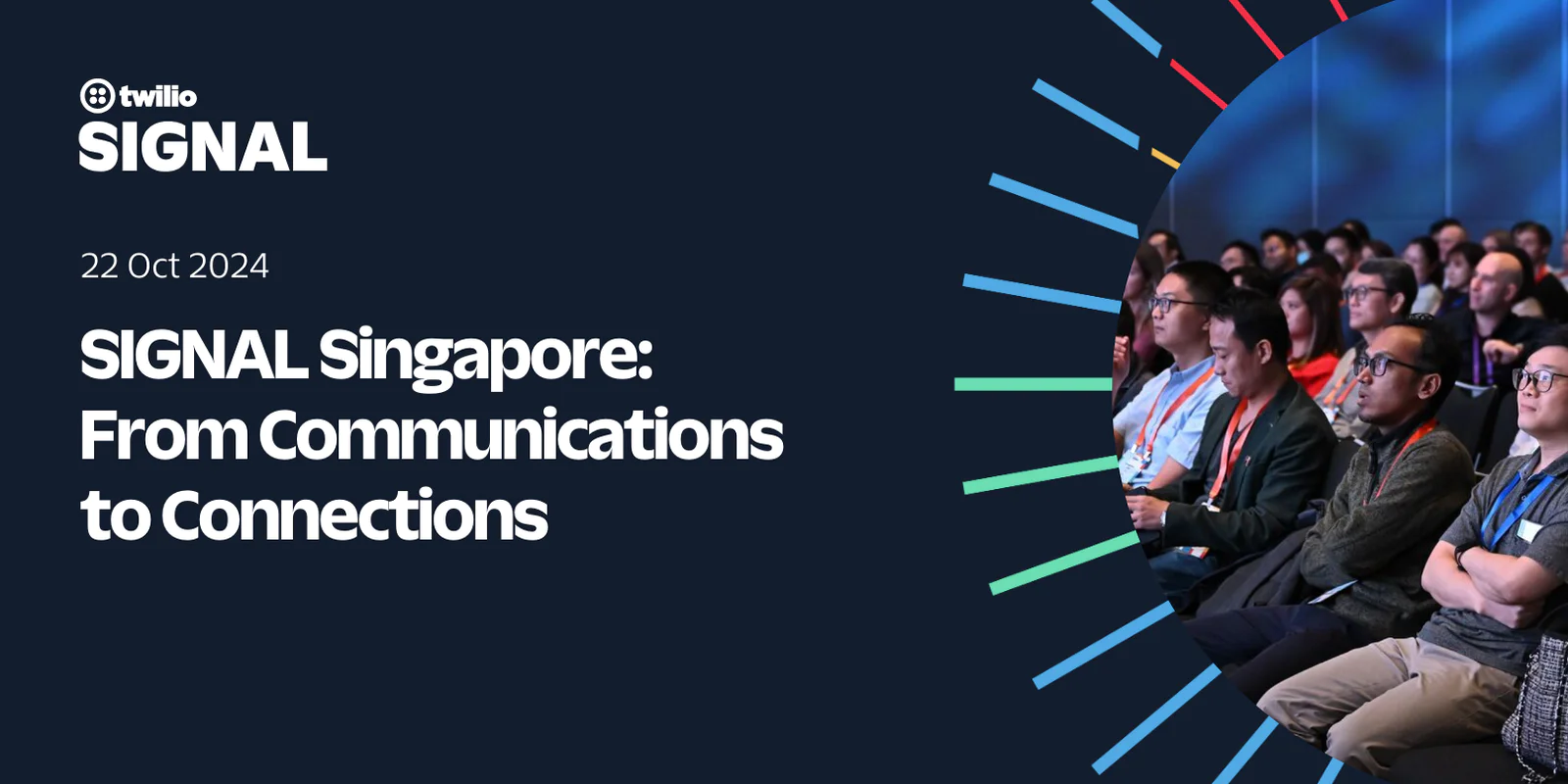 SIGNAL Singapore 2024: From Communications to ConnectionsAnthony
 -
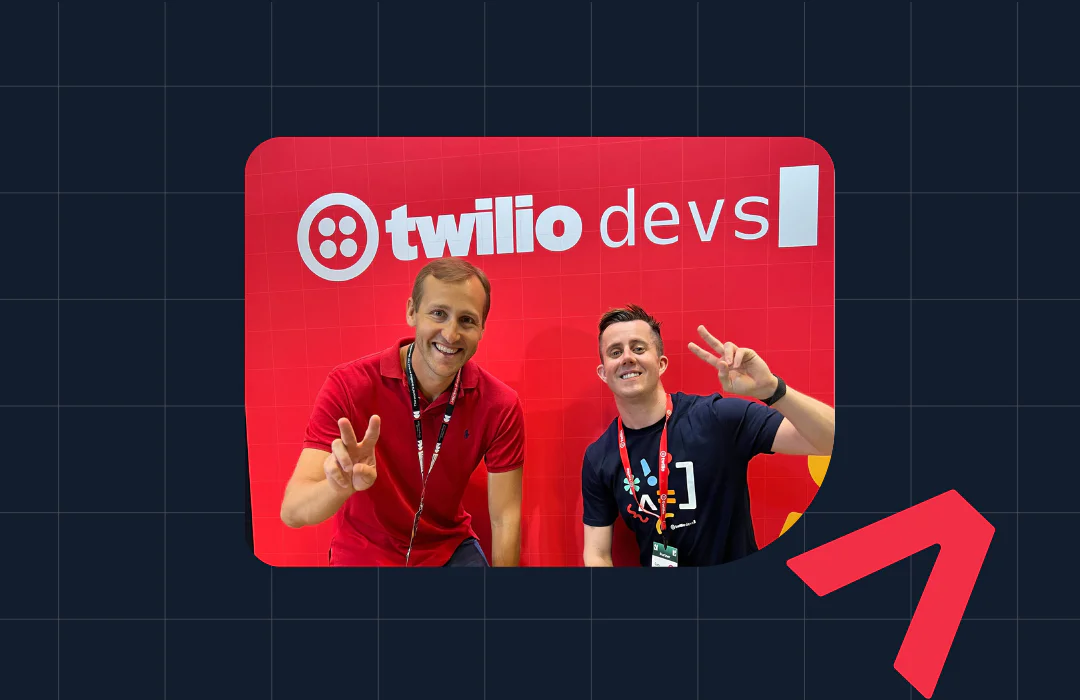 Reflecting on WeAreDevelopers World Congress 2024Marius Obert
Partners & Ecosystem
See how Twilio partners and platform integrations are powering innovation. Explore success stories and new collaborations.
-
 From Customer Intelligence to Customer EngagementStillman Wong
 -
 Twilio Brings Customer Engagement Workflows into Claude by AnthropicRikki Singh Seline Chen
 -
 A New Platform Chapter — And Why Partners Are at the Center of ItKevin Wagner
 -
 From Data to Daily Wins: Driving Voice AI ROI with Twilio and SpokeJason Spulak Stillman Wong
 -
 Headless Provisioning via CLI for Twilio with Stripe ProjectsSeline Chen Ryan Ferguson
 -
 Building an Outbound Voice Agent with Twilio and DeepgramCorey Weathers
 -
 Building an Inbound Voice Agent with Twilio and DeepgramCorey Weathers
 -
 Building the Future Together: Introducing the Twilio Partner Advisory BoardKevin Wagner
 -
 Empowering Partners for the AI Era: Twilio AI Certification ProgramStillman Wong
 -
 Rooted in Tradition, Powered by Tech: One Acre Fund’s Digital TransformationClaire FitzGerald
 -
 Innovation Spotlight: How Datadog's integration keeps your Cloud Communications safe while prioritizing uptime
 -
 Twilio Segment Joins the MACH Alliance: Embracing the Future of Extensible ArchitectureKevin Harris
 -
 Experience an out-of-the-box, no-code texting solution powered by SalesmsgWill McKenzie
 -
 Braze: expanding the reach of customer engagement for impactful resultsTwilio
 -
 Twilio Flex Announces Public Beta of Compatibility with Microsoft Azure Virtual DesktopHitesh Manwar
Company
Get the latest updates from inside Twilio—including leadership announcements, culture highlights, and more.
-
Twilio Wins Modern Consumer Award for Excellence in Customer Service
-
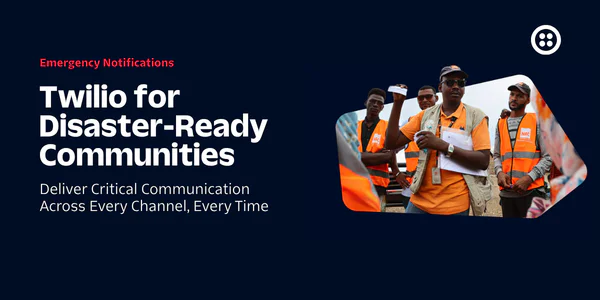 Twilio for Disaster-Ready Communities: Our 2030 GoalErin Reilly
 -
The Total Economic Impact™ of the Twilio Platform
-
 Calling All AI Startups: Twilio’s Startup Searchlight 2026 Is HereFrank Yaw-Owusu Bianca St Louis
 -
 Meet the 2026 finalists of our Excellence in Engagement Awards
 -
 Behind the builder: Dalia Molina, Sr. Manager, Documentation PlatformTwilio Employer Brand Team
 -
 Bringing SendGrid and Segment to Twilio.com: A More Unified Web ExperienceJesse Sumrak
 -
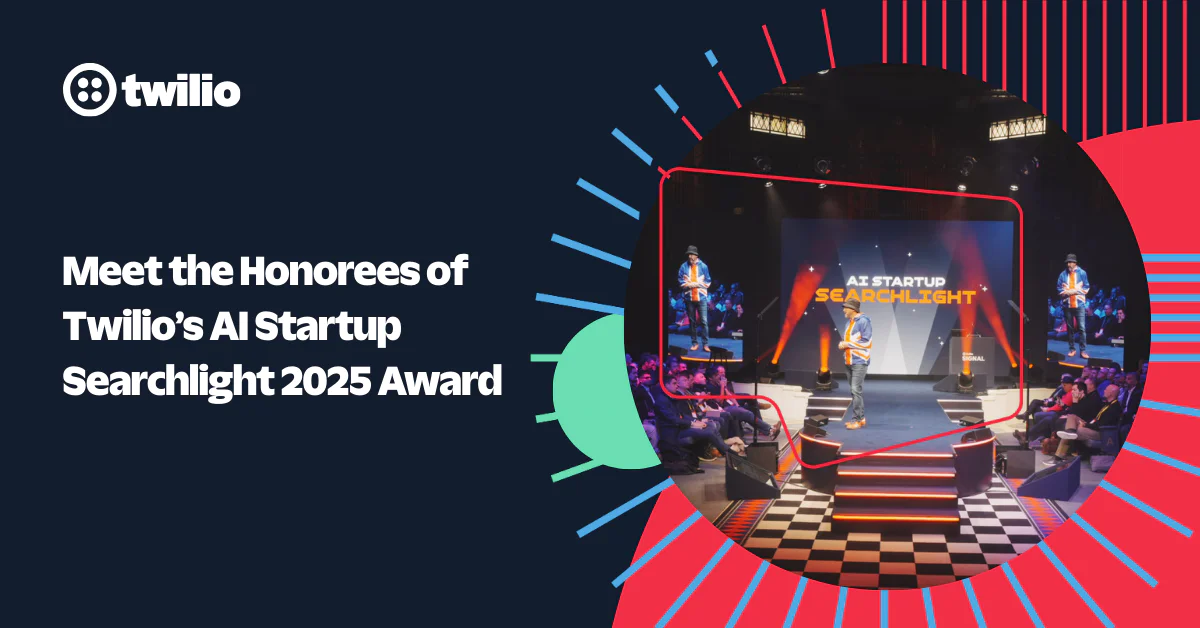 Meet the Honorees of Twilio’s AI Startup Searchlight 2025 Award ProgramFrank Yaw-Owusu Bianca St Louis
 -
 Behind the Builder: Justinus Kho, Staff Product Data AnalystTwilio Employer Brand Team
 -
 Building Holiday Magic: Twilio Powers Real-Time Calls for ‘NORAD Tracks Santa’Kevin Wagner
 -
 Behind the Builder: Stefany Millstein, Director of Sales, Commercial
 -
 Building Trust in the Age of AI: Why Identity Is the Foundation of Customer EngagementInbal Shani
 -
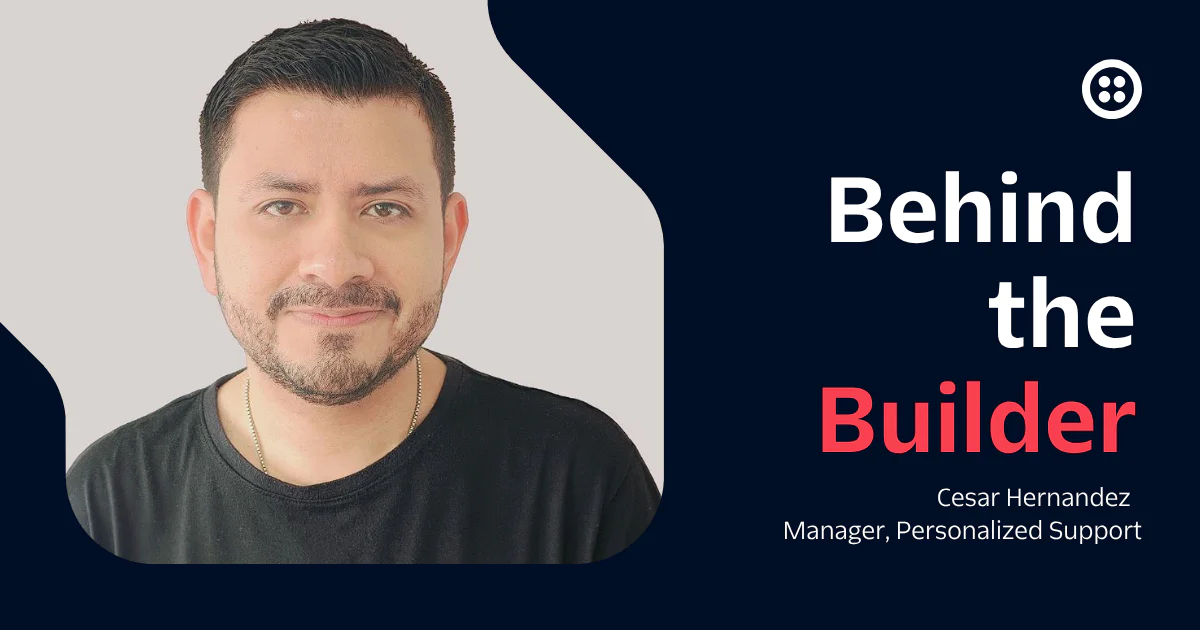 Behind the Builder: Cesar Hernandez, Manager, Personalized SupportTwilio Employer Brand Team
 -
 2025 Global Impact Week RecapTanise Love
 -
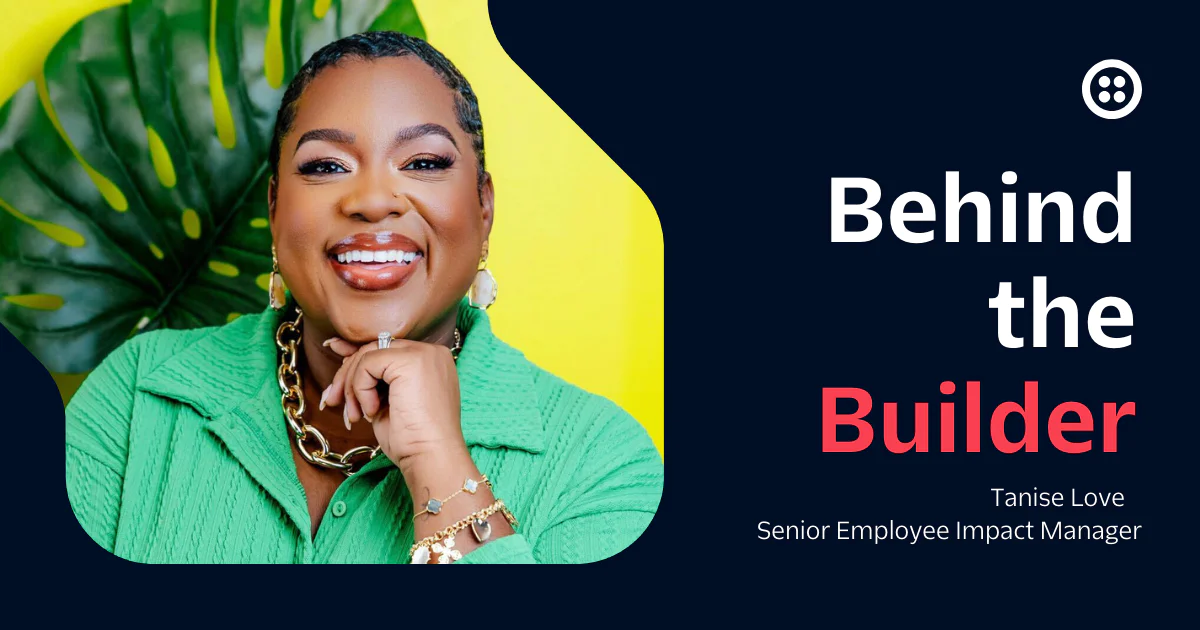 Behind the builder: Tanise Love, Senior Employee Impact ManagerTwilio Employer Brand Team
Archive
Jump into our vault for a look back at past posts and retired content.