Flex UI local logging
Pilot
This Twilio product is currently available as a pilot release. Some features are not yet implemented and others may be changed before the product is declared as Generally Available. Pilot and beta products are not covered by a Twilio SLA. Learn more about how Twilio supports products that are not yet GA.
Local logging lets a user capture client-side logs into a text file that can then be shared with Twilio support to help troubleshoot issues.
When local logging is enabled (see How to enable local logging), users see a "bug" icon in the header.
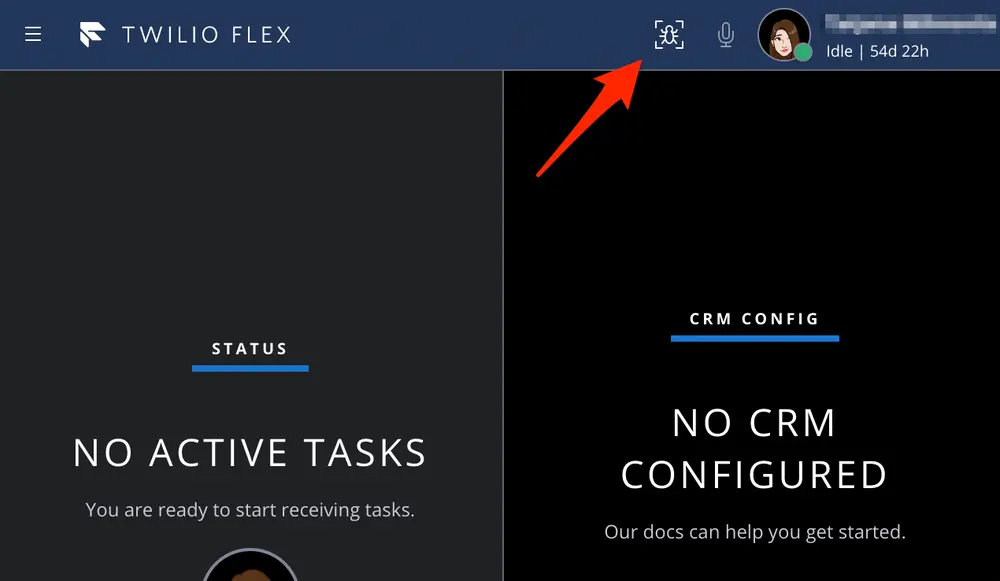
To capture and share local logs, follow these steps:
-
Click on the bug button
-
Start logging and reproduce the issue. Logs will be captured until logging is stopped, even if user logs out.
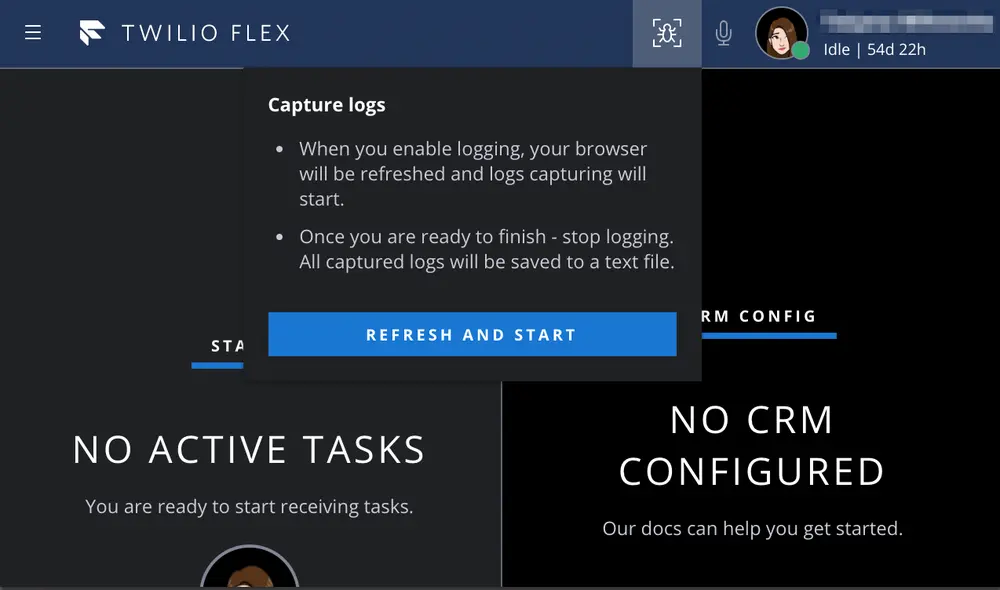
-
Once the issue was reproduced, stop logging and download file
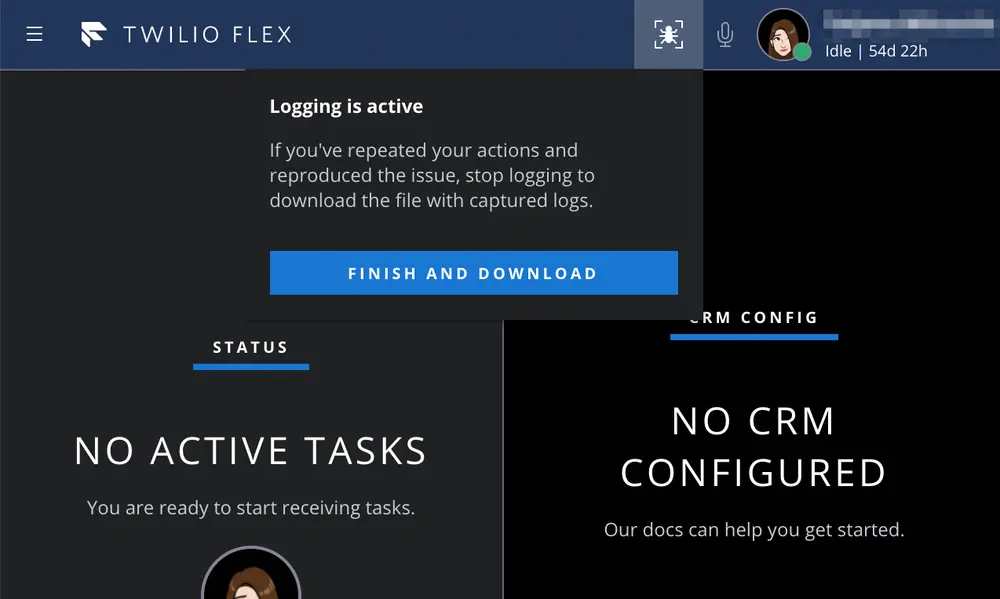
-
Send the file to Twilio support with issue description
There are two ways to enable local logging:
- For hosted and self-hosted Flex: Upload plugin-logger plugin to assets
- For self-hosted Flex: add the following flag to configuration file (appConfig.js)
1var appConfig = {2<..>3logger: { type:"file" },4<..>5};6