Programmable Messaging API
One Messaging API to reliably reach 7B+ devices
Integrate a multichannel API to send and receive transactional SMS, MMS, RCS, and WhatsApp messages.

Build scalable messaging into your applications with just a few lines of code
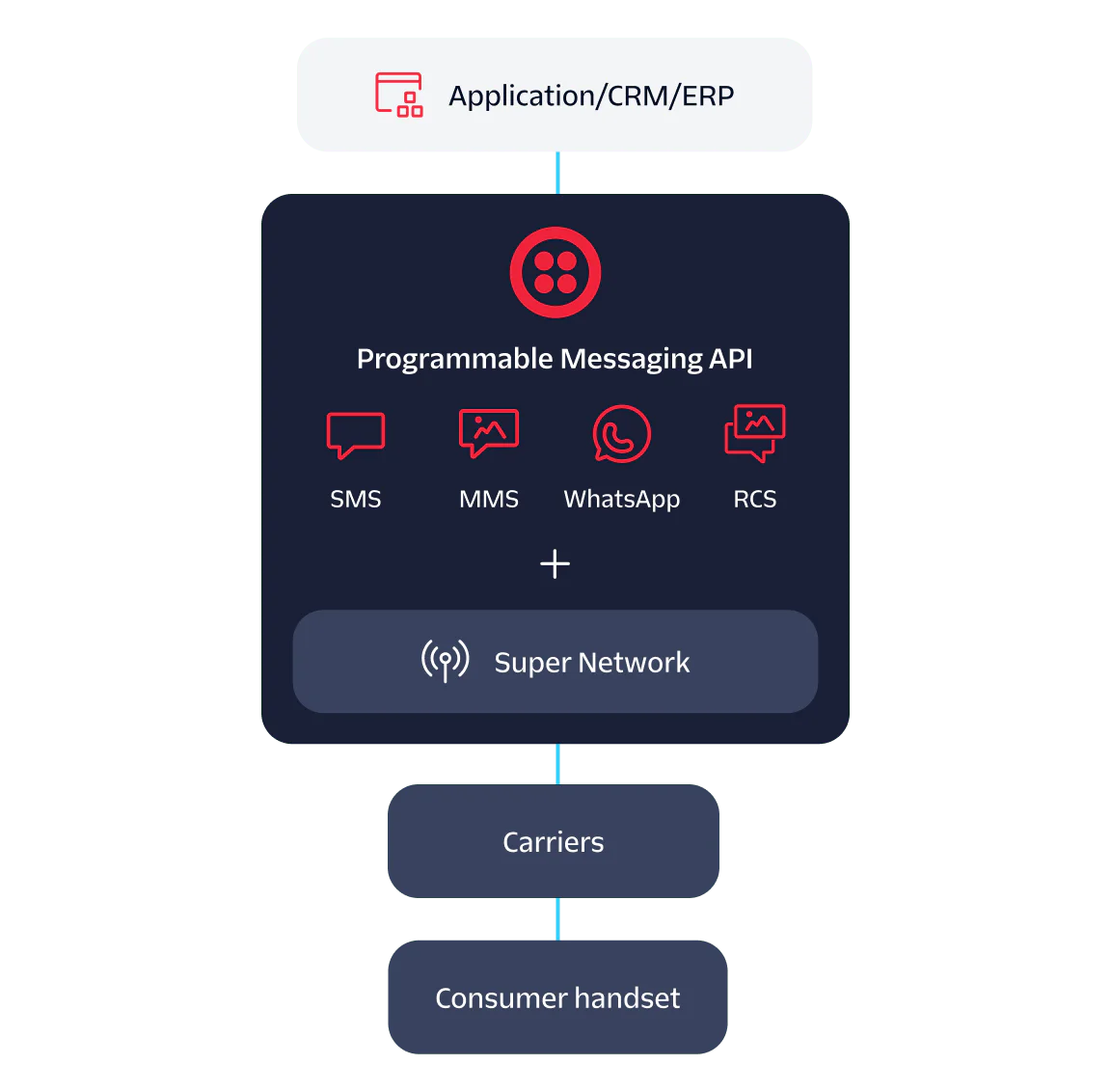
Software for transactional messaging at any scale
Send alerts and notifications, promotions, and marketing messages on your customers’ favorite channels with one API. The Programmable Messaging API includes software for managing phone numbers, deliverability, compliance, replies, and more.
Reliable, global business messaging for any use case
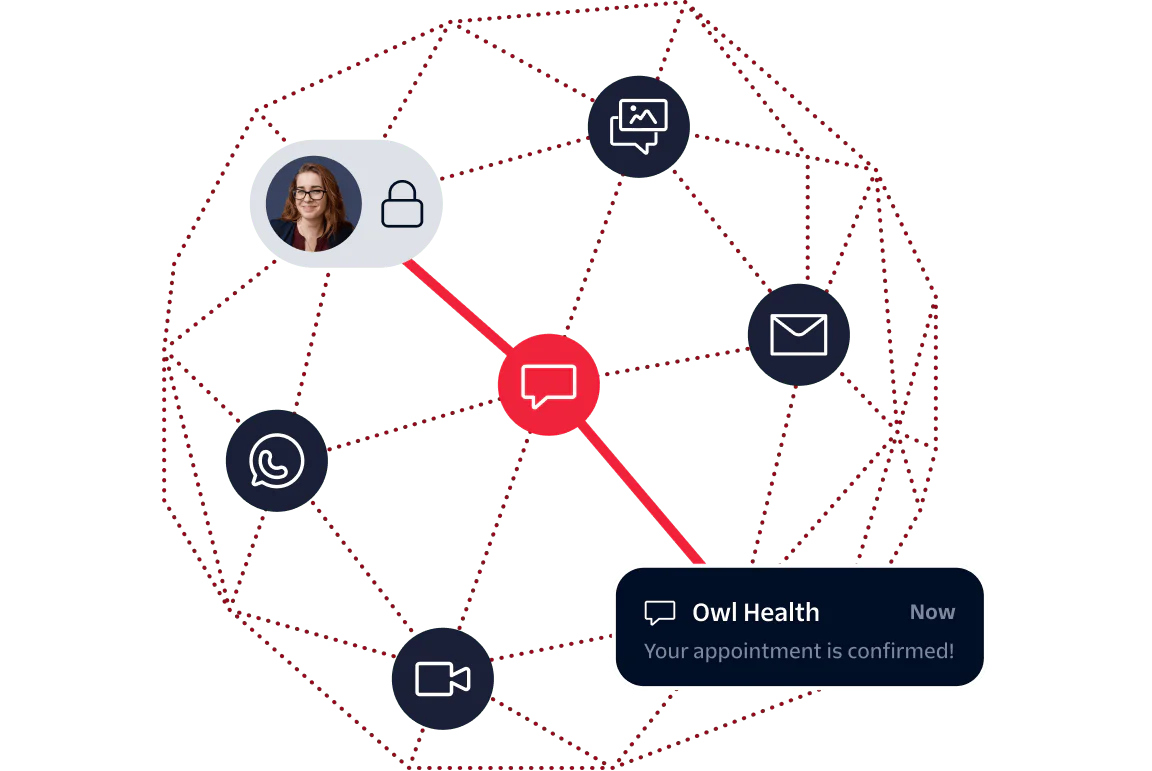
Send and receive transactional messages on the most popular channels
Read the Docs
Explore quick-start guides, code snippets, SDKs, and more in our comprehensive resource library to kickstart your build for Facebook Messenger with Messaging.
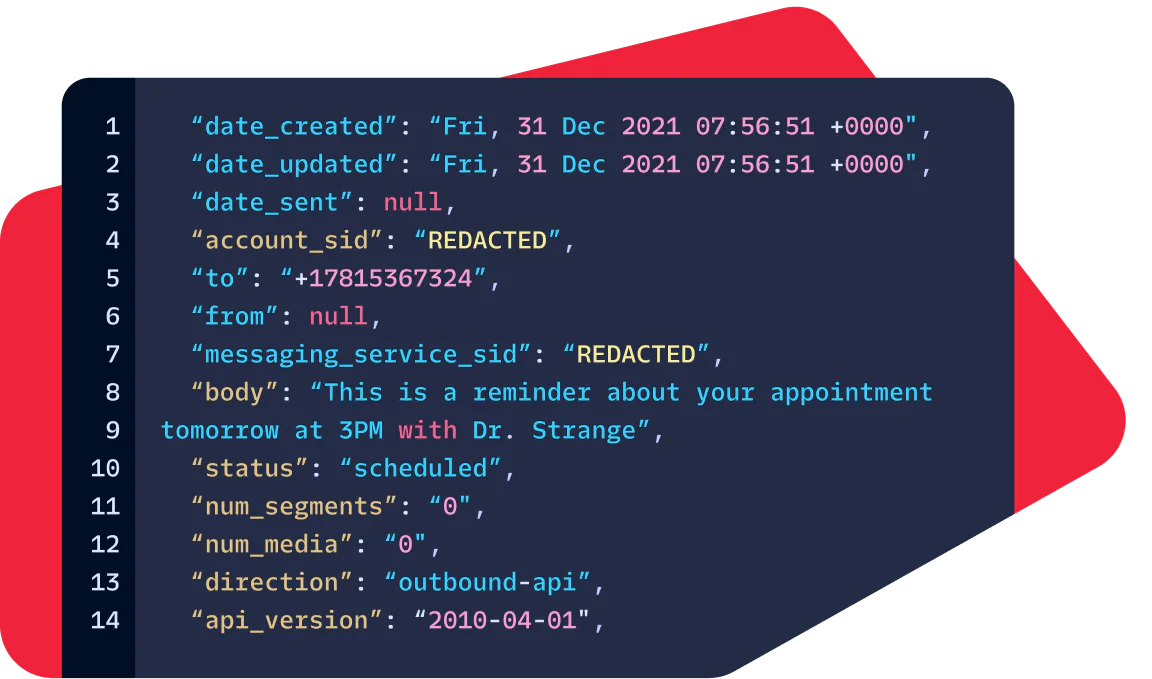
Send an SMS message
Powering next-generation transactional messaging
Optimized message deliverability at scale
-
Global senders
Reach consumers in 180+ countries with localized senders, global guidelines, and regulatory compliance tools. -
Real-time route optimization
Automatic rerouting of global traffic every 75s to avoid outages and latency. -
Messaging Insights
Real-time analytics for monitoring and troubleshooting message delivery and engagement. -
Message fallback
Automatic fallback to SMS when a message is not deliverable via WhatsApp or short code.


Resources
The Total Economic Impact™ of Twilio Messaging*
A commissioned study conducted by Forrester Consulting found Twilio Messaging provided a 3% increase in messages delivered, a 15% improvement among development teams, and a 30 to 40% opt-in rate for SMS marketing.
Scalable messaging solutions with flexible pricing
Get started with the Programmable Messaging API for free. Only pay for the messages you send and receive, per phone number, and channel-specific fees. No commitments. Enjoy discounts for high-volume messaging.
Twilio Messaging Engagement Suite
Get simpler development, quicker time to market, and higher deliverability rates.** See how Message Scheduling, Link Shortening with Click Tracking, advanced data, and real-time dashboards can benefit your business.
FAQs
Twilio Programmable Messaging API supports SMS, MMS, RCS, and WhatsApp for sending and receiving messages.
Twilio offers transparent, pay-as-you-go pricing with no hidden fees or minimum commitments. Costs vary by message type, destination, and volume. See our pricing page and monitor usage to stay on budget.
We don’t publish an official delivery rate for messaging because delivery rates vary, depending on the exact use case and message quality. Destination country and carrier, type of sender (long code, short code, toll-free), message content, compliance with local regulations, and recipient number validity can all affect delivery rates.
To ensure high delivery rates, the Twilio platform is built on hybrid cloud infrastructure. We have wide reach with more than 4,800 global carrier connections, eight edge locations, and multiple dedicated availability zones per edge. Our dashboards and APIs help you monitor your delivery rates so you can track and troubleshoot any failed or undelivered messages.
To offer an idea of how Twilio’s delivery rates compare, we commissioned a study conducted by Forrester Consulting, which found Twilio Messaging provided a 3% increase in messages delivered when customers used Twilio.
Twilio provides tools and resources to help you meet compliance and regulatory requirements for messaging. First, we maintain up-to-date regulatory guidelines for each country to cover phone number usage, SMS, voice, and short code requirements. We offer Messaging Services, so you can bundle senders (10DLC, short codes, toll-free numbers, alphanumeric sender IDs) and apply compliance settings across the board.
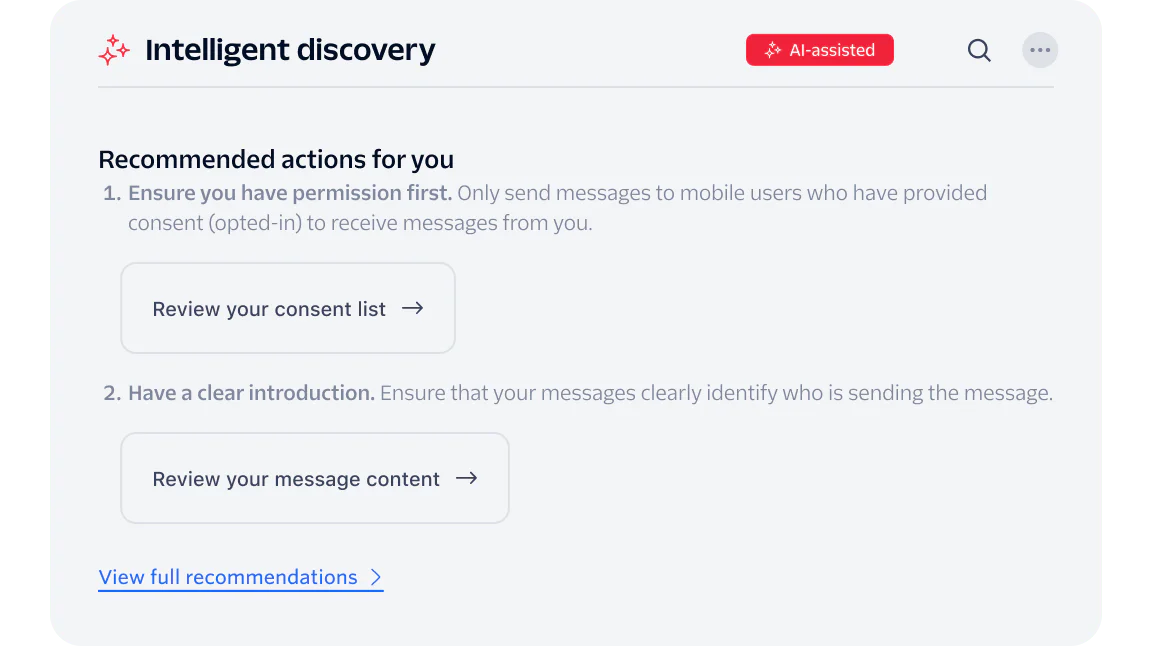
We also have a Compliance Toolkit for Messaging. Compliance Toolkit uses Artificial Intelligence to proactively detect possible regulatory and messaging policy violations and prevents or reschedules their transmission so businesses can better manage their compliance obligations. See our docs for Compliance Toolkit.
Our teams are also here to help. We regularly update requirements and notify customers about regulatory changes, and provide support to navigate complex compliance requirements.
Getting started with the Twilio Programmable Messaging API is easy and straightforward. You can use our quickstart guides, code samples, and up-to-date documentation to help.
After you’re set up, Twilio sends webhooks to your system for incoming messages and status updates, and you can easily configure your endpoints to receive and process these events in real-time.
Twilio Messaging lets you integrate at your own pace. Start with a simple messaging use case, and then add features like advanced opt-out, message scheduling, or link shortening when you’re ready. You can also expand to other channels like WhatsApp, MMS, and RCS with the same API with minimal code changes.
The Twilio Programmable Messaging API offers a number of features to send and manage messages:
Global senders to reach customers in 180+ countries
Real-time route optimization to avoid outages and latency
Out-of-the-box Messaging Insights dashboards to monitor and troubleshoot message delivery
Message fallback to SMS when a MMS or RCS cannot be delivered
Short codes, toll-free numbers, 10DLC, and Alphanumeric sender IDs to send in the US and other regions
Advanced opt-out to customize opt-ins and opt-outs
Message redaction to protect sensitive data
Message scheduling
Inbound message routing using inbound message webhooks
Content API to translate rich message content across channels
MMS for long text messages
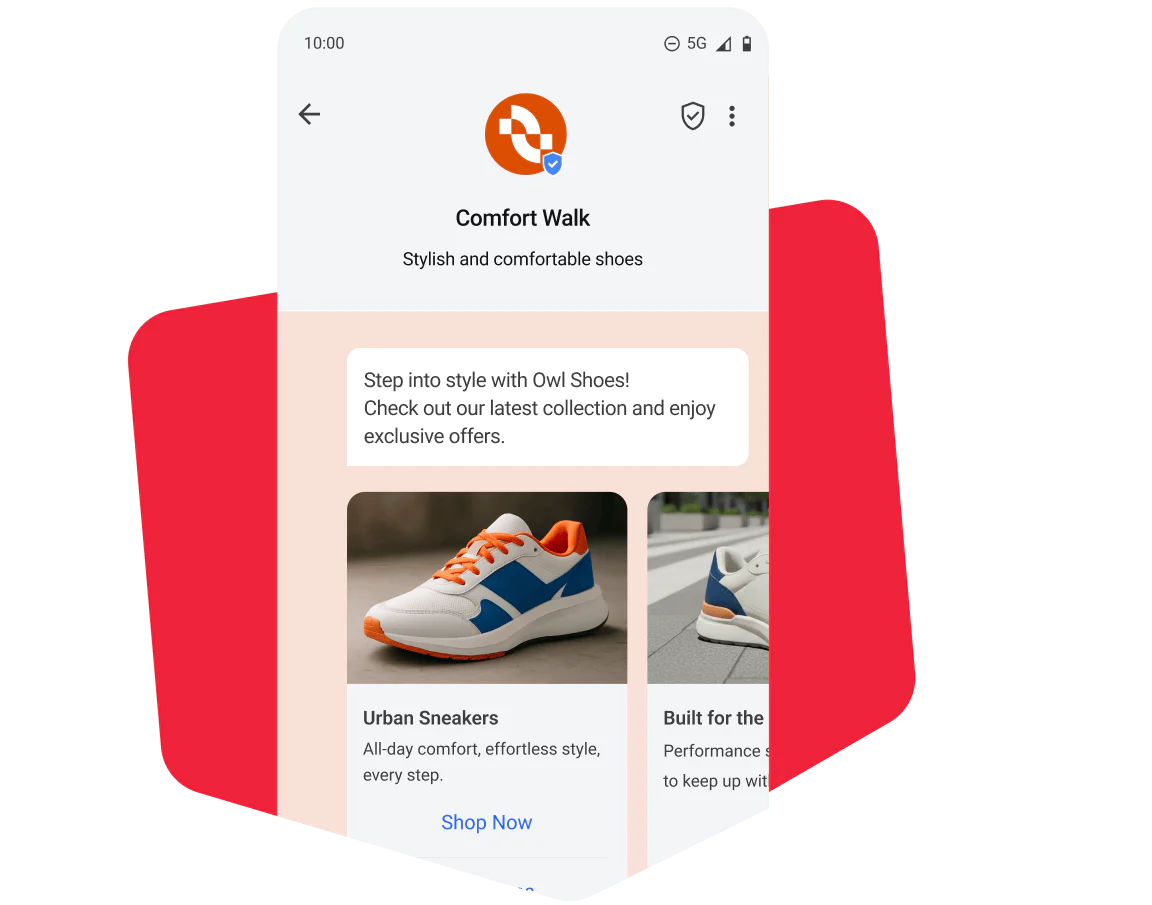
RCS for rich content
AI-powered real-time routing algorithms for message deliverability
SMS pumping fraud prevention tools to block fraudulent traffic
Some common challenges that come up implementing a new messaging solution include regulatory onboarding requirements, carrier filtering and deliverability, delayed delivery or dropped messages, SMS pumping fraud attacks, and sending to invalid or opted-out numbers.
When you deploy messaging with Twilio, you can avoid these challenges with guidance on choosing phone numbers that support your use case, volume, and compliance needs. You can use compliance tools and Messaging Services to manage compliance settings at scale. And you get a platform with features to validate phone numbers, manage opt-outs, and prevent SMS fraud.
Twilio works hard to ensure that customers do not experience filtering on legitimate messaging that follows all applicable rules. We surface error codes and dashboards to identify items to troubleshoot and resolve. Deliverability Scores are available to provide an easy-to-understand overview of how your messaging traffic is performing, and guide you on how to optimize deliverability and engagement.
Our support teams are available 24/7 with SLAs for uptime and issue resolution. Whether you need onboarding assistance or fast troubleshooting, we are here to help.
When messages fail or do not get delivered, you can check the message status and error code in the Twilio Console Message Logs or via the API. With the error codes, you can identify the reason for the message failure, like an invalid number, carrier filtering, or an opt-out.
Common reasons for message delivery failure are: inactive numbers, content restrictions, regulatory blocks, or carrier issues.
You can handle errors programmatically by using the error codes in your application logic to retry, alert, or take corrective action.
Twilio’s readily available Deliverability Scores help you understand how your messaging traffic is performing and how to better optimize for deliverability and engagement.
Yes. The Twilio Programmable Messaging API supports RCS, MMS, WhatsApp, and other rich media formats, so you can send images, videos, audio clips, location info, and more to create engaging conversations beyond plain text.
* The Total Economic Impact™ of Twilio Messaging, a commissioned study conducted by Forrester Consulting, April 2023. Results are for a composite organization representative of interviewed customers.
** In an evaluation of more than 63M messages sent through Twilio with shortened hyperlinks, messages with shortened hyperlinks by 3rd party Link Shorteners were filtered at 1.96% or 28x the rate of Twilio which was filtered at a rate of 0.07%