Guide
Email marketing for beginners: step-by-step guide
Complete email marketing guide for beginners: what it is, types of campaigns, how to build lists, design emails, write copy, and track performance.
Time to read:
AI generated summary
- Email marketing requires strategy, copywriting, design, compliance knowledge, and data analysis for success
- Build your email list organically using lead magnets and opt-in forms; avoid purchased lists
- Balance sending transactional and promotional emails to maintain engagement and avoid unsubscribes
- Ensure compliance with email regulations like CAN-SPAM and routinely clean your list of inactive subscribers
This summary was generated by AI.
Email marketing for beginners: step-by-step guide
Email marketing might seem straightforward: write an email, hit send, track opens. Sure, at it's core, that's what it's all about, but there's a bit more that goes into it when you're creating campaigns that drive real results. This takes strategy, design decisions, copywriting skills, compliance knowledge, and data analysis.
Most beginners underestimate the work involved, then wonder why their emails get ignored or land in spam. Fortunately, we've got you covered here.
This guide covers everything you need to know to get started with email marketing, including what email marketing is and why it matters, how to build an email list from scratch, types of campaigns to send, and how to design and write effective emails.
What is email marketing?
Email marketing is a digital marketing strategy that involves sending targeted messages to a group of people who have opted in to receive communications from your business. It's one of the most direct and personal ways to reach your audience, build relationships, and promote products, services, or content.
Unlike social media or paid advertising where you compete for attention in crowded feeds, email lands directly in your subscribers' inboxes. Recipients have chosen to hear from you, making them a warm audience that's already interested in what you offer. This opt-in nature is what makes email marketing so powerful.
Common email marketing channels and tactics:
- Newsletters: Regular updates, industry news, and valuable content sent on a consistent schedule
- Promotional emails: Special offers, sales, product launches, and discount codes
- Welcome emails: Automated messages that greet new subscribers and set expectations
- Transactional emails: Order confirmations, shipping updates, and account notifications
- Re-engagement campaigns: Win-back emails for inactive subscribers
- Abandoned cart emails: Reminders for customers who left items in their cart
Types of email marketing campaigns
Different email types serve different purposes in your marketing program. You'll start with a few, expand to others, and eventually develop a full-on email marketing strategy that engages customers and would-be customers on all fronts.
Welcome emails
Welcome emails are the first message new subscribers receive after signing up. They set expectations, introduce your brand, and often deliver whatever lead magnet (free resource, discount, etc.) prompted the signup.
Welcome emails have the highest open rates of any email type because subscribers are most engaged immediately after opting in. Use them to make a strong first impression, deliver on promises, and guide subscribers to their next action.
Newsletter emails
Email newsletters keep your audience informed and engaged with regular updates, valuable content, industry news, and company announcements. They're sent on a consistent schedule (weekly, biweekly, monthly) to maintain top-of-mind awareness.
Newsletters build relationships over time by providing value without always asking for a sale. They're especially effective for content-driven businesses, B2B companies, and brands with longer sales cycles.
Promotional emails
Promotional emails drive sales through special offers, discounts, product launches, seasonal campaigns, and limited-time deals. They have a clear commercial intent and typically include strong calls-to-action to purchase or take advantage of an offer.
While promotional emails can be effective, sending too many will lead to unsubscribes and low engagement. Balance promotional content with value-driven emails like newsletters and educational content.
Abandoned cart emails
Abandoned cart emails remind customers about items they added to their cart but didn't purchase. These emails work because they catch customers at a decision point. Adding urgency (limited stock, expiring discount) or addressing concerns (free shipping, easy returns) can push them to complete the purchase.
Re-engagement emails
Re-engagement campaigns target inactive subscribers who haven't opened or clicked emails in a while. They attempt to win back interest with compelling subject lines, special offers, or surveys asking why they've disengaged.
Re-engagement emails serve two purposes: reactivate interested subscribers and identify truly disengaged contacts to remove from your list. Maintaining good list hygiene improves deliverability and engagement rates.
Transactional emails
Transactional emails are triggered by customer actions: order confirmations, shipping notifications, password resets, account updates. While primarily functional, they have the highest open rates because customers expect and need them.
Smart marketers use transactional emails as relationship-building opportunities by including personalized product recommendations, helpful resources, or loyalty program information alongside the expected transaction details.
How to build an email list
Your email list is your most valuable marketing asset, but you need to build it the right way—through opt-ins, not purchased lists or shady tactics.
Create a lead magnet
A lead magnet is something valuable you offer in exchange for an email address. The best lead magnets solve a specific problem for your target audience and provide immediate value.
Effective lead magnets include:
- Free resources: Ebooks, guides, templates, checklists, worksheets
- Exclusive content: Industry reports, case studies, research findings
- Discounts and offers: 10% off first purchase, free shipping, exclusive access
- Tools and calculators: ROI calculators, assessment tools, interactive resources
- Educational content: Video tutorials, webinars, email courses
Your lead magnet should be relevant to your business so you attract the right subscribers.
Add opt-in forms to your website
Place signup forms where visitors naturally look: website header or footer (consistent across all pages), homepage hero section (for maximum visibility), blog sidebar (captures engaged readers), exit-intent popups (catch visitors before they leave), and dedicated landing pages (for promoting specific lead magnets).
Keep forms simple. Ask for only what you need—typically just email address and first name. Each additional field decreases conversion rates. You can collect more information later as the relationship develops.
Promote your email list
Drive signups by promoting your list across all marketing channels:
- Social media posts and bio links directing to signup pages
- Blog post CTAs and content upgrades (bonus content in exchange for email)
- YouTube video descriptions and end screens
- Guest posts and podcast appearances
- In-store signage and receipts (for retail businesses)
- Referral programs encouraging subscribers to share
Never buy email lists
Purchased lists contain people who didn't opt in to hear from your brand. They're more likely to ignore messages, mark them as spam, or unsubscribe immediately. This tanks your sender reputation, hurts deliverability, and can get you banned from email platforms.
Worse, buying lists violates the CAN-SPAM Act in the US and GDPR in Europe. The fines aren't worth it. Build your list organically with people who actually want to hear from you.
Set measurable goals
The big picture of your email marketing program should be what you want to accomplish with each specific email campaign. Do you want your emails to drive sales, or are you looking to improve your email engagement? You may also want to experiment with sending re-engagement emails so you can clean up your email marketing list.
Once you’ve nailed down the “why” behind your email marketing campaign, set up (and document) your goals. A few examples of simple and easy-to-measure email marketing goals might include:
- Increase your open rate by 25% in 6 months
- Expand your email list by 15% each quarter
- Drive conversion rates by measuring who signs up for your product or service via your email campaign
- Implement a new A/B test with each campaign that incorporated winning elements
No matter what your goal is, ensure that it’s SMART, or specific, measurable, attainable, relevant, and time-based. Documenting your goals not only holds your program accountable but also provides a framework for you to see how the campaigns are improving over time.
Align with your stakeholders on goals and responsibilities
Reach out to anybody who will either be regularly or tangentially involved with your email marketing campaign process. Determine some points of ownership so that there are no surprises down the road.
Try to answer the following questions before creating your email marketing campaign:
- Who gathers the content?
- Who writes the copy?
- Will you be working with a designer for custom images or where will you get art and creative assets for your emails?
- Who reviews the test emails?
Putting in extra time up front to address answers to these questions now rather than later saves a lot of time and potential backpedaling further down the email campaign creation process.

Choose an email template or build one from scratch
The next step in creating a successful email marketing campaign is to decide if you will build each campaign from scratch or leverage pre-made, customizable email templates. Unless you have the resources to build a campaign from scratch each time you want to send an email, you can use email templates to get your campaigns up and running in a short amount of time. You can also buy templates, download free ones, or work with an email designer and developer to create your own. Whatever you choose, gaining access to a template will make your life as an email marketer much easier!
And don’t stress—your email templates don’t need to be fancy or complicated. The more complicated you make the designs, the more you risk confusing your recipients and not allowing the important pieces of your email to have their own space.
A couple of design elements to consider during the design phase are the header/footer and your use of white space throughout your email template.
- Email header and footer: The header and footer are places to reinforce your brand and provide a consistent experience for your recipient. The header can be something as simple as your logo, while the footer can include links to your brand’s social channels, your company’s physical address, and a way for your recipients to unsubscribe.
- Whitespace: Whitespace is the area of your email without content or images—as its name suggests, it’s just white! Ensuring your email templates include some form of whitespace is crucial as it helps your email feel less busy which can actually help your recipients focus more on the content of your emails. It’s almost always better to lean on too much white space over too little as email designs can quickly become cluttered with too many elements.
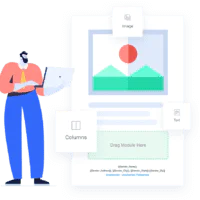
With Twilio SendGrid, you can easily build beautiful, responsive emails that drive results with our Design Editor and Code Editor tools. Whether you prefer visual design, code, or a blend of both, you can easily build marketing and transactional email designs customized to match your company’s branding. If you’re short on time, we also give Twilio SendGrid customers access to our Design Library full of pre-built email templates that you can update with your logo, brand colors, and copy.
Start designing better emails.
Write enticing email copy
Email copywriting requires dedicated time, energy, and focus. Consider tackling each email copy component individually to make the entire task seem less overwhelming. The following content pieces appear before a recipient opens your email:
Email sender, subject line, and preview text—oh my!
Convincing a recipient to open your email requires engaging subject lines, preview texts, and email senders. Here are a couple of pointers for each component to help you optimize each and increase your open rates:
- Sender name: Stop using a no-reply in your emails! Doing so creates a generic and unfriendly experience and will likely discourage your recipients from opening. Try using your brand name so there is no question who your emails are from or check out some other “friendly from” tests to try here.
- Subject line: The first touchpoint you can make with your recipient is the subject line, so it pays to give it special attention! In fact, 67% of US recipients said email subject lines strongly or somewhat strongly influence their decision to open or ignore a message. The best subject lines let your recipients know what to expect from your email, but that’s easier said than done with a limited character count. While you don’t have the space to sum up the entirety of your message, try to choose one thing to highlight—and know that shorter is generally better. Here are some of our all-time favorite subject lines to help inspire your own copy-writing!
- Preview text: If you weren’t able to fit everything you wanted to say in your subject line, you can add it in your email’s preview text. Preview text is a great opportunity to expand on the thoughts you still want to get across before a recipient opens your message. If you don’t set the preview text, most ESPs will pull from your email copy, so make sure you are taking advantage of this real estate.
For more best practices to help your email campaigns secure high open rates, check out our blog post How to Get Subscribers to Actually Open Your Emails.
Headlines, copy, and CTAs
Once your recipient decides that your email is worthy of an open, the next pieces of content they see are your headlines, copy, and call to action (CTA).
Try writing your body copy first, followed by your headline, and then your CTA. With the exception of grammar and style guides, there aren’t any hard and fast rules for copywriting since it’s the most artistic part of the email marketing campaign process. But every piece of successful copy shares a couple of themes:
- Be conversational, not generic. Every audience is different, so you’ll need to pick the tone that works best for your prospects and customers. For example, a scientific email newsletter might choose to use more technical, sophisticated verbiage, while a sock e-commerce store might off for more fun, casual phrasing. The more you write and test what copy and tone resonate best with your recipients, the more comfortable you will be with this step.
- Write with a deep understanding of your audience/reader. In order to build the right emotional connections, you need to have a clear understanding of their interests, wants, needs, and pain points. This way, you can craft messages that make your subscribers feel seen, heard, and valued.
- Focus on the benefit for the reader. Before hitting send, ask yourself what’s in it for my customers and why is this email worth their time? Don’t just send an email to boost end-of-quarter sales, instead send an email that provides a relevant offer or highlights a product or service that solves a pain point for your users, so you know they’ll find value in your message.
For more on email copywriting best practices, our Awesome Email Copy: A How-To explores every last detail about how to break up your writing, how to set up a smooth editing process, and how to feel more confident with email copywriting.
Images
The right images can enhance your email and improve message engagement, but the wrong ones can actually distract recipients from the purpose of your email. You must choose the images you use within an email marketing campaign thoughtfully and carefully to improve the experience your recipient has with your email.
A few online photo galleries that provide free stock photos are Unsplash and Pixabay (or check out our favorites here), or if you have the budget to pay for a photo subscription service, you can check out iStock or ShutterStock.
When choosing images for your email marketing campaigns, look for those that represent concepts or interpretations of the topics included in your email marketing campaign. Look for simple, but bold images that draw attention but aren’t too distracting for your recipient. It may take a little longer than expected, but spending extra time on image selection can help your email campaign pop!
Comply with email regulations to stay out of the spam folder
Even if you’re creating beautiful and engaging email campaigns, some recipients might not want to receive your emails anymore. Don’t take it personally—subscribers often come and go! While you might be inclined to keep people on your lists, it’s actually illegal to hide how to unsubscribe from your messages. The U.S.’s CAN-SPAM law actually requires senders to include a clear way for subscribers to opt out of email marketing campaigns. Failure to comply can cause disastrous consequences for your deliverability and sender reputation, luckily, adding a clear “Click here to unsubscribe” link at the bottom of every marketing email you send will ensure you’re compliant.
If you use Twilio SendGrid to send email marketing campaigns, you can set up an unsubscribe group that will automatically remove a contact from your active list when they subscribe.
Remove unengaged subscribers from your email list
Bigger isn’t always better. Simply having a big email marketing list won’t guarantee your email program is a success, especially if your list is full of unengaged recipients. You should practice good email list hygiene by regularly “scrubbing”, or removing inactive, bounced, and other non-engaging email addresses, from your lists. Periodically removing unengaged users from your email list can actually improve your sender reputation, reduce the likelihood of your brand landing on an email deny list, and increase engagement rates.
Best Practice Tip:
Never purchase an email list—here's why!
Purchased lists contain users who didn't opt in to receive your messaging and who aren't expecting to hear from your brand. As a result, they're more likely to ignore your messages, unsubscribe, or worse—mark your messages as spam.
Looking to increase your subscriber count quickly?
Review, test, and send your email marketing campaign
Before you hit send, take time to review a pre-send email checklist to minimize your chance of sending an email with mistakes. Give your email a final read-through to look for spelling and grammar errors, broken or incorrect links, and browser variations, so you can ensure your email appears exactly as you intend it to.
Or, better yet, ask a colleague to help. Enlist the help of a teammate with a discerning eye and send them a test email to review copy, check links, and email formatting.
Once your email has been thoroughly reviewed, it’s time to either send or schedule your campaigns. Should you send it now, or schedule it for a future time? This decision of when to schedule your email will rely heavily on where most of your recipients reside and whether or not you see higher engagement at certain days or certain times of the day. Not sure which is best for your brand? A/B testing is a great way to figure this out!
To conduct an A/B test to determine which is a more effective send time, send your message to half of your recipients at one time (for example, 8 AM) and to the other half at another (say, 3 PM). Then, compare your results to see which send time had the highest open or click rates—once you have your winner you can continue to test other send times and ultimately find your sweet spot of sending engagement. Just remember, successful A/B tests require you to only test one element at a time, otherwise you can be 100% certain which factor impacted your results.
Best Practice Tip:
Don't send your emails at the top of the hour.
At Twilio SendGrid, we also tend to urge our customers to avoid sending emails at the top of the hour. Sending at “off-hour” times such as 8 or 22 minutes past the hour reduces the chance of your emails becoming delayed if ISPs, such as Gmail or Yahoo, need to process an overload of emails.
Measure your results
Once you’ve scheduled or sent your email marketing campaign, you’re likely feeling a wave of relief as the bulk of your work is over (at least until your next send!). But, don’t forget that you should be spending as much time measuring your email campaigns as building them.
Fortunately, email marketing campaigns produce mounds of data that indicate the health of your email program. Some important email metrics to note include:
- Unique opens
- Click-through rate
- Click-to-open rate
- Unsubscribe rate
- Conversion rates
- Spam complaints
You don’t have to measure every last metric available to you, but make sure you’re continuously monitoring the same 4 or 6 metrics for each campaign so you can capture a complete picture of how your email marketing campaigns are performing and track performance over time. Having a proven track record of results will be crucial when you’re ready to request additional headcount or resources for your email program.
Takeaways
The more hands-on experience you gain building email marketing campaigns, the more efficient you’ll become and the more insight you’ll gain into what works best for your email program.
Although it might feel overwhelming at first, following the steps outlined above will position your campaigns to achieve success. Just don’t be afraid to try new things, test your assumptions, and push creative boundaries. The more you learn what resonates with your audiences, the more you can scale your program and deliver meaningful messages that drive engagement time and time again.
Looking for some extra help to get started with your email program?
Take it for a spin. Start for free and see why senders worldwide trust Twilio to deliver their email.
Get Started with Twilio SendGrid
Twilio SendGrid helps you focus on your business without the cost and complexity of owning and maintaining an email infrastructure. And with a full-featured marketing email service that offers a flexible workflow, powerful list segmentation, and actionable analytics, all of your email needs are met in one simple platform.
