Activate Warehouse Data Faster with New Advanced Audiences features in Twilio Segment
Time to read:
April 14, 2026
Written by
AI generated summary
- Marketers can now build and update audiences directly from warehouse data without relying heavily on engineers.
- Adaptive audience flows prioritize relevant customer relationships and streamline audience treatment with new features like Rank & Refine and Randomized Splits.
- Advanced technical controls, improved performance, and real-time visibility accelerate and optimize audience activation, enhancing precision and reducing manual work.
This summary was generated by AI.
For many organizations, the warehouse is the source of truth for customer data — but getting that data into the tools marketers use every day still requires extra work. The behavioral, transactional, and account-level data teams need for personalization is already there, but activating it often still depends on SQL requests, precomputed traits, and manual audience maintenance.
That gap slows everyone down. Marketers wait for access to the data they need, while data teams spend 15–30 hours a week handling manual marketing requests. The latest Linked Audiences releases in Twilio Segment unlock warehouse data for marketers without giving up the precision, governance, and flexibility technical teams need. With new audience-building capabilities, faster execution, deeper observability, and more programmatic control, teams can move from warehouse data to activation with far less manual work.
For teams operating at scale, performance is improving, too. In early customer results, median audience run times have dropped by 80 - 90%, turning workflows that used to take more than an hour into runs that can finish in as little as five minutes.
Unlike audience tools that force a tradeoff between marketer usability and warehouse-level flexibility, Linked Audiences is built to give both teams a shared activation layer: no-code when you want speed, programmatic control when you need precision.
This release expands Linked Audiences in four key areas: easier warehouse-native audience building, more adaptive audience orchestration, faster activation performance, and stronger visibility and programmatic control for technical teams.
Put warehouse-powered audience building in marketers’ hands
The biggest shift in this release is simple: teams can do more directly from warehouse data, without pushing every request back to engineering.
For many organizations, advanced audience building still depends on a familiar workflow. Marketing identifies a use case. Data teams translate it into SQL. Someone builds or updates traits in the warehouse. Then the logic has to be maintained every time the campaign changes. That process is slow, repetitive, and hard to scale.
These builder updates are designed to change that by making it easier for marketers to build audiences directly from warehouse data, with less engineering support.
Entity-Based Linked Audiences (GA) makes it easier to build audiences around business entities like accounts, subscriptions, or policies — not just individual profiles. If a B2B team wants to identify at-risk enterprise customers based on declining spend across locations, they can now build that audience directly around the account and activate against the right stakeholders without custom modeling workarounds.
Part of Audience (GA) helps teams stop rebuilding the same segmentation logic across every campaign. In the past, if a retailer wanted every loyalty promotion to use the same “active loyalty member” definition, that logic often had to be duplicated and manually updated across multiple audiences. Now teams can reference one Linked Audience inside another, creating a reusable source of truth for critical segments. When the core audience definition changes such as "VIP Customer", dependent audiences stay aligned automatically.
Aggregated Conditions (GA) brings more warehouse-native calculations into the Segment UI. Instead of asking engineers to precompute every metric a marketer might need, teams can build audiences using sums, counts, averages, and min/max values directly from raw warehouse tables. That means a travel brand can target customers based on cumulative spend over the last 12 months, or a commerce team can segment by recent purchase frequency, without waiting for custom scripts or prebuilt traits.
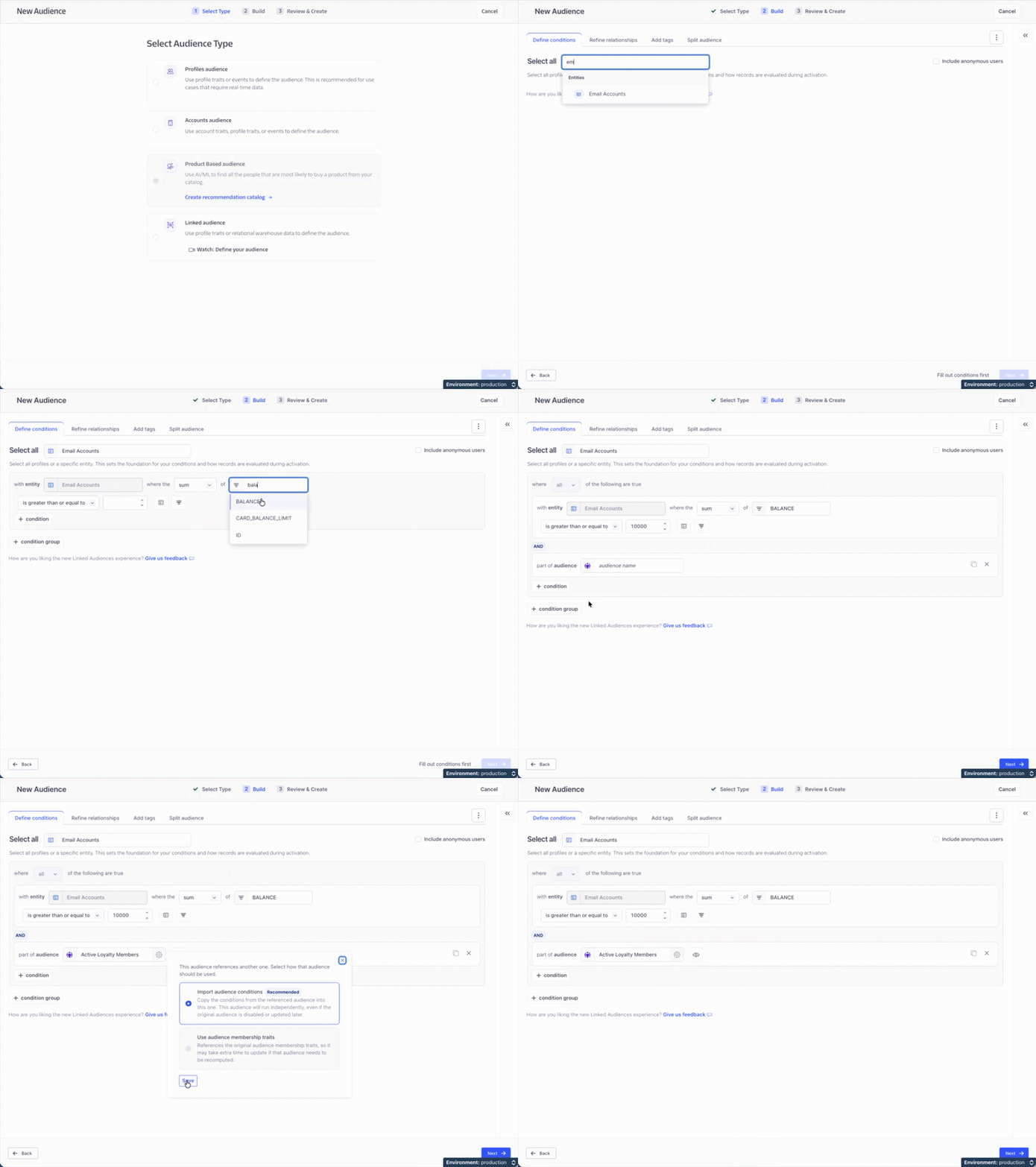
Combining Entity-Based Targeting, Aggregated Conditions, and Part of Audience references to build precise, multi-layered segments in one flow
Together, these updates make Linked Audiences more expressive for marketers and less maintenance-heavy for data teams. The result is faster audience creation, less manual rework, and more precise personalization across the customer journey
Move beyond static segments to adaptive audience flows
A good audience is not just about who qualifies. It is also about which relationship matters most, which treatment a customer should receive, and what context downstream tools need to personalize effectively.
That is where the next set of Linked Audiences updates comes in. Together, these updates help teams identify the most relevant relationship for each customer, route audiences into the right treatments, and pass the context downstream systems need to personalize effectively.
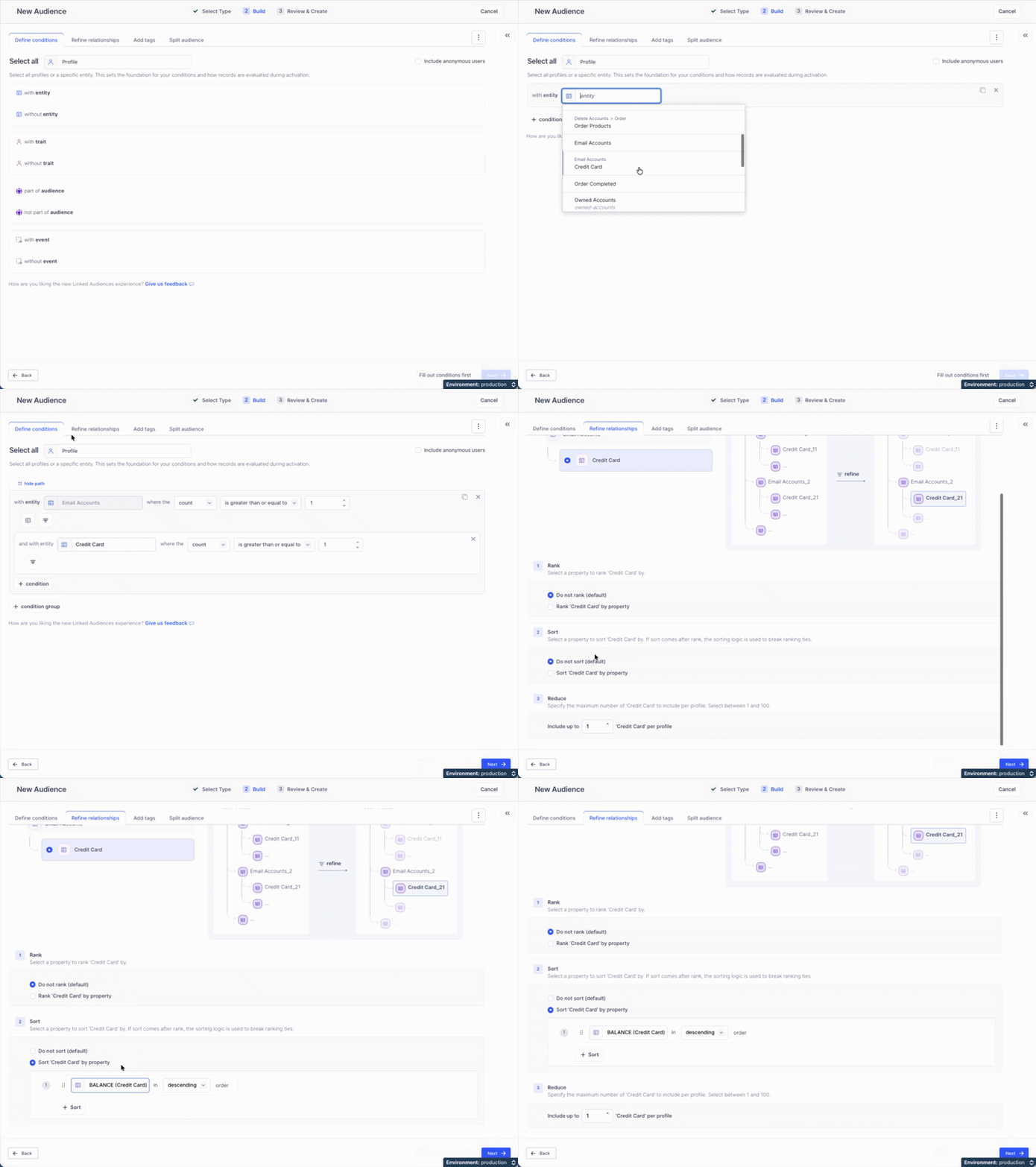
Rank & Refine (GA in July 2026) helps teams prioritize the single most relevant entity relationship for each profile. Instead of sending duplicate or competing messages when a customer is tied to multiple accounts, products, or records, teams can sort and reduce based on the logic that best fits the use case. A financial services company, for example, can identify the highest-balance card associated with each customer and activate against that one relationship instead of triggering separate offers for every card on file.
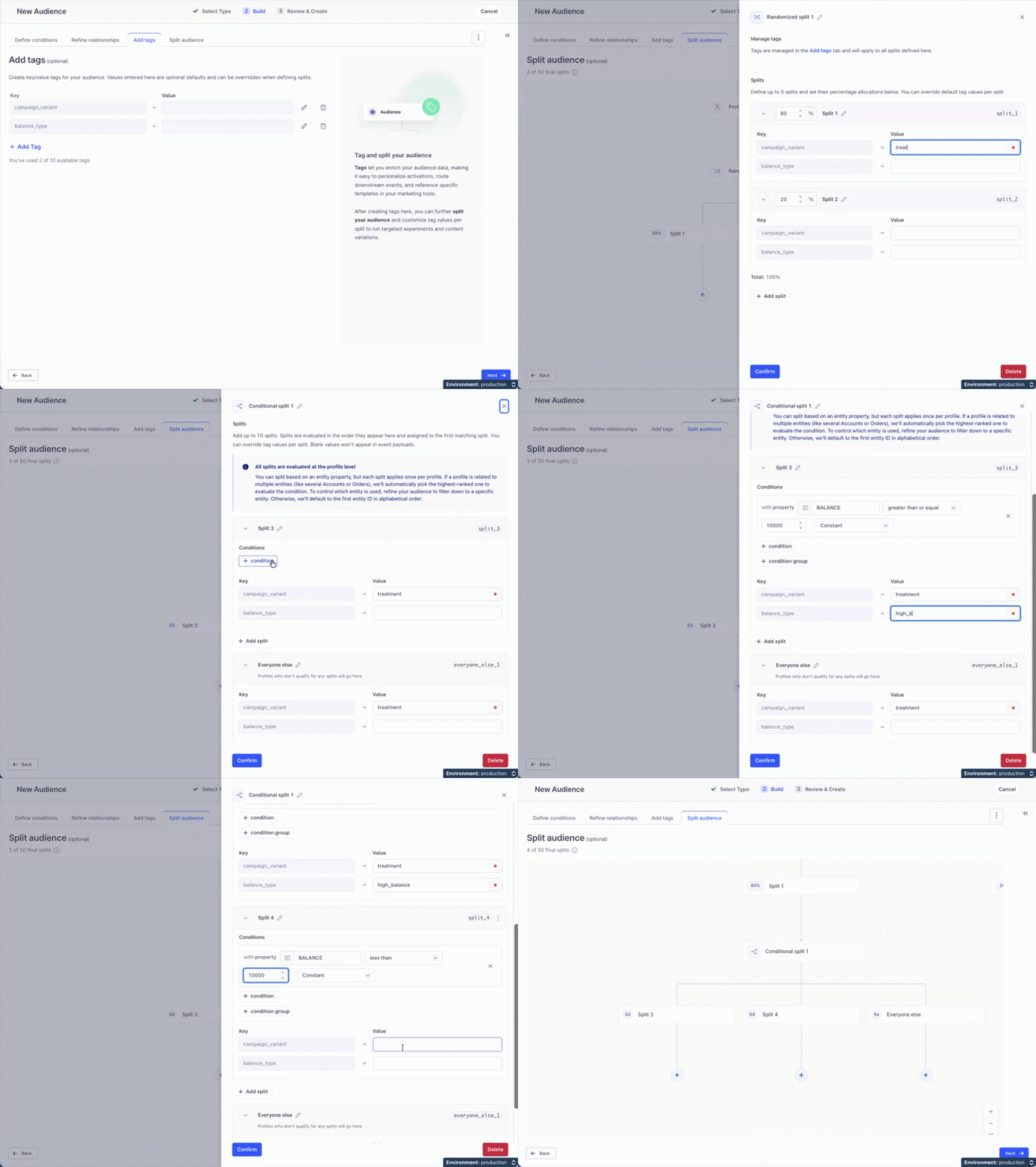
Randomized Splits (Public Beta now, GA in Sept 2026) gives marketers a built-in way to divide a Linked Audience into subgroups using randomized percentages or conditional logic. Previously, teams often had to create multiple overlapping audiences or manage holdouts and test logic manually in downstream tools. With Splits, they can run A/B tests, set holdouts, and route treatments directly within Linked Audiences — reducing manual setup and keeping audience logic in one place.
Tags (Public Beta now, GA in Sept 2026) adds dynamic key-value metadata to those audience splits, so downstream tools receive not just audience membership but the context needed to personalize content. Instead of hardcoding separate campaign logic in an email or SMS platform, teams can pass values like offer type, discount tier, or treatment group directly in the payload.
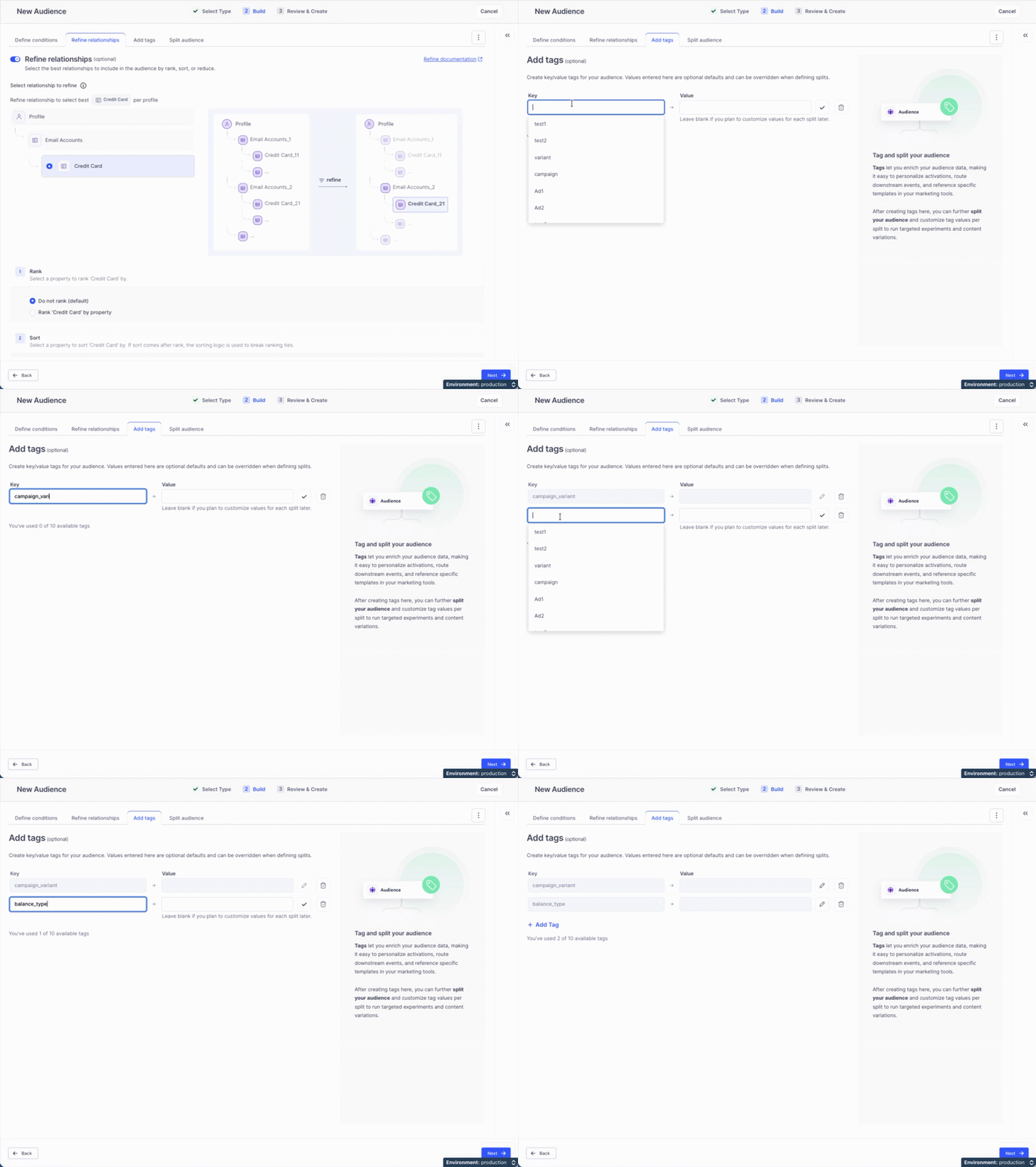
These capabilities make audience activation more adaptive. Teams can qualify the right users, prioritize the right relationship, and deliver the right context downstream in one workflow.
Speed up activation without adding warehouse overhead
Advanced audience logic only matters if it runs fast enough to support real customer engagement.
Slow runs create stale campaigns, missed opportunities, and unnecessary warehouse load. That is why one of the most important updates in this release is Warehouse Extraction Optimization (GA).
This enhancement builds on Linked Audiences’ low-copy architecture with a lean extraction model that processes only the data explicitly needed for enrichment payloads. Instead of querying every entity referenced in audience conditions, the system narrows extraction to the data required downstream. That reduces the volume processed during syncs, improves real-time computation, and helps teams operate more efficiently at scale.
In early customer deployments, these optimizations have cut median audience execution times dramatically — by 80-90% — reducing jobs that once stretched past an hour to just a few minutes.
That kind of improvement changes what teams can do with warehouse-based activation. Instead of treating it like a slow batch job, they can respond faster with fresher audiences while keeping infrastructure lean.
Add delivery visibility and programmatic control
As teams scale audience activation, speed alone is not enough. They also need visibility into delivery health, flexibility in how payloads are shaped, and APIs that fit into engineering workflows.
Several updates in this release help close those gaps:
Delivery Overview (Private Beta in June 2026): Gives teams real-time observability into Linked Audience syncs from extraction through delivery. If a triggered campaign is not reaching customers, teams can quickly identify failure spikes, isolate issues by event type or destination, and resolve problems faster.
Destination Functions (GA in July 2026): Lets teams use JavaScript to transform and route Linked Audience payloads before delivery. This is especially useful when internal systems or external tools require custom payload formats or enrichment logic.
Warehouse Writeback (GA): Syncs audience entry and exit events back into Snowflake, BigQuery, Databricks, and Redshift, making it easier to join activation history with downstream business outcomes in BI workflows.
Audiences API (GA in July 2026): Adds programmatic audience lifecycle management for teams that want to automate creation, previewing, updates, and destination activation as part of their existing tooling or CI/CD processes.
These updates give technical teams more control without forcing marketers back into manual workflows.
Why this matters for builders
With these updates, marketers can build more of their own audiences directly from warehouse data. Data teams can spend less time servicing repetitive requests. Engineering teams can automate and govern activation at scale. And enterprise organizations can run more advanced audience strategies with the performance and observability needed for production use.
That means:
Less manual work: fewer SQL tickets, fewer precomputed traits, and less duplicated audience logic
Faster activation: median audience run times reduced by 80-90% in early customer results
More reliable execution: better observability, clearer delivery diagnostics, and tighter control over downstream payloads
More precise personalization: richer entity-based targeting, ranking, splits, and contextual activation
Start building with Linked Audiences
If you’re looking to reduce the manual effort behind audience requests, accelerate warehouse-based activation, and give both marketers and technical teams greater control, these updates are ready to deliver.
Want to see these latest Linked Audiences features in action? Talk to a Twilio Segment expert today to learn more.

Related Resources
Twilio Docs
From APIs to SDKs to sample apps
API reference documentation, SDKs, helper libraries, quickstarts, and tutorials for your language and platform.
Resource Center
The latest ebooks, industry reports, and webinars
Learn from customer engagement experts to improve your own communication.
Ahoy
Twilio's developer community hub
Best practices, code samples, and inspiration to build communications and digital engagement experiences.