Twilio SIGNAL London 2026: Turning AI Intelligence into Actionable Customer Engagement
Time to read:
November 26, 2026
Written by
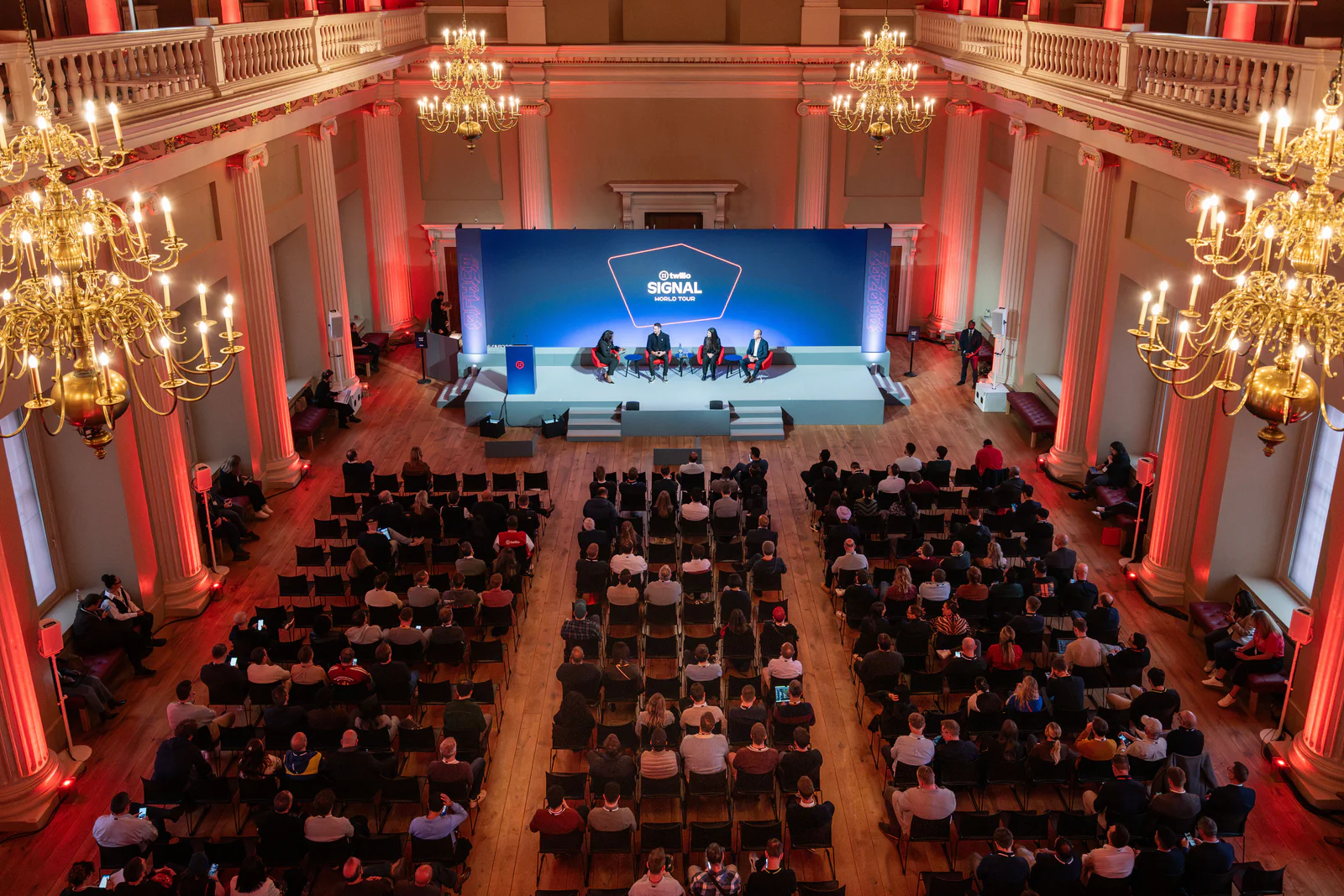
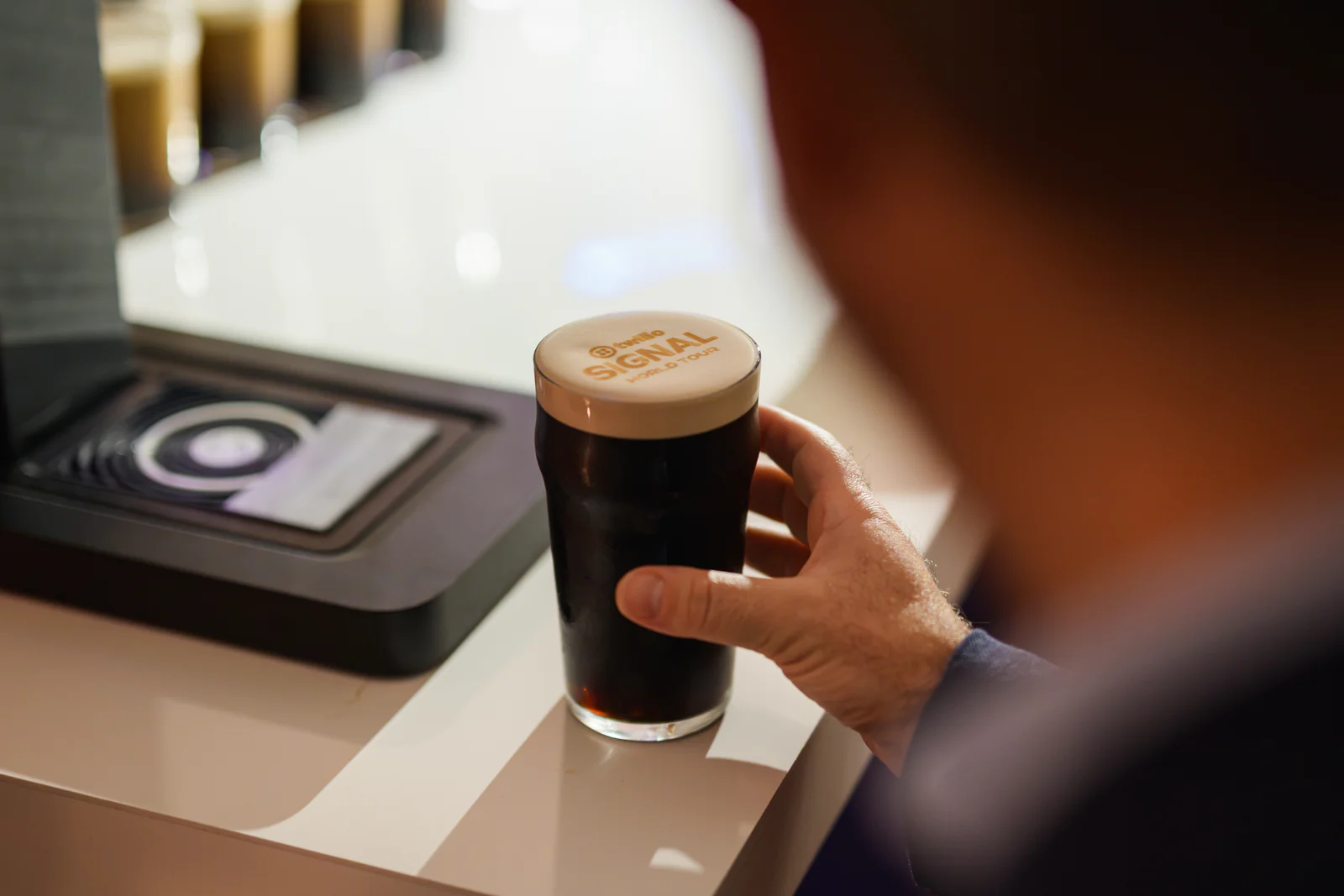
On 19 November 2026, developers, business leaders, and innovators packed into London’s historic Banqueting House for Twilio SIGNAL, the grand finale of the SIGNAL World Tour. The event didn't hold back on the fun: attendees ordered their morning coffees via a WhatsApp Barista, stepped into the AI Portrait Studio, lined up for the Guinness printing activation, and even watched Twilio’s CMO take to the stage sporting a Chelsea FC Christmas jumper.
Beyond the pints, portraits, and festive knitwear, however, the energy in the room pointed to one unmistakable shift. The next phase of AI-powered customer engagement isn’t just about building smarter models. It’s about pairing that intelligence with the communications infrastructure, live customer data, and real-time context needed to deliver genuinely useful experiences. Across keynotes, product launches, and candid customer stories, one theme stood out: businesses are finally moving past isolated interactions and building continuous, connected conversations.
The Era of Action-Oriented AI Agents
The opening keynote, delivered by Twilio’s CEO Khozema Shipchandler, made it clear that AI agents are graduating from answering questions to getting things done. The new ambition is for technology to coordinate complex tasks and solve problems on a customer's behalf. Picture a delayed flight: instead of a frustrated traveller scrambling to rebook a hotel, airport transfer, and dinner reservation, AI agents could step in and orchestrate the entire recovery automatically.
Massive scale ahead: IDC projects that one billion AI agents could be operating within enterprises by 2029.
Built to connect: To deliver on that promise, agents need the ability to communicate across channels, plug into existing systems, verify identities, and track every action taken.
Trust as the foundation: The next wave of innovation will be defined by what AI can reliably do for customers making security, reliability, and regulatory compliance non-negotiable.
Connecting Channels, Context, and Intelligence
In his product keynote, Twilio’s Field CTO Andy O'Dower, tackled a frustrating reality: AI has become dramatically smarter, yet the everyday customer experience hasn't always kept pace. Even the sharpest AI agent hits a wall if it lacks context or can't communicate across systems. To close that gap, Twilio is evolving its platform across three core pillars:
Next-Gen Channels: Continued investment in voice, SMS, RCS, WhatsApp, and Apple Messages for Business (now in beta).
The Conversation Layer: Tools designed to stitch individual touchpoints together, including Conversation Relay for voice AI, Conversation Memory (integrated with Twilio Segment) so agents never lose customer context, and Conversation Intelligence for real-time monitoring and hallucination detection.
Twilio Console: A unified command centre to help teams manage the complexity of deploying AI at scale.

Real-World Realities and the Human Touch
For all the excitement around automation, SIGNAL London stayed refreshingly grounded in the realities of deploying AI at scale.
Car Finance 247 showed how AI can capture out-of-hours enquiries and seamlessly hand them off to a human adviser with full context intact. They reported an allocation rate jump from 36% to 45%, alongside an engagement improvement from 37.7% to 42.7%. Still, pushing the agent to handle around 50% of enquiries exposed real-world limitations, underscoring that human expertise remains essential.
Relay Technologies, the fast-growing UK delivery business, demonstrated how conversational tech eliminates everyday friction. By using WhatsApp Flows, customers can share delivery instructions and safe-place preferences directly in the chat - no separate app or clunky web form required.
Switchboard, the LGBTQ+ support charity, offered a powerful reminder that great engagement isn't always about speed or automation. Handling roughly 17,000 conversations last year, their focus is on accessibility, privacy, and meeting people on the channel - phone, email, or instant messaging where they feel safest.
The Rise of Voice AI and RCS
Voice and next-generation messaging took centre stage, with a clear push toward interactions that feel more natural, personalised, and proactive.
Voice AI hits production: A partner panel featuring AWS, Deepgram, and Zing Dev confirmed that businesses are moving voice AI out of the lab and into live production, putting testing, observability, guardrails, and lifecycle management front and centre.
Builders leading the way: Independent developers are pushing the boundaries, too. Creator Matt Cortland showcased Guinndex, a playful voice agent named "Rachel" (built with Twilio Voice, ElevenLabs, and other tools) that calls local pubs to track and compare Guinness prices.
RCS gains momentum: In a joint session with Google, RCS stood out as a rapidly growing channel for branded, verified, and interactive messaging, with the UK emerging as a key market at approximately 76% coverage.
Ultimately, SIGNAL London 2026 made one thing clear: as AI agents take on greater operational responsibility, scalable communications infrastructure and strong governance will matter just as much as the intelligence behind them. The winning businesses won't just deploy smarter AI, they will deliver one seamless, connected conversation, regardless of the channel or model working behind the scenes.



Related Resources
Twilio Docs
From APIs to SDKs to sample apps
API reference documentation, SDKs, helper libraries, quickstarts, and tutorials for your language and platform.
Resource Center
The latest ebooks, industry reports, and webinars
Learn from customer engagement experts to improve your own communication.
Ahoy
Twilio's developer community hub
Best practices, code samples, and inspiration to build communications and digital engagement experiences.