The future of customer engagement: How brands will win in 2026
Time to read:
January 21, 2025
Written by
Reviewed by
AI generated summary
- Customer engagement in 2026 focuses on trust, personalization, and seamless experiences.
- AI drives predictive engagement, providing timely guidance and preventing issues before they arise.
- Effective communication and transparency build trust, enhancing customer loyalty and satisfaction.
This summary was generated by AI.
The future of customer engagement: How brands will win in 2026
Customer engagement in 2026 is no longer a series of isolated messages or reactive responses. It is a continuous, trust-driven relationship. Brands compete not just on products or price but on how thoughtfully, ethically, and intelligently they show up in customers’ lives. Success comes from anticipating needs, creating seamless experiences, and building meaningful connections over time.
Engagement has become predictive rather than reactive
The most meaningful interactions increasingly happen before a customer reaches out. Instead of waiting for issues to surface, brands are expected to anticipate needs using behavioral data, usage patterns, and AI-driven insights. Artificial intelligence has moved beyond simple automation into prediction and orchestration, enabling early intent detection, timely guidance, and issue prevention before frustration sets in. Engagement shifts from response management to experience stewardship, where interactions feel thoughtful and well-timed without crossing into intrusion.
Here’s a good example of how a SaaS company can detect when a customer repeatedly fails to complete a key workflow. Instead of waiting for a support ticket, the company can proactively trigger a personalized message offering guidance, a short tutorial, or a live session with a specialist. The customer feels supported, not monitored, because the outreach is relevant and timely. Predictive engagement like this reduces churn while strengthening trust.
RCS builds trust through clear, interactive communication
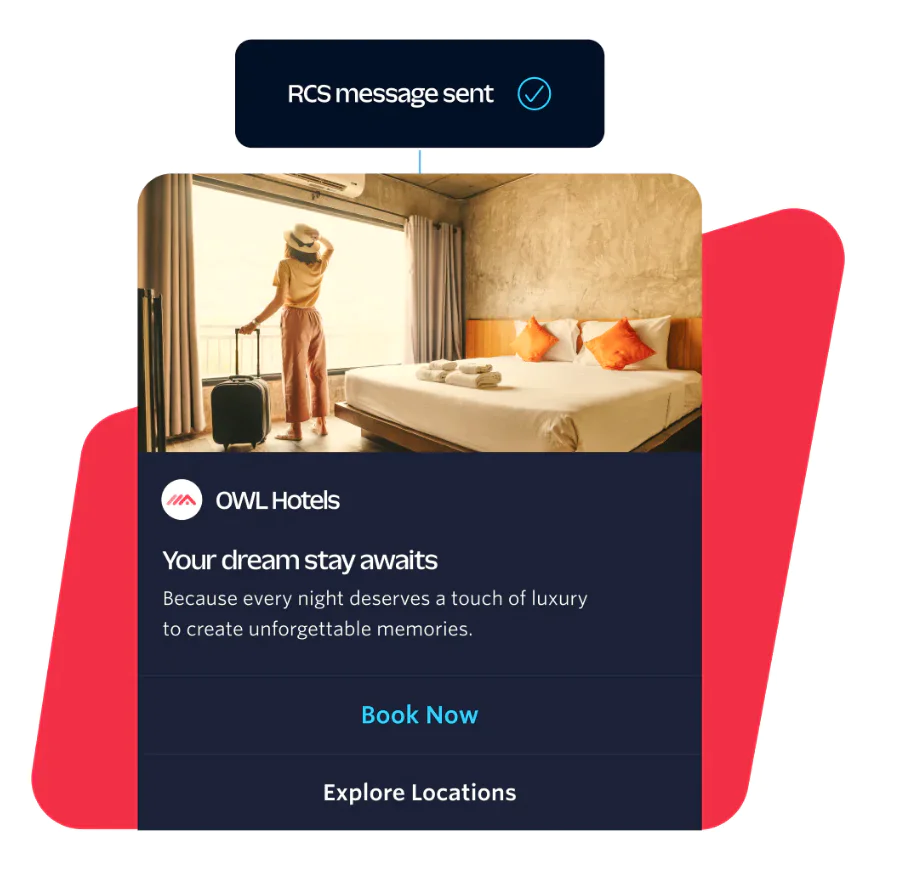
Effective messaging is defined by clarity and confidence. Customers expect messages they can trust, recognize, and act on without friction. Rich Communication Services (RCS) supports this expectation by combining verified sender identity, rich visuals, and interactive elements within the familiar messaging environments customers already use every day.
This shift toward trusted, interactive messaging becomes especially tangible in hospitality, for example, where timing, clarity, and confidence shape the entire guest experience. A hotel brand can use RCS to send reservation confirmations and pre-arrival messages with branded verification, share check-in details, amenities, or local recommendations through rich cards, and allow guests to confirm arrival times, request early check-in, or upgrade their stay with a single tap. Because everything happens in one authenticated thread, guests feel confident and informed, reducing front-desk congestion, last-minute questions, and support calls. Over time, this kind of clear, interactive communication reinforces brand credibility and creates a smoother, more personalized guest experience.
Agent productivity improves when tools remove friction
Productivity today is less about handling more conversations and more about removing the friction that slows teams down. Agents are most effective when they have immediate access to context, guidance, and automation without needing to switch systems or repeat work.
For example, a customer support team operating in a unified environment can see conversation history across channels, receive AI-generated summaries, and use suggested responses tailored to each situation. When routine inquiries are handled automatically and complex issues are escalated with full context intact, agents resolve problems faster and with greater confidence. The result is a calmer, more focused workforce, and customers who feel heard and supported throughout the interaction.
Omnichannel engagement is seamless and invisible
Customers no longer think in terms of channels. They simply expect conversations to continue without friction. Context is preserved across SMS, chat, email, voice, and in-app messaging so customers never have to repeat themselves or restart a conversation. As interactions move fluidly between touchpoints, repetition and fragmentation feel like friction rather than inconvenience. The strongest omnichannel strategies prioritize continuity and a coherent presence, creating experiences that feel effortless.
Consider a retail customer who receives a shipping update via SMS, asks a follow-up question through web chat, and later calls customer support. When conversation history is unified, the agent on the phone can see the full context instantly. The customer doesn’t need to re-explain the issue, and the interaction feels efficient. This continuity transforms what could have been a frustrating experience into a seamless one.
Personalization has evolved into contextual understanding
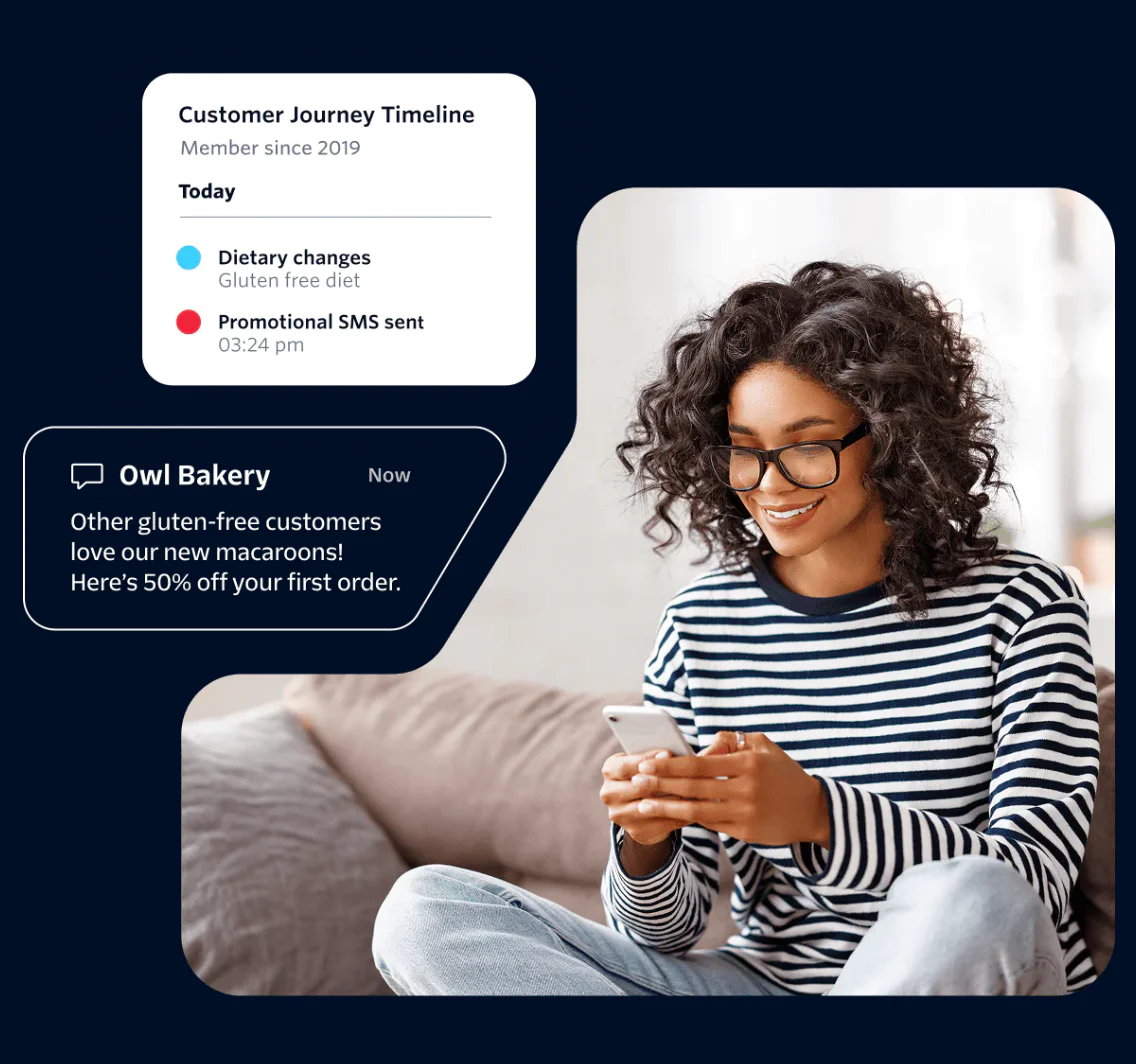
Personalization is no longer about surface-level tactics like name insertion or static product recommendations. It is about understanding where a customer is in their journey and responding with the right tone and content in that moment. Behavioral patterns, real-time signals, and situational context now guide interactions more than fixed profiles. As customers become more aware of how their data is used, effective personalization must be transparent, consensual, and restrained. Brands that succeed create relevance through genuine understanding, delivering experiences that feel thoughtful without compromising trust.
Consider a retail customer who receives a shipping update via SMS, asks a follow-up question through web chat, and later calls customer support. When conversation history is unified, the agent on the phone can see the full context instantly. The customer doesn’t need to re-explain the issue, and the interaction feels efficient. This continuity transforms what could have been a frustrating experience into a seamless one.
Trust and transparency are built into engagement workflows
Trust has become one of the most valuable engagement currencies. Customers are highly aware of automation, AI, and data usage, and they disengage quickly when communication feels intrusive or unclear. Transparency and consent are increasingly embedded directly into engagement workflows, helping customers understand how technology is used and giving them meaningful control over their interactions. Ethical engagement is no longer just a values statement; it directly influences retention, loyalty, and advocacy. Open communication, respected boundaries, and consistent behavior build deeper emotional connections over time.
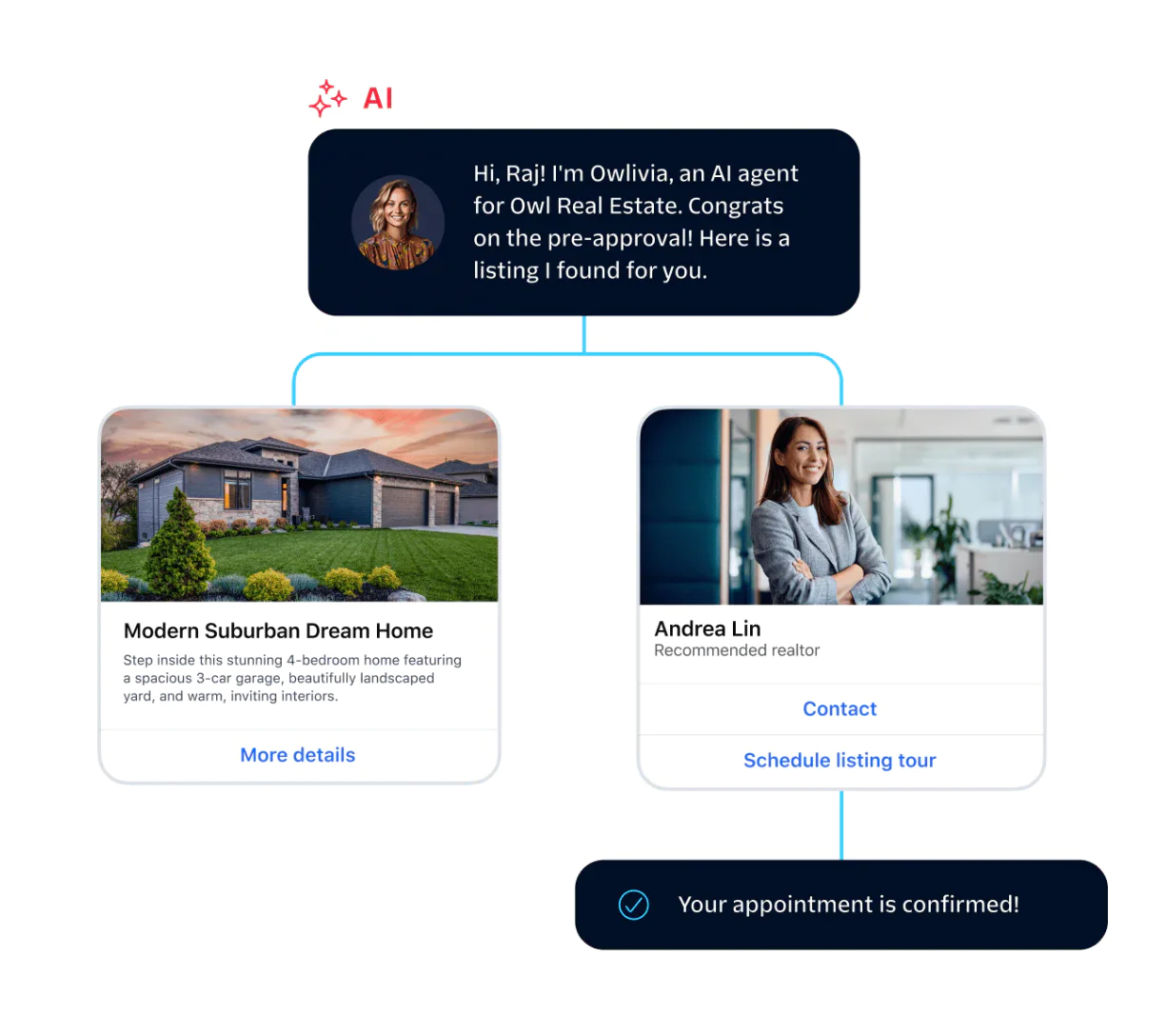
Beyond efficiency and personalization, trust has emerged as a cornerstone of meaningful engagement, shaping how customers perceive every interaction and respond to technology. When an AI assistant used for customer support clearly identifies itself, explains what it can help with, and offers an easy handoff to a human, customers feel more comfortable engaging. Similarly, when messages clearly explain their purpose, such as a fraud alert or service update, response rates increase and opt-outs decline. Transparency turns automation into a trust-building asset rather than a liability.
The best experiences combine AI efficiency with human empathy
AI is most effective when it enhances human connection rather than replaces it. High-volume, repetitive tasks such as pattern recognition, routing, and real-time decision support can be handled by AI, freeing people to focus on moments that require judgment and emotional intelligence. Customers can sense when technology supports, rather than obscures, the human on the other side of the conversation. The strongest engagement experiences balance speed with care, efficiency with authenticity, and automation with genuine understanding.
Engagement is now participatory and two-way
Engagement has shifted from broadcasting messages to facilitating meaningful conversations. Customers expect interactions to be reciprocal and responsive, not linear or scripted. Modern engagement experiences invite participation, allowing customers to ask questions, make choices, and influence outcomes in real time. As brands move away from traditional funnels toward interactive journeys and community-driven experiences, engagement becomes a shared process rooted in dialogue, presence, and mutual exchange rather than one-directional persuasion.
A logistics company, for example, can allow customers to reroute a delivery, schedule a new drop-off time, or request updates through a simple text-based interaction. Instead of calling a support line or navigating a complex portal, customers resolve issues conversationally. Engagement feels collaborative rather than bureaucratic, and satisfaction increases as friction decreases.
Loyalty is earned through consistency and reliability
Loyalty today is less about rewards programs and more about reliability, emotional safety, and follow-through. Customers stay with brands that communicate clearly, behave consistently, and handle problems with care. When messaging is aligned across teams and touchpoints, customers experience one coherent voice regardless of who they are speaking to. During disruptions, proactive and consistent updates reduce confusion and frustration. Over time, reduced friction, respectful communication, and alignment with customer values build loyalty that is emotional rather than transactional.
Engagement has become a living system
Taken all together, customer engagement in 2026 operates as a living system rather than a series of isolated interactions. It adapts in real time, responds to context, and evolves alongside customer needs. Technology enables scale and intelligence, but meaning comes from coherence, care, and ethical intent. The brands that thrive understand a fundamental shift: engagement is no longer about winning attention in the moment. It is about earning trust, continuity, and presence over time. In 2026, the brands that win are not the loudest, they’re the ones that listen best.
Conversational AI is redefining what “engagement” means
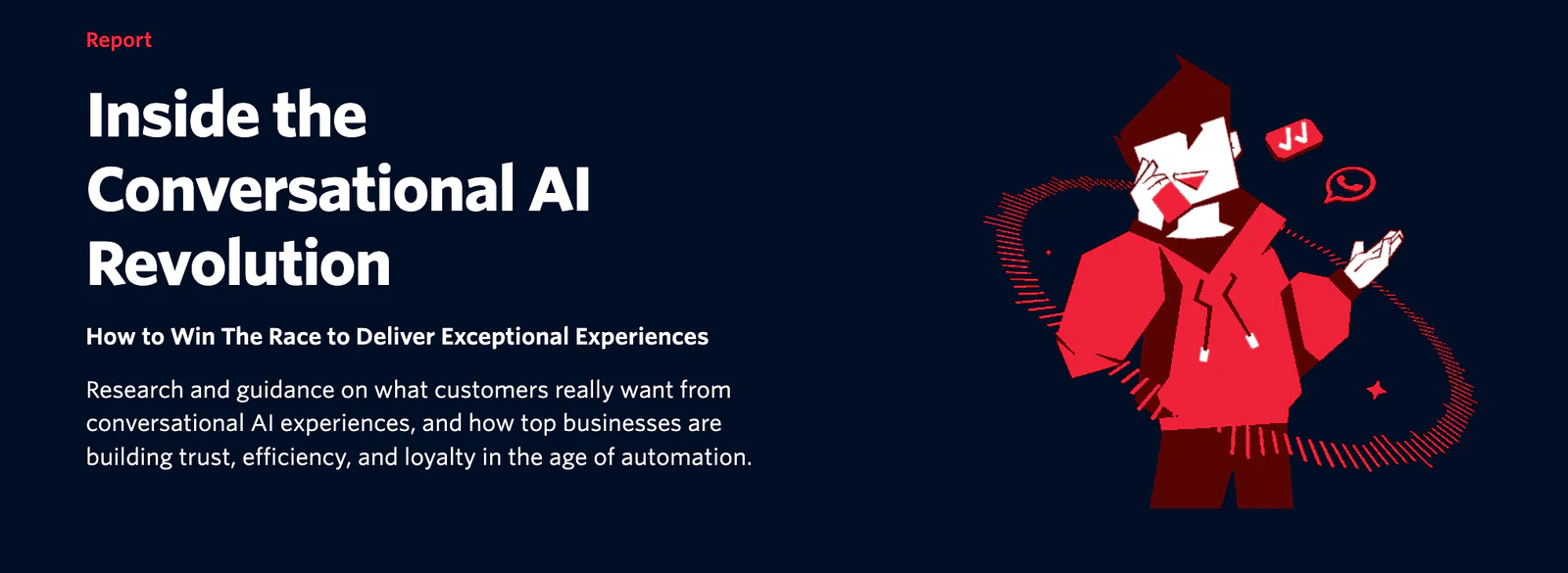
Conversational AI has shifted from a novelty to a foundational element of modern engagement. It enables communication that combines precision and personality at scale, interpreting intent, maintaining context across touchpoints, and responding in ways that feel natural and relevant. Customers receive fast, accurate answers and feel understood, while teams are freed to focus on the most meaningful, high-impact interactions.
For a deeper look at how this evolution is reshaping engagement strategies and expectations, check out Twilio’s Inside the Conversational AI Revolution report.

Related Resources
Twilio Docs
From APIs to SDKs to sample apps
API reference documentation, SDKs, helper libraries, quickstarts, and tutorials for your language and platform.
Resource Center
The latest ebooks, industry reports, and webinars
Learn from customer engagement experts to improve your own communication.
Ahoy
Twilio's developer community hub
Best practices, code samples, and inspiration to build communications and digital engagement experiences.