Sunsetting Twilio Segment’s Legacy Analytics Libraries
Time to read:
February 23, 2026
Written by
Reviewed by
AI generated summary
- Migrate from legacy Analytics-iOS and Analytics-Android SDKs to Analytics-Swift and Analytics-Kotlin for enhanced performance and features.
- New SDKs offer modern capabilities like AI-driven instrumentation, consent management, and advanced analytics.
- Support for legacy SDKs ends on March 31, 2026; migrate by then to maintain full support and access new features.
This summary was generated by AI and reviewed by the Twilio team.
Summary
- As announced in March 2025, we are ending support for Twilio Segment’s Analytics-iOS and Analytics-Android at the end of Q1 2026. This affects both the libraries and any device-mode destinations that depend on them.
- The replacements, Analytics-Swift and Analytics-Kotlin, deliver superior performance and modern features, such as Auto-Instrumentation, Consent Management, Live Plugins, and Destination Filters.To ease the transition, we've prepared migration guides and wrappers for using these SDKs in Objective-C and Java.
- What does this mean? Events will continue reaching Segment if you stay on legacy SDKs, but those libraries won't receive updates or bug fixes. To maintain full support and access to new capabilities, migrate to Analytics-Swift and Analytics-Kotlin.
Background
When we launched our Twilio Segment Analytics SDKs in 2014, they revolutionized how businesses track customer data for marketing and analytics. These libraries have served our community well, growing to support 40,000 sources and processing trillions of events monthly.
A decade later, the technological landscape has transformed dramatically. What once was cutting-edge architecture now struggles to accommodate modern innovations without introducing complexity, performance bottlenecks, and mounting technical debt. To ensure our customers have modern tooling that matches contemporary expectations around performance, security, and ease-of-use, the Twilio Segment team continues pioneering R&D on new industry standards and delivering cutting-edge capabilities.
The path forward: Analytics-Swift & Analytics-Kotlin
Our modern libraries represent a complete architectural reimagining, built for today's challenges and tomorrow's opportunities. They deliver superior performance, seamless framework compatibility, and the flexibility to adapt as technology evolves.
These next-generation solutions unlock powerful capabilities including AI-ready instrumentation, granular device-mode destination filters, and plugin-in consent management—features that would be impossible to implement effectively on legacy infrastructure.
Why upgrade now?
Performance that scales
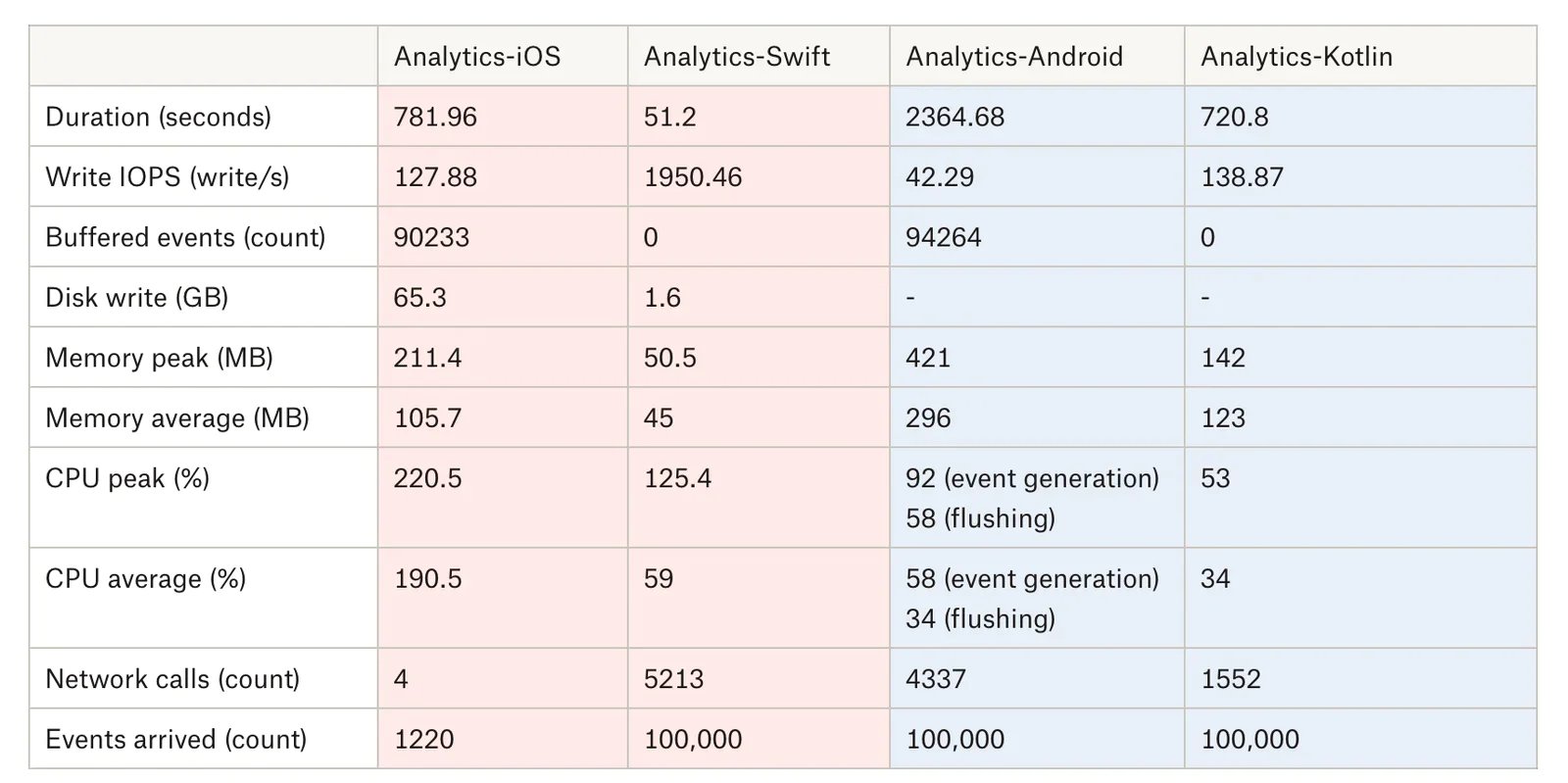
Our benchmarks reveal the stark reality: legacy SDKs run twice as slow while consuming double the resources compared to modern alternatives. During peak loads, they cache 94% of data in memory, risking data loss during unexpected shutdowns.
Privacy and compliance built-in
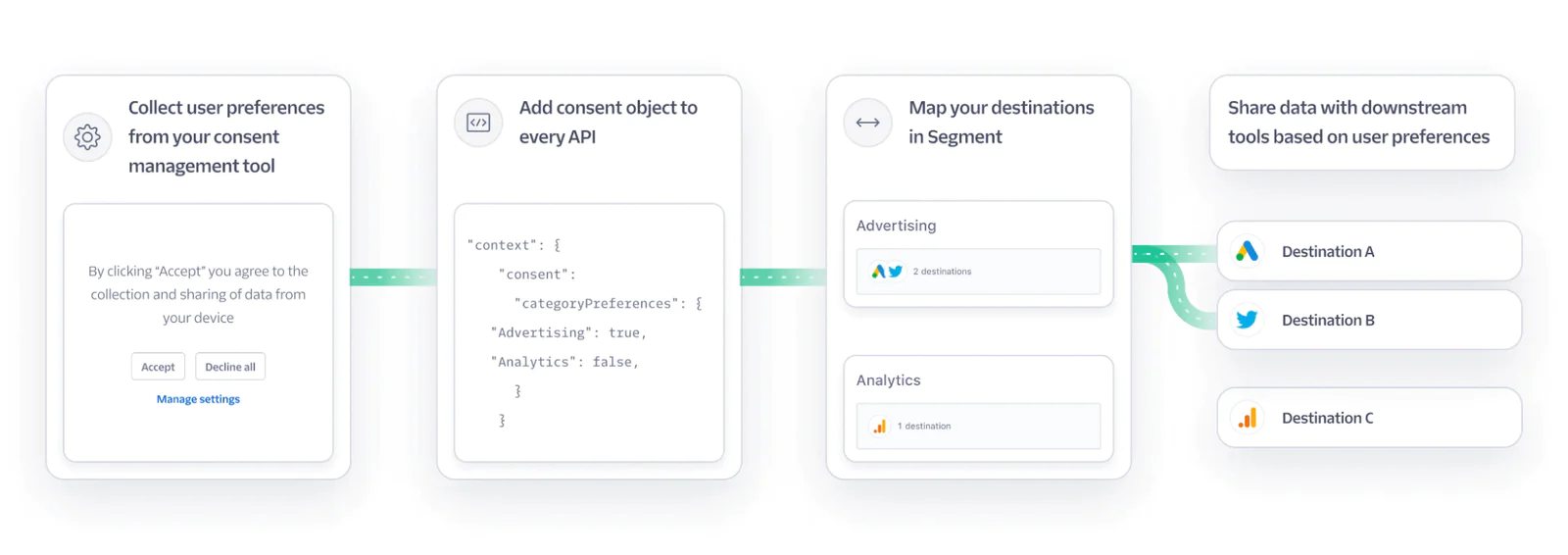
Our next-generation libraries support consent management that helps you obtain, store, and manage user permissions for data collection and sharing. The SDKs enforce these choices throughout the data pipeline, ensuring compliance with regulations like GDPR and CCPA while giving users meaningful control over their privacy.
Features that matter
The new architecture enables capabilities such as AI-driven instrumentation, consent management, Live Plugins, and advanced analytics. It also provides the flexibility to customize critical components like plugins, storage, flush policies, and HTTP clients based on different needs. While attempting these enhancements on legacy infrastructure would require disruptive breaking changes, our modern libraries have them built-in, providing a highly flexible and extensible foundation for future innovation.
Migration timeline
Q1 2025: Official Sunset Announcement – Customers received detailed migration guides, FAQs, and support resources.
Q2-Q1 2026: Migration Support Period – Our team provided support and weekly reminders for customers yet to transition.
March 31st, 2026: Full Sunset – Legacy Segment SDKs will no longer receive updates or support. To ensure uninterrupted service, all customers must migrate by this date.
How to migrate
Comprehensive Migration Guides: Step-by-step instructions for iOS, Android.
Responsive Support: Our customer success team is available for assistance and troubleshooting.
Next steps
We encourage you to begin your migration as soon as possible to take full advantage of these improvements. If you have any questions or need assistance, please reach out to our support team at friends@segment.com or report to our Github issues (Swift, Kotlin).
Thank you for being a valued customer. We are excited to continue innovating and providing you with high quality solutions for your data needs!
Additional resources
- Auto-Instrumentation: The End of Manual Tracking
- AI-ready Instrumentation from the ground-up, with Auto-Instrumentation
- Highlighting Performance Improvements Across Our Most Popular SDKs
- Upgrade to Analytics-Swift (iOS)
- Analytics-Kotlin Migration Guide (Android)
- Consent Management Overview
- Live Plugins
- Destination Filters
Wenxi Zeng is a Staff Software Engineer at Twilio on the Data Collection team. He specializes in writing mobile SDKs that are scalable and performant—though he's equally skilled at giving legacy SDKs a dignified send-off. He can be reached at wzeng@twilio.com.



Related Resources
Twilio Docs
From APIs to SDKs to sample apps
API reference documentation, SDKs, helper libraries, quickstarts, and tutorials for your language and platform.
Resource Center
The latest ebooks, industry reports, and webinars
Learn from customer engagement experts to improve your own communication.
Ahoy
Twilio's developer community hub
Best practices, code samples, and inspiration to build communications and digital engagement experiences.