Discover how unified data, AI, and a modern customer engagement platform help enterprises simplify complexity, strengthen trust, and deliver real-time experiences.
How to create resilient, real-time customer engagement in a rapidly changing tech landscape
Time to read:
AI generated summary
- Customer engagement is enhanced by unifying data, communication, and AI tools on a single platform
- Only 45% of consumers feel understood by brands, highlighting the need for better data integration
- Unified platforms like Twilio’s can significantly reduce acquisition costs and improve campaign effectiveness
- Modern identity solutions and secure, efficient verification processes are crucial in building trust and reducing friction
This summary was generated by AI.
The Executive Leader’s Guide to Modern Customer Engagement
Customer engagement is entering a new era defined by AI, rising privacy demands, and growing pressure to do more with less. Winning companies are investing in platforms that unify their customer data, communications channels, and intelligence tools to deliver trusted experiences that adapt to every customer.
With nearly every business planning to deepen its AI investments in the coming years, 97% in the next five according to our 2025 State of Customer Engagement report, now is the time for leaders to step back and think about how all their systems can work together instead of operating in silos.
When everything works together, real-time customer engagement becomes far easier to build, operate, and scale. Instead of relying on one-off personalization, businesses can deliver experiences that are contextual, timely, predictive, and consistent across every channel. These are the kinds of interactions customers now expect–moments that feel relevant because they’re informed by real understanding, not just surface-level data.
And businesses that invest in this level of intelligence see clear payoff. According to the same 2025 research, 75% of companies say that personalization boosts customer spending, with a 32% average increase per purchase. It’s a powerful signal: when engagement feels connected, coordinated, and rooted in context, customers respond.
The answer: A secure, trusted platform
The Twilio platform brings together contextual data, cross-channel communications, and AI-powered insights so customers hear from your business on the channels they prefer, at the right moments, with personalized offers and support informed by real context. It offers the security, flexibility, and scale modern enterprises require.
In this guide, you’ll learn how to:
- Optimize spend with data-driven marketing
- Deliver secure, seamless identity experiences
- Personalize engagement across every channel
- Build trust with transparent data stewardship
And ultimately, how a platform approach helps your organization create durable, profitable customer relationships in a rapidly changing landscape.
Chapter 1:
Optimize marketing and ad spend with unified data and AI
The customer engagement landscape is undergoing its biggest shift in a decade. AI is now embedded across the customer journey, customers expect personalization, convenience, and ease in every interaction, and executives are under pressure to make every dollar of marketing and acquisition spend work harder. Meanwhile, data privacy expectations continue to rise, and the gradual decline of third-party cookies is forcing companies to rely more heavily on the trusted, consent-based data they control.
In this environment, businesses can no longer rely on siloed systems, manual workflows, or disconnected analytics. To compete, leaders need a platform designed for unified data, intelligent orchestration, and AI-driven optimization across every channel.
According to Twilio’s 2025 State of Customer Engagement Report, 96% of companies say AI is improving customer-facing operations, with the biggest gains in personalization, support efficiency, and marketing performance. But there’s still a major experience gap: only 45% of consumers feel understood by the brands they interact with. This disconnect is exactly where unified data and a modern platform make the difference.
Why AI + unified data are the new growth engine
For years, marketing teams tried to solve engagement gaps by adding more tools: a new email service here, a reporting add-on there, a standalone audience builder somewhere else. But more tools have led to more fragmentation, and AI exposes that fragmentation instantly. AI is, after all, only as powerful as the data and context it receives.
Leaders now recognize that true AI-powered engagement requires:
- A single source of customer truth
- Real-time contextual data activation
- Cross-channel orchestration on one platform
- Transparent consent, privacy, and governance
- Channel strategies that adapt based on customer behavior + AI insights
- Infrastructure that facilitates communications and interactions between AI and end customers
Domino’s decreases cost per acquisition by 65% with unified customer data
Domino’s Pizza is the largest pizza company in the world based on retail sales. For Domino’s Mexico, customer interactions span dozens of digital touchpoints. To keep up with an expanding digital footprint and an increasingly online customer, Domino’s needed to build more engagement across its digital platforms. However, customer data became siloed across teams, and the marketing team was unable to personalize campaigns based on customers’ behavior, resulting in poor customer experiences that impacted lifetime value.
Using Twilio Segment, Domino’s created a universal view of the customer and better visibility of ad campaign effectiveness. By building a more efficient and reliable marketing engine, Domino’s decreased customer acquisition costs by up to 65% while simultaneously increasing customer loyalty.
And with Twilio Segment’s sales qualified leads (SQL) traits informing Domino’s ad campaigns, they were able to drive more revenue. Facebook campaign results saw a 23% incremental increase on conversions for customer acquisition, and a 16% incremental increase on conversions for customer retention.
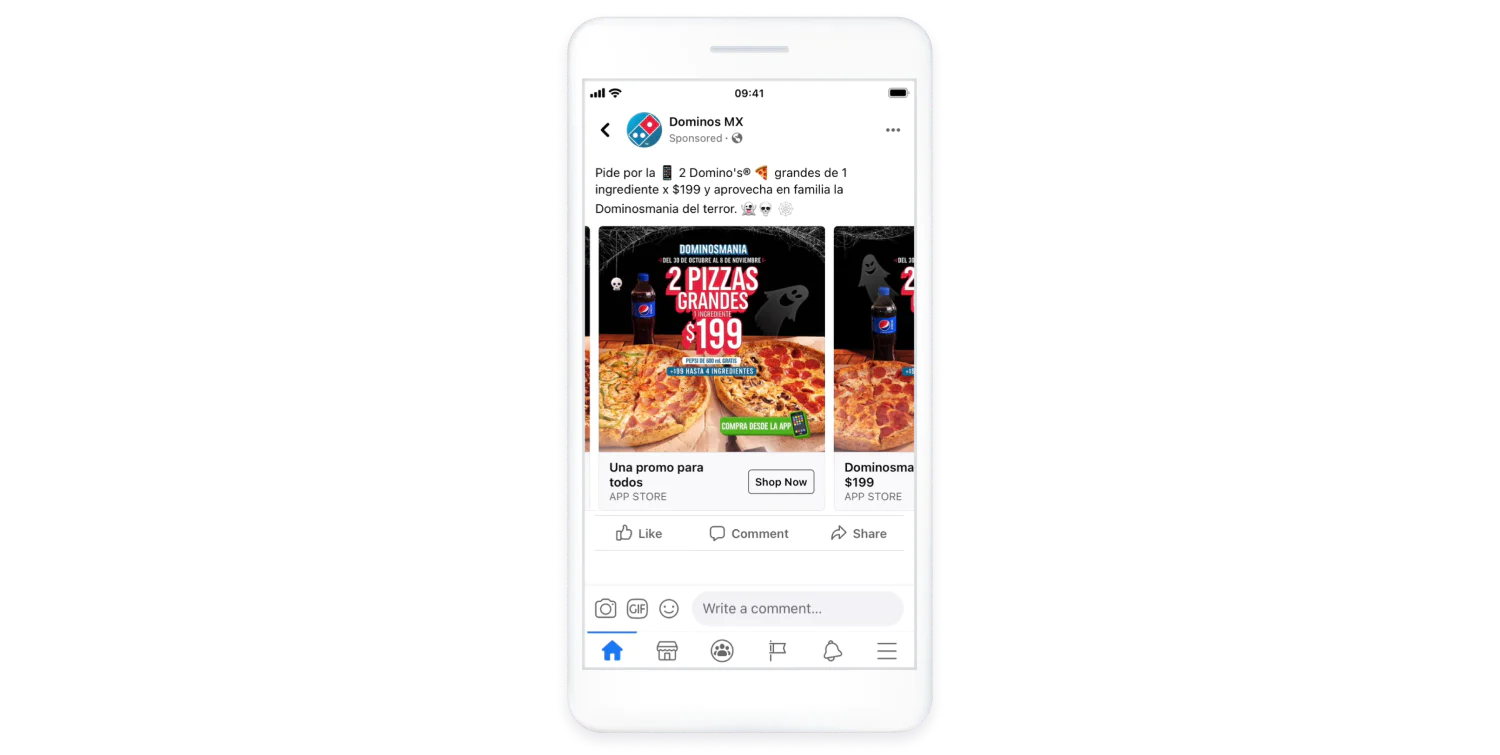
Domino’s also created hyper-personalized audiences with Twilio Engage — a tool that uniquely combines the power of a native customer data platform (CDP) with native omnichannel communications in one place — to increase return on ad spend (ROAS) by 700%, as well as revenue and incremental orders across all paid and owned e-commerce channels.
This is the compounding effect of a unified platform: once your data foundation is connected, AI and orchestration become dramatically more effective. The more you build on the Twilio platform, the more value you unlock.
How AI and the Twilio platform transform marketing efficiency
AI isn’t simply a layer added on top of marketing — it’s reshaping how campaigns are planned, executed, measured, and optimized. But AI can only perform when it has the right data, the right context, and the right channels working together.
The right platform gives leaders the ability to:
- Work from a single, trusted source of contextual customer data that’s accurate, real-time, and ready for activation
- Connect every communication channel on one platform, so outreach is consistent and coordinated across teams and interactions
- Use AI with confidence through governed, privacy-first data and built-in safeguards
- Optimize spend and performance faster with clearer signals
- Launch new customer experiences quickly without re-architecting systems or adding more point solutions
This becomes a true platform advantage, and one that grows over time.
As AI accelerates, the gap between companies using point solutions and those building on a unified platform will widen dramatically. The companies that win will be the ones connecting their data, channels, and intelligence in one place — turning AI from a buzzword into measurable business results.
Chapter 2:
Drive secure, seamless logins with intelligent identity and AI-powered trust
Secure authentication has become one of the most critical—and most overlooked—components of customer engagement. In a world where AI is accelerating fraud attempts, expectations for frictionless onboarding are rising, and digital identity is foundational to every interaction, leaders need login and verification experiences that are both trusted and effortless.
According to the Customer Identity Trends Report 2025, nearly a quarter of respondents (6% “always” + 17% “often”) abandon an online purchase because of signup or login issues. As customer patience shrinks and digital complexity increases, the cost of friction becomes enormous.
Twilio’s 2025 State of Customer Engagement Report also underscores this pattern: while 96% of companies say AI is improving customer-facing operations, the same AI advancements have created new expectations for security and new vectors for fraud. Leaders need identity infrastructure that not only protects customers, but adapts in real time.
This is where the Twilio platform provides an advantage. By bringing together global communication channels, trusted phone data, verification APIs, and intelligent risk signals in one place, the platform helps businesses create login flows that are fast, secure, and scalable—without adding engineering overhead or requiring specialized security tools. And with the recent acquisition of Stytch, Twilio is deepening its investment in modern identity, expanding its ability to offer flexible, passwordless authentication, stronger fraud defenses, and a more seamless developer experience.
Why identity is now central to customer engagement
Think about the first thing a customer does with your brand: they try to sign in or create an account. If that experience goes poorly, frustration can set in fast. But when it feels simple, safe, and well-designed, customers feel like they’re in good hands.
Traditional point solutions often create more identity challenges than they solve. Teams end up juggling separate verification tools that don’t share context or signals. Deliverability becomes inconsistent from region to region, creating gaps at the exact moment customers expect things to just work.
At the same time, fraud prevention adds another layer of complexity, with manual rules that can’t keep pace with fast-moving threats. Generative AI makes phishing, spoofing, and impersonation attempts more sophisticated, and faster to deploy.
To keep customers safe and journeys smooth, leaders need a platform that:
- Uses trusted, real-time signals across global carriers
- Orchestrates verification alongside other communication flows
- Applies AI-driven fraud detection that adapts to risk
- Delivers high SMS and voice verification success rates
- Keeps the experience consistent across devices and geographies
- Reduces engineering burden and operational overhead
This platform-first approach ensures that identity evolves alongside engagement.
Nearly 70% of Stripe’s user verifications are handled by Twilio Verify
Stripe powers hundreds of billions of dollars of transactions for companies and millions of users around the world. Security is of the utmost importance for this economic infrastructure to function seamlessly.
At multiple points across a user’s journey with Stripe, a user must verify his or her identity. Most users choose to authenticate via their phone number, and an authentication code is sent to the user via SMS, ensuring they are who they say they are and in fact have their device in-hand. Stripe says it focuses on two-factor authentication this way because it provides an easy process, making it more likely users will see it through.
Stripe also relies on Twilio’s Verify API across nearly 70% of all authentication processes to ensure simplicity and ease of use, and is actively incorporating it into the company’s entire system. With Twilio, deliverability rates are high—higher than regular SMS—and that means more Stripe users can be verified more easily.
“Verify greatly reduces our own support costs, over other verification methods,” says Stripe Engineering Manager Suhas Joshi. In the US alone, Joshi said, conversion rates for two-factor authentication have increased six points thanks to Twilio Verify. And in India, successful authentication rates went from 70% to 86%.
"It’s a no brainer to use Twilio... having Twilio as the backend for our authentication just allows us to keep growing without any concern."
Engineering Manager, Stripe
Stripe’s story highlights a broader truth: when verification lives on the same platform as your messaging, voice, and customer data, you gain reliability, flexibility, and visibility impossible to achieve with standalone tools. The more identity infrastructure you build on the Twilio platform, the more consistent, secure, and scalable your customer experience becomes.
How the Twilio platform elevates trust, speed, and user experience
A fragmented identity stack creates friction for users and risk for businesses. But with a universal verification layer connected to the rest of your engagement strategy, you can:
- Accelerate onboarding with streamlined verification
- Improve security using layered, AI-assisted risk scoring
- Maintain high delivery rates across global carriers
- Reduce customer drop-off with consistent, intuitive flows
- Expand into new geographies with compliance built-in
- Connect verification insights to customer profiles for richer context
And now, with Stytch’s identity technology enhancing Twilio’s foundation, businesses can bring even more flexibility, security, and ease to their authentication workflows—without introducing new operational complexity.
This unified approach enables companies to respond to changing threats and opportunities quickly. When identity signals, communication channels, and customer data live within one platform, businesses can detect anomalies faster, adapt flows automatically, and ensure trust at every step of the customer journey.
Identity is really the starting point for everything that comes next, every secure moment, and every personalized experience. And as AI speeds things up on both the good and the bad fronts, having one platform to anchor it all helps leaders stay one step ahead.
Chapter 3:
Create lifetime value by building amazing interactions
Customer expectations have shifted dramatically. They now expect brands to recognize them across every touchpoint, remember their preferences, and respond in real time—not with generic broadcasts, but with personalized communication that feels relevant, timely, and human. And thanks to AI, those expectations are rising even faster.
Yet companies continue to struggle with the basics: different parts of a business still have fragmented views of their customers. That fragmentation creates disjointed and awkward experiences: irrelevant emails, mistimed texts, out-of-date communications, 2FA identity friction, and personalization that varies widely from channel to channel. This is the core challenge modern leaders must solve.
According to the 2025 State of Customer Engagement report, 96% of companies say AI is improving customer-facing operations, yet only 45% of consumers feel understood by the brands they interact with.
AI is only as good as the data you have and only as good as your ability to contextualize the data with your customer’s needs and concerns.
This is where the Twilio platform makes a difference. By unifying communication channels, contextual data that delivers a persistent customer memory and AI-driven orchestration of conversations—all natively integrated across the entire customer journey— leaders can create experiences that feel cohesive, contextual, and personal. With Twilio, there’s no more siloed data or disjointed communications. Every conversion is two-way, omnichannel is the default, and every customer gets a tailored experience — at scale.
Why real-time, data-first engagement is now essential
In 2025, contextual experiences sit at the center of growth. But most traditional tools weren’t built for real-time experiences. They depend on slow batch updates, fragmented profiles, and manual segmentation, making consistent, cross-channel personalization nearly impossible.
A modern customer engagement platform solves these challenges by unifying identity, behavior, and context into one real-time customer memory. It provides dynamic audiences, connected analytics, and the ability to orchestrate journeys across every touchpoint.
With contextual data, AI becomes far more effective, helping teams predict intent, automate decisions, and deliver amazing experiences that genuinely feel personal.
How Vacasa achieves 3× more bookings with personalized campaigns
Vacasa provides a vacation rental management platform for homeowners to maximize revenue while helping guests relax comfortably in professionally managed homes. To stay competitive in the travel industry, Vacasa needed innovative ways to engage with customers. At the same time, they were looking to optimize spend by putting customer data at the center of all marketing and lifecycle campaigns to drive more predictable outcomes.
With Twilio Segment, Vacasa could access a CDP that unifies customer data across various touchpoints, while providing a single source of truth for teams. It also equipped Vacasa with the data needed to understand customers’ journeys and campaign performances on a more granular level in order to increase conversion rates: from welcome text messages, to email opens, and site reservations, all in one place.
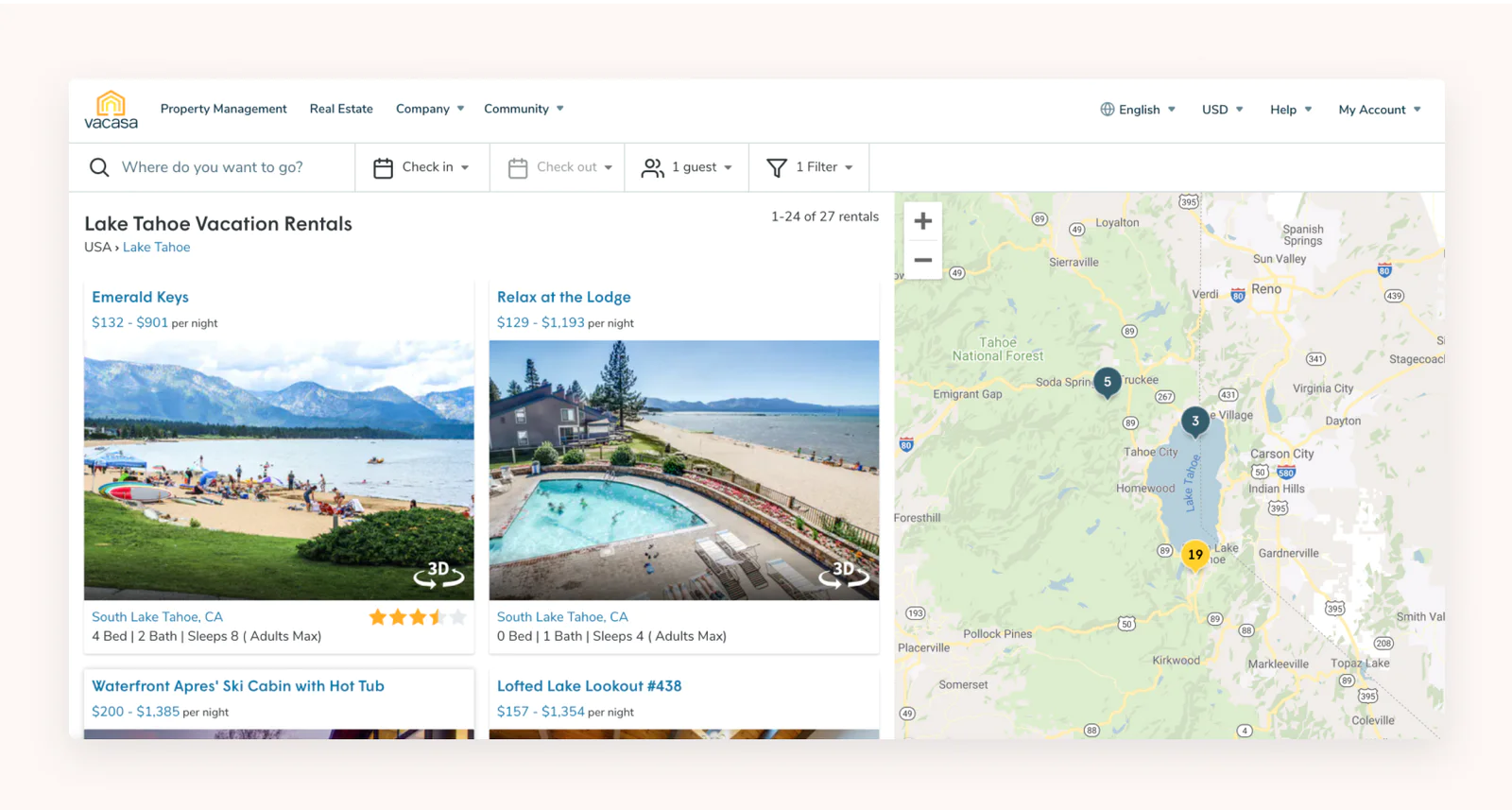
Using Twilio’s Programmable Messaging API and Twilio SendGrid’s Email API, Vacasa can send timely promotional messages to users. After texts and emails are successfully delivered, Twilio Segment’s intelligent event capture enables Vacasa to see the impact beyond just clicks and conversions, building more intelligent marketing and lifecycle campaigns in the process.
Additionally, Twilio Segment enables Vacasa to build custom audiences based on specific data attributes, reaching customers—both guests and homeowners—with highly personalized campaigns and communications. These personalized campaigns have increased engagement rates across the board for Vacasa. Email marketing campaigns sent to 500K recipients consistently reach over 21% open rates, performing well above industry benchmarks.
Vacasa can also create personalized subject lines based on user-data that return higher click rates compared to static subject lines in the team’s A/B tests. Strong subject lines yield engagement, and ultimately more bookings. Users who open and click Vacasa’s marketing emails are 3–10× more likely to book than users who open the emails without clicking.
Vacasa’s success is a clear example of this platform effect: once customer data is unified, every downstream engagement channel becomes smarter — and revenue follows.
"We don't want our guests to remember a family vacation for that one thing that went wrong. We want to help guests make great memories, so our platform solves any need that might arise either before, during, or after their trip— especially making sure they have a smooth booking experience."
Director of Marketing Analytics, Vacasa
Chapter 4:
Instill trust with responsible data practices
Legacy systems rarely provide the governance, visibility, or control needed to earn lasting customer trust. Disconnected tools create inconsistent data practices and privacy blind spots that can erode confidence. As AI-driven orchestration becomes more powerful, the need for a consistent, compliant, and transparent data foundation becomes even more critical.
A platform built for this moment must enable leaders to:
Centrally manage contextual data
Apply governance rules consistently across teams and channels
Build accurate customer profiles without duplications
Maintain transparency into how data is collected, connected, and activated
Embed security and compliance into every workflow
Give customers clear value in exchange for their data
Real trust doesn’t come from scattered tools. It comes from a platform built to handle customer data responsibly and in a way customers can feel good about.
Real trust doesn’t come from scattered tools. It comes from a platform built to handle customer data responsibly and in a way customers can feel good about. They reward companies that provide real value in exchange for their data, and they expect personalized experiences, clear explanations of how their data is used, control over their preferences and communications, consistent treatment across channels, and security as a default, not a feature. A platform bridges this gap by making trusted data the engine behind every interaction.
How the Twilio platform helps leaders build trusted, transparent, AI-ready engagement
Twilio’s platform brings every part of modern engagement together: secure identity, contextual data, AI orchestration, and our proven global communication channels, so companies can create experiences that feel consistent, personal, and reliable at every touchpoint. With one platform to power communication, data, and intelligence, leaders can build relationships rooted in trust while driving business growth.
On the Twilio platform, teams can:
Collect contextual data that delivers a persistent customer memory
Maintain transparency over how data is collected and used
Enforce governance rules across teams and tools
Deliver personalized experiences grounded in trust
Integrate AI responsibly with full control and visibility into data use
Protect customer privacy while still unlocking meaningful value
Get ahead of fraud with fully-managed authentication APIs
As AI continues to raise the bar for personalization, customers will increasingly choose brands that show restraint, clarity, and respect around their data. A platform-first approach allows leaders to meet these expectations without sacrificing performance and security.
Trust becomes the consistent throughline. Not a one-off program, but a durable advantage embedded in every interaction.
Chapter 5:
Reduce complexity with a platform designed for simplicity
Modern customer engagement has become overwhelmingly complex. Businesses are juggling shrinking budgets, expanding customer expectations, fast-moving AI advancements, and technology stacks weighed down by years of integrations, point solutions, and tech debt. The result is operational inefficiency: long onboarding timelines, rising vendor costs, and teams forced to maintain systems rather than innovate with them.
The Twilio platform removes these barriers. Instead of stitching together tools or hiring armies of consultants to keep systems functioning, leaders can rely on a unified, modular platform that works with the technology they already have and scales as their needs grow.
Twilio’s platform simplifies complexity by providing flexible, natively integrated tools designed to reduce time to value and make adoption frictionless. With transparent pay-as-you-go pricing, your business can scale up or down as needed without long-term commitments. No-code and low-code capabilities let teams build, test, and deploy quickly, while enterprise-ready APIs allow developers to customize in the programming language of their choice. Every component of the platform is powerful on its own, but is built to work together seamlessly, eliminating the integration headaches and hidden costs that come from vendor sprawl.
The Twilio platform also offers extensibility. Businesses can harness the power of build and buy with trusted and secure solutions that scale, while remaining confident that they have the agility to tailor every component to meet changing business priorities. They can start with a single use case, like secure logins, personalized campaigns, or SMS notifications, and expand over time into a fully unified engagement strategy.
This simplicity is reinforced by a global developer and partner ecosystem. With more than 10 million developers, 3,000+ technology partners, and world-class documentation and support, Twilio gives teams at every level the guidance and expertise they need to get started quickly—and to keep improving without disruption.
For leaders, simplified complexity means:
Integrating into existing systems without re-architecting
Retiring tech debt and unlocking innovation with a modern, modular stack
Standardizing how teams build, test, govern, and deploy
Reducing operational overhead and internal resourcing strain
Achieving faster time to value with tools that grow alongside the business
As companies face increasing pressure to do more with fewer resources and move faster without increasing risk, a platform built around simplicity becomes a strategic advantage. By removing the operational drag created by fragmentation, Twilio helps organizations focus on what matters: building amazing experiences that drive loyalty, revenue, and long-term customer value.
Drive amazing customer engagement today with the Twilio platform
Twilio helps businesses engage their customers in a trusted, consistent way across the whole business. As a named Leader in CPaaS (Gartner, 2026), Twilio empowers organizations to engage customers anywhere in the world exactly how they prefer, with the engagement channels of today and tomorrow.
Twilio offers a secure, flexible platform for customers to build any experience — without the complexity. It’s the unique combination of communication channels, contextual data that delivers a persistent customer memory and AI-driven orchestration of conversations—all natively integrated across the entire customer journey to drive productivity and increase efficiency.
Contact sales
Talk to our sales team to see how you can build amazing customer experiences with Twilio’s platform.