What is data reliability (and do you need reliable data)?
Time to read:
February 01, 2026
Written by
What is data reliability (and do you need reliable data)?
There's a big difference between having data and having reliable data.
Most organizations collect plenty of information: website behavior, transaction histories, campaign metrics, customer profiles. The problem isn't volume. It's whether you can actually trust what you've collected.
A duplicate record here, a misformatted field there, a third-party data source that hasn't been validated. Suddenly, your data-driven decisions are built on a shaky foundation.
And the cost isn't hypothetical. Poor data reliability costs organizations nearly $13 million per year in lost revenue, wasted resources, and bad business decisions.
That's not a rounding error.
Data reliability is how you close that gap. It's the measure of how accurate, complete, and consistent your data is—and how confidently your teams can use it to inform strategy, personalize customer experiences, and drive growth.
This guide breaks down what reliable data means, how it differs from data validity, why it matters for your business, and how to build the infrastructure that keeps your data trustworthy at scale.
What is reliable data?
Reliable data is data that is accurate, complete, and consistent. This means your organization can trust it to inform decisions, power campaigns, and drive business outcomes without second-guessing whether the numbers are right.
Data reliability comes down to a few core characteristics:
- Accuracy: The data reflects reality. Customer names are spelled correctly. Revenue numbers match actual transactions. Event timestamps are precise.
- Completeness: Nothing critical is missing. Records aren't half-filled, fields aren't blank, and data gaps aren't silently skewing your analysis.
- Consistency: The same data produces the same results regardless of where you access it. Your CRM, your analytics dashboard, and your data warehouse should all tell the same story.
- Timeliness: The data is current enough to be useful. A customer profile that hasn't been updated in six months isn't reliable for a real-time personalization campaign.
When data meets these criteria, teams can act on it with confidence. When it doesn't, you get flawed reporting, wasted ad spend, irrelevant customer experiences, and compliance risks. All of this erodes trust in the data itself and the teams responsible for managing it.
Data reliability isn't a one-time achievement, either. It's an ongoing discipline.
As your data sources multiply, your tech stack evolves, and your data volume grows, maintaining reliability requires the right processes, governance policies, and tooling at every stage of the data lifecycle.
Data reliability vs. data validity
Data reliability and data validity are related, but they measure different things. Confusing them (or treating them as interchangeable) leads to blind spots in your data quality strategy.
- Data reliability is about accuracy and consistency. Can you trust the data? Does it reflect reality? Will it produce the same results when accessed from different systems or measured at different times?
- Data validity is about format and structure. Is the data captured in the correct format? Does it conform to the rules and constraints your systems expect?
A customer's address can be valid (properly formatted with street, city, state, and zip code in the right fields) but unreliable (it's their old address from three years ago).
Conversely, data can be reliable (it's the correct, current address) but invalid (the apartment number is stored in the zip code field).
You need both.
Valid data that isn't reliable gives you well-formatted garbage. Reliable data that isn't valid creates processing errors, failed integrations, and downstream issues.
The goal is data that's both accurate in substance and correct in structure—which is why data governance frameworks need to address reliability and validity as complementary priorities, not separate initiatives.
Why is data reliability important?
Reliable data is crucial to a business’s ability to make data-driven decisions (like understanding which initiatives will yield the biggest ROI) and avoid missteps (like sending marketing emails to invalid email addresses).
Bad data isn’t just virtually useless, it can also cause legal problems, erode customer trust, and hinder business growth. Conversely, prioritizing reliable data allows you to reap the benefits that come with it – happier customers, boosted revenue, and more efficient operations.
Increased revenue
Data can unlock key insights for your business: how to streamline operations, what should be prioritized in your product roadmap, which acquisition channels have the highest ROI - the list goes on. However, what all these possibilities have in common is their ability to generate more revenue, whether by mirroring customer expectations, finding the right product-market fit, or not wasting time and resources on channels and touchpoints that generate little returns.
A prime example of this is with Adevinta, a leading online classifieds provider in Europe. Adevinta has 25 digital brands, which operate across 11 countries. As a result, they had multiple teams working with multiple different tools and product roadmaps – and there was little visibility between departments as to what data was being collected. So, Adevinta used Twilio Segment to help establish a universal tracking plan, standardize collection, and consolidate data into a single source of truth. By implementing the right infrastructure, and having confidence in the data they collected (which in turn, fed their campaigns and real-time personalization strategies), Adevinta was able to:
Decrease marketing campaign costs by 200%
Save 25% of engineering hours previously dedicated to fixing errors
Increase operational efficiency by 10%
Improved brand reputation and consumer trust
There are countless instances of bad data out in the wild. One of the most common examples of bad data is a lack of relevance and personalization – like receiving a promotion for a product that you just returned, as one example.
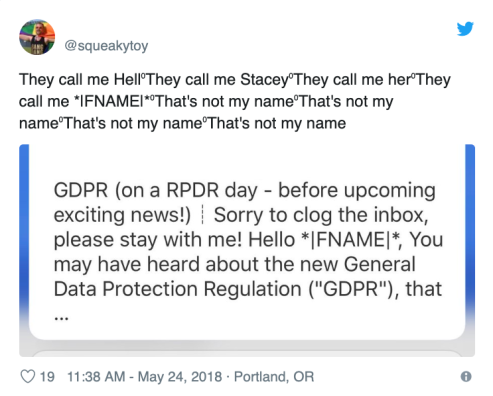
Reliable data means every department within your organization is working off the same complete and up-to-date insights. This allows marketing to create highly relevant audiences for their campaigns or for customer support to flag potential churn risks and proactively intervene (as just two examples). In this day and age, customer experience is everything – and the quality of your interactions is what will cement customer loyalty.
Accurate analysis to launch new products faster
Reliable, error-free data helps you scale faster by understanding your customers and analyzing their behaviors. Univision, the United States’ leading Spanish-language media company, is a great example of this.
Univision needed to better understand customer behavior to drive subscriptions for their new streaming service, ViX. But they needed the necessary infrastructure for collecting, unifying, and taking action on customer data. Intending to launch ViX in three months, they had millions of customer data touchpoints to track. Twilio Segment’s customer data platform (CDP) gave Univision access to behavior analytics, which enabled them to create targeted marketing campaigns (which have helped increase monthly streaming rates by 20%).
How to achieve & maintain maximum data reliability
Embrace these best practices to keep your data reliability high and your overall data health strong.
Optimize data collection, storage, and analysis
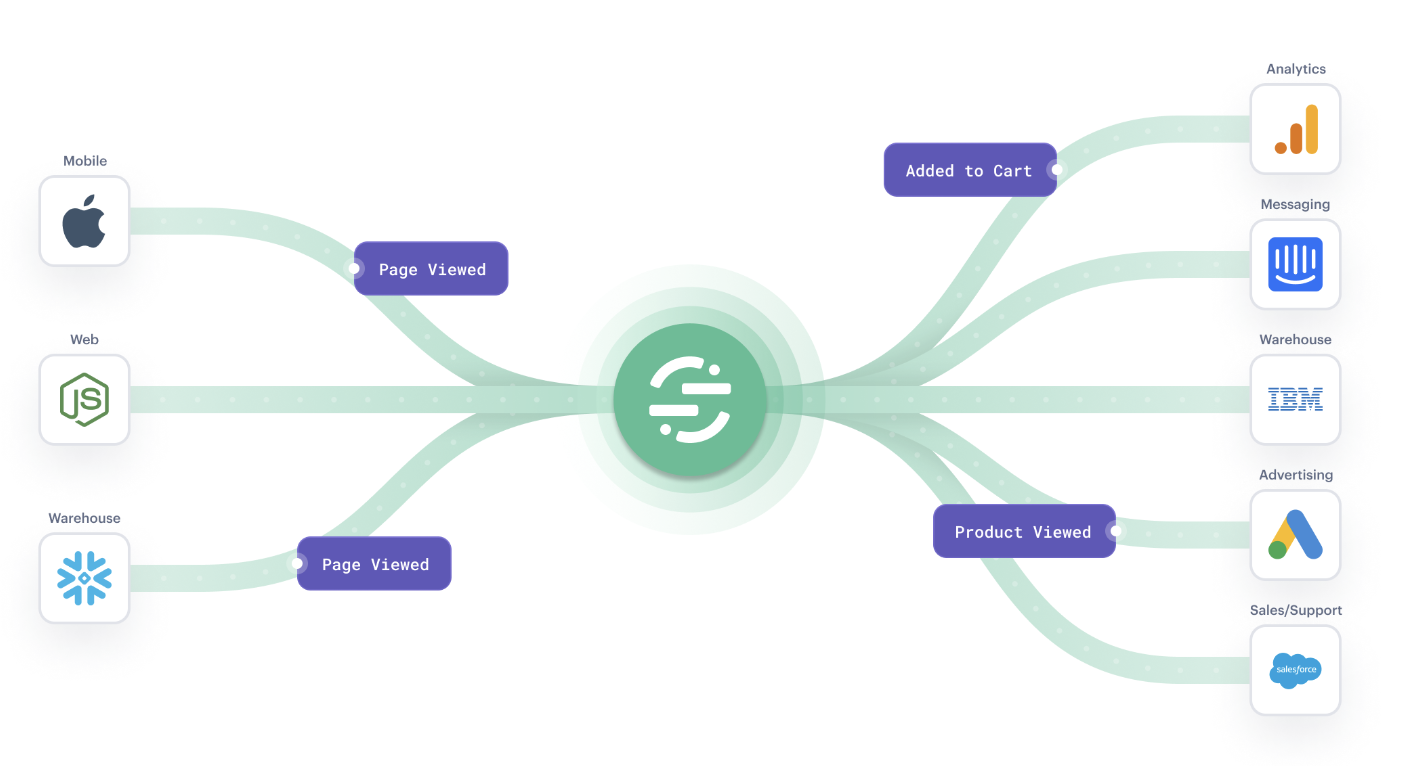
Optimizing data collection, storage, and analysis will depend on your data infrastructure. A customer data platform like Twilio Segment is able to streamline the process of integrating new tools into your tech stack, offloading what would otherwise be manual labor.
Twilio Segment can then automatically collect, clean, and consolidate data in real time. While businesses can send their data to any downstream destination for activation, they can also leverage Twilio Segment Unify to see a real-time, unified view of each customer.
Confirm data uniqueness
If you have duplicate records, your data isn’t unique (or accurate). Duplicate records can misrepresent campaign results, or lead to subpar customer experiences. Confirming data uniqueness happens during the validation process. We recommend creating a universal tracking plan to create internal alignment within your organization.
Favor primary data sources
Where data originates from is an important aspect of its reliability. For instance, buying data from a third-party source is risky for a few reasons: you can’t be sure the data is correct, and, if you haven’t built a relationship with customers, it could feel invasive (and creepy) to know certain facts about them.
We recommend prioritizing zero-party data (which is freely given from customers to your business via surveys, forms, etc.), and first-party data (which comes from direct interactions with customers, like the pages they view on your website). This data is unique to your business: no other company should have access to this information. Second, it’s highly reliable, especially in a world where data privacy regulations are continually evolving (and once-common tactics, like using third-party cookies, will soon be phased out).
Clean as you collect
Data cleaning refers to the process of fixing or removing duplicate, incomplete, invalid, or irrelevant data to ensure that it remains correct, usable, and able to be properly analyzed.
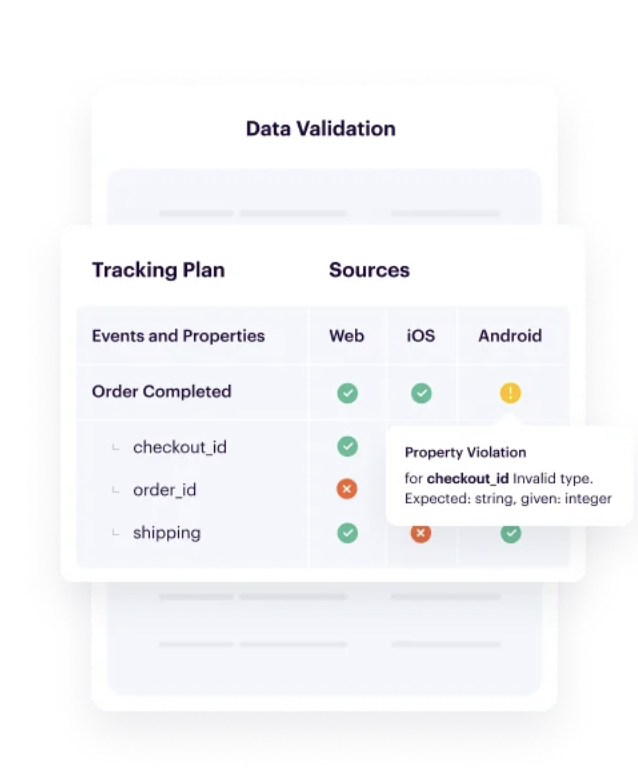
We’ve mentioned this before, but we recommend standardizing the way you collect data to ensure its cleanliness. When everyone is following the same naming conventions, and everyone is clear on what data is being collected, it’s easier to spot inconsistencies before they make their way into the data set (in fact, there are tools available like Twilio Segment Protocols which can perform automatic QA checks to block bad data from the jump).
Adapt with data maturity
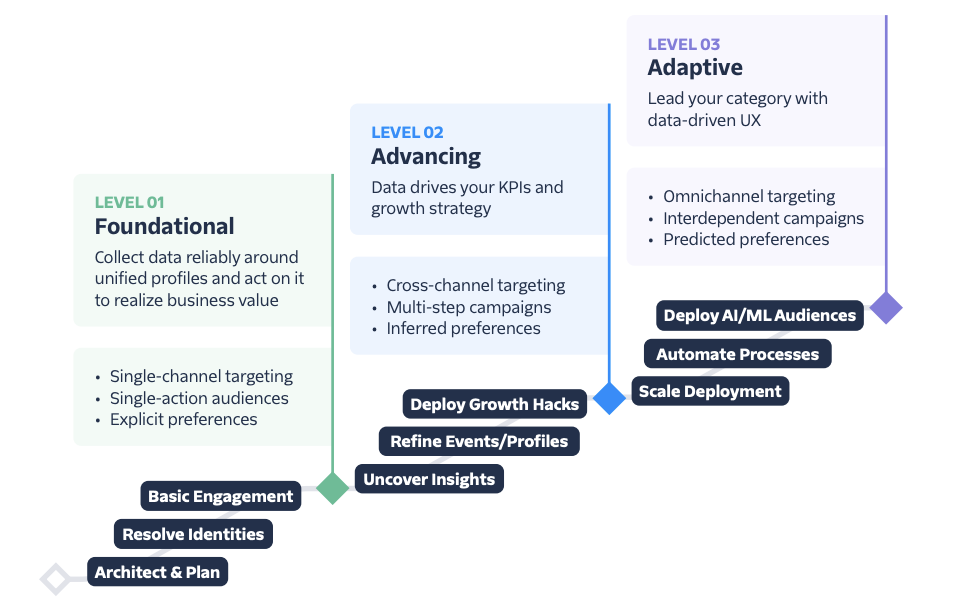
Data maturity refers to a businesses’ ability to leverage data-driven decision making at every level of the organization. Advanced data maturity is when businesses have broken down data silos, consolidated customer data into unified profiles, and have democratized data across the company so that every person is using it to discover insights, hone strategies, and set realistic KPIs.
Below, we outline how companies can move from a foundational data strategy to an advanced and adaptive one
How to improve data reliability with the experts at Twilio Segment
The reliability of data can be a tricky thing to establish, but Twilio Segment can help.
Make data collection simple with Connections
Connections helps you collect event data from all the channels you use, including mobile apps, websites, and servers, with one API. It then pulls in data from your CRM and other internal databases to build a complete picture of your customers.
The engineering and data science teams at Endeavor, an American holding company for media and talent agencies, needed to integrate customer data from multiple sources. So, they used Connections to centralize data collection, scale their data infrastructure, and share information throughout the company based on individual roles. With newfound visibility into customer behavior, Endeavor teams use accurate analytics and other downstream tools to create effective marketing campaigns.
Keep your data clean and accurate with Protocols
Twilio Segment Protocols helps keep your data clean, standardized, and up to date. With Protocols, data reliability issues are diagnosed before they infiltrate your marketing and analytics tools or data warehouses, helping companies achieve data governance at scale.
Gain a complete view of your customer with Unify
Unify merges real-time customer data across each platform and channel you use, so you can understand the customer journey and personalize experiences.
Take global healthcare leader Sanofi. They needed a complete view of their healthcare providers to better understand the customer journey. The goal was to provide more personalized experiences and positively impact patient outcomes. By partnering with Twilio Segment, Sanofi was able to build “golden profiles” of customers by using Unify to combine customer data from multiple sources in their data warehouse (and quickly create 35+ audiences that were tailored to each campaign).
Frequently asked questions
You can ensure data is reliable by understanding the data lifecycle (e.g., knowing how data is collected, stored, and used). Also, establishing a data governance framework helps create internal alignment around data best practices and management.
An example of reliable data would be a record with a customer’s complete name and address, as well as past purchase history and which pages on your website they’ve interacted with. Unreliable data would be if you found a duplicate record for the same customer but with multiple different addresses listed (and no certainty over which one should be used for shipping).
When your data is kept in separate systems or silos, each department in your organization has different data sets, some of which are likely incomplete or inaccurate. This can result in your data being unreliable.
Data reliability, validity, and hygiene are interrelated concepts. Data reliability refers to the consistency of data, or the extent to which data produces stable results over time and in different conditions. Data validity is concerned with the accuracy and correctness of data. Data hygiene refers to the cleanliness and quality of data. It involves ensuring that data is complete, consistent, accurate, and free from errors or inconsistencies.
Ready to see what Twilio Segment can do for you?

The Customer Data Platform Report 2025
Drawing on anonymized insights from thousands of Twilio customers, the Customer Data Platform report explores how companies are using CDPs to unlock the power of their data.



Related Resources
Twilio Docs
From APIs to SDKs to sample apps
API reference documentation, SDKs, helper libraries, quickstarts, and tutorials for your language and platform.
Resource Center
The latest ebooks, industry reports, and webinars
Learn from customer engagement experts to improve your own communication.
Ahoy
Twilio's developer community hub
Best practices, code samples, and inspiration to build communications and digital engagement experiences.